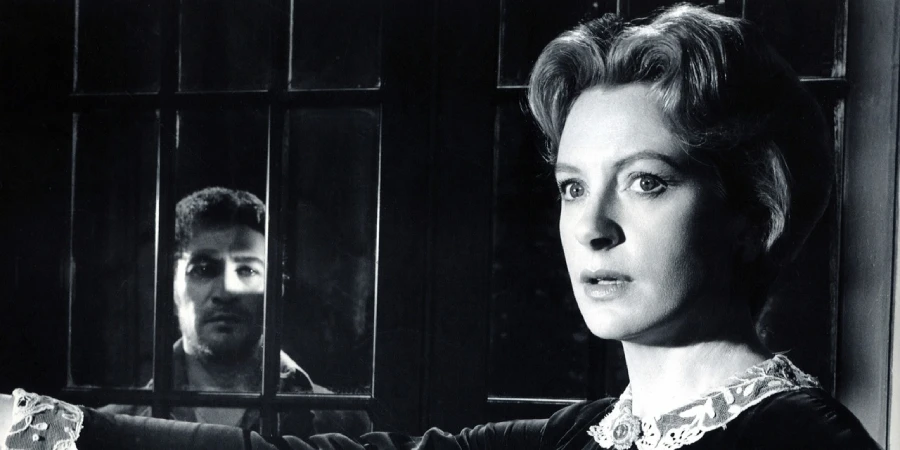

The Innocents (1961), directed by Jack Clayton, is one of the most haunting and elegantly crafted psychological horror films ever made. Adapted from Henry James’s novella The Turn of the Screw, the film blends atmospheric dread, psychological ambiguity, and gothic storytelling into a chilling experience that remains influential to this day.
Detailed Summary
The Arrival of Miss Giddens
Miss Giddens (Deborah Kerr) is hired as a governess to care for two orphaned children, Flora and Miles, at the remote Bly estate. She is instructed by their uncle never to bother him with any issues concerning the children. From the outset, she tries to be the perfect caretaker but quickly feels the weight of isolation and responsibility.
Unease at Bly
Miss Giddens begins noticing strange behavior from the children. Miles, recently expelled from school for unspecified—possibly unsettling—reasons, is charming yet disturbingly mature. Flora appears sweet but oddly evasive. Miss Giddens becomes increasingly convinced that the children are keeping secrets.
She begins seeing apparitions around the estate: a man she identifies as Peter Quint, the former valet, and a woman matching the description of Miss Jessel, her predecessor. Both are deceased.
Miss Giddens’ Growing Obsession
Certain that the children are possessed by the spirits of Quint and Jessel, Miss Giddens becomes determined to “save” them. Her fear and conviction grow simultaneously, and her behavior becomes more frantic.
The housekeeper, Mrs. Grose, tries to calm her but cannot fully deny the troubled past of Quint and Jessel, whose tumultuous, possibly abusive relationship may have affected the children.
Confronting the Children
Miss Giddens tries to force the children to admit they see the ghosts. Flora breaks down and denies everything, while Miles remains eerily calm. Miss Giddens becomes increasingly convinced that Miles is under Quint’s influence, and she decides to isolate him to “free” him.
Movie Ending
Miss Giddens stays alone with Miles in the garden, begging him to admit Quint’s presence. She becomes more hysterical as she claims to see Quint standing behind him. Miles insists he’s not being influenced, but as she pressures him further, he begins to panic.
Finally, Miles shouts Quint’s name, seemingly acknowledging the spirit. At that exact moment, Miss Giddens believes the ghost has been forced out. Miles collapses in her arms. She holds him close, convinced she has saved him.
But then she realizes he is no longer breathing.
The camera does not show any ghost. There is no confirmation of possession. Miles dies, and Miss Giddens kisses his lifeless lips in one of the most unsettling final images in gothic cinema.
The ambiguity is the whole point:
- Were the ghosts real?
- Or was Miss Giddens slowly descending into delusion and hysteria?
- Did she frighten Miles to death?
The film intentionally leaves these questions unanswered, making the ending deeply disturbing.
Are There Post-Credits Scenes?
No. The Innocents (1961) does not contain any post-credits or mid-credits scenes.
Type of Movie
The film is a psychological horror and gothic ghost story with heavy emphasis on atmosphere, ambiguity, and psychological tension rather than overt supernatural events.
Cast
- Deborah Kerr as Miss Giddens
- Martin Stephens as Miles
- Pamela Franklin as Flora
- Megs Jenkins as Mrs. Grose
- Peter Wyngarde as Peter Quint
- Clytie Jessop as Miss Jessel
Film Music and Composer
The score was composed by Georges Auric, known for his haunting, minimalist use of piano and eerie atmospheric tones. The recurring tune “O Willow Waly” becomes a symbolic presence in the film, and its soft, melancholic melody is one of the movie’s most memorable features.
Filming Locations
Filming primarily took place in Shepperton Studios (Surrey, England). The exteriors of Bly were shot on several English estates, whose wide fields, misty lakes, and old architecture reflect the isolation and gothic mood of the story.
- The locations were chosen for their lonely, timeless atmosphere, helping support the film’s themes of repression, secrecy, and psychological decay.
- The use of light and shadow in these locations allowed cinematographer Freddie Francis to create an iconic, dreamlike horror aesthetic.
Awards and Nominations
- BAFTA nomination for Best British Film
- Edgar Award for Best Motion Picture (Winner)
- Numerous retrospective awards and recognitions for its cinematography and adaptation work
Although not a blockbuster upon release, the film has become critically revered and is often cited as one of the greatest psychological horror films ever made.
Behind the Scenes Insights
- Deborah Kerr considered Miss Giddens one of her most challenging roles due to the emotional intensity.
- The production used innovative lighting techniques, such as overexposing windows to create ghostly interiors.
- Director Jack Clayton encouraged ambiguity: scenes were shot so viewers could interpret them as either supernatural or psychological.
- The child actors were intentionally not told certain interpretations of the script to preserve natural performances.
- Truman Capote worked on the screenplay, adding layers of psychological tension and subtle implication.
Inspirations and References
- Based on The Turn of the Screw (1898) by Henry James.
- The film heavily draws on Victorian gothic traditions: repressed emotions, haunted estates, and unreliable narrators.
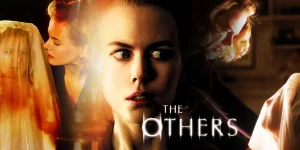
- The use of innocence corrupted and ambiguous evil inspired later works like The Others (2001).
Alternate Endings and Deleted Scenes
Few deleted scenes survive, but drafts of the screenplay reveal:
- One alternate version had a more explicit supernatural ending, showing Quint’s ghost clearly, which Clayton rejected to maintain ambiguity.
- A longer confrontation scene with Flora was filmed but trimmed for pacing.
Book Adaptations and Differences
Some key differences from The Turn of the Screw include:
- The film is slightly more explicit about Miss Giddens’ hallucinations or visions.
- The movie adds new imagery and recurring motifs like the music box tune “O Willow Waly.”
- The ending in the novel is even more ambiguous; the movie intensifies the emotional impact.
- Capote’s script introduced darker psychological interpretations that were not present explicitly in James’s text.
Memorable Scenes and Quotes
Key Scenes
- Miss Giddens seeing Quint on the tower for the first time.
- The eerie lake scene where Flora hums “O Willow Waly.”
- Miles’s unsettling nighttime whispering.
- The climactic final confrontation where Miles collapses in the garden.
Iconic Quotes
- “All I want to do is save the children, not destroy them.”
- “Oh, my dear, we must go on… and on.”
- “You’re afraid. You’re afraid of what you can’t see.”
Easter Eggs and Hidden Details
- The flowers dying in Miss Giddens’ room subtly represent her psychological unraveling.
- Mirrors are used throughout the film to symbolize duality and hidden truths.
- The ghosts often appear in reflections or partial obscurity, reinforcing ambiguity.
- Early scenes show Miles behaving exactly as Quint once did, hinting at possible influence—or Miss Giddens’ imagination.
Trivia
- Martin Stephens (Miles) also starred in Village of the Damned, making him an iconic creepy-child actor of the era.
- Deborah Kerr reportedly requested fewer retakes because she found the emotional tension exhausting.
- The film is still studied in film schools for its lighting and use of ambiguity.
Why Watch?
Because The Innocents is one of the finest examples of psychological horror that trusts the viewer’s intelligence. Its slow build, chilling atmosphere, and morally complex ending make it a timeless classic. If you appreciate subtle horror that gets under your skin rather than relying on jump scares, this film is essential viewing.
Director’s Other Movies
- Room at the Top (1959)
- The Pumpkin Eater (1964)
- Our Mother’s House (1967)
- Something Wicked This Way Comes (1983)
Recommended Films for Fans
- The Haunting (1963)
- The Others (2001)
- Don’t Look Now (1973)
- Picnic at Hanging Rock (1975)