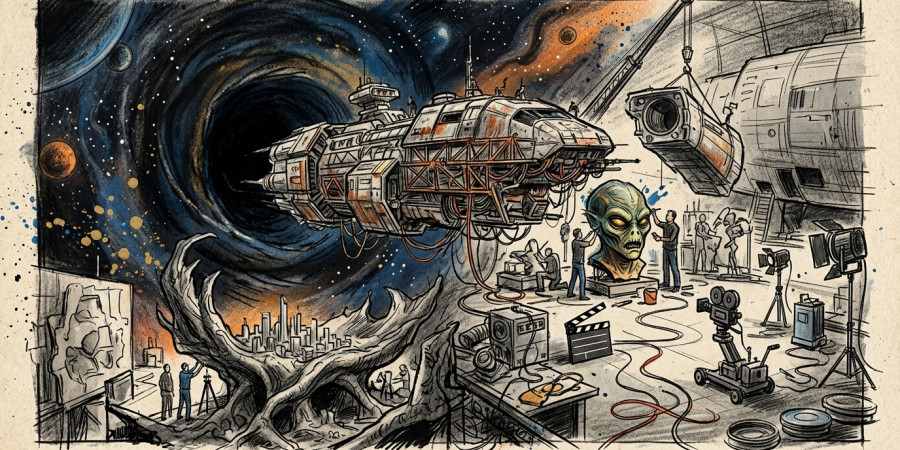

Movie magic once happened right in front of the camera. Before computer-generated imagery dominated Hollywood, filmmakers relied on ingenuity, craftsmanship, and physical materials to bring impossible worlds to life. This practical effects history reveals how some of cinema’s most iconic moments were achieved through clever engineering rather than digital wizardry.
Understanding these techniques offers more than nostalgia. It illuminates a creative problem-solving tradition that shaped modern filmmaking and continues to influence directors who blend old-school methods with new technology.
The Golden Age of Physical Special Effects
Science fiction films from the 1960s through the 1980s pushed practical effects innovation to unprecedented levels. Studios invested in physical techniques because no alternative existed. Consequently, entire departments developed sophisticated methods that remain impressive today.
2001: A Space Odyssey set a benchmark in 1968. Stanley Kubrick partnered with effects supervisor Douglas Trumbull to create realistic spacecraft using miniatures, front projection, and meticulous lighting. The rotating space station sequence required building a massive centrifuge set where actors could walk on the walls.
These achievements weren’t accidents. Teams spent months perfecting single shots, understanding that physical effects demanded precision at every stage.
Miniature Work and Motion Control
Scale models revolutionized how filmmakers depicted massive structures and vehicles. However, simply photographing miniatures wasn’t enough. Artists needed to make tiny objects feel enormous on screen.
Motion control systems changed everything. These computer-controlled camera rigs could repeat identical movements, allowing multiple passes over the same model. Therefore, effects teams could layer explosions, lights, and background elements separately, then combine them optically.
Key techniques included:
- Building models at scales ranging from inches to dozens of feet depending on required detail
- Using slower frame rates to make miniature movements appear more massive and weighty
- Adding intricate surface details and weathering to enhance realism under bright lights
- Incorporating practical lighting elements within models to create authentic glow effects

Creature Creation and Animatronics Development
Bringing alien life forms to the screen required different approaches. Makeup artists and mechanical engineers collaborated to create beings that could act alongside human performers. This practical creature effects work produced some of cinema’s most memorable characters.
Stan Winston’s contributions to the field remain legendary. His studio developed the Alien Queen for Aliens, a complex puppet requiring multiple operators. The full-scale creation stood over fourteen feet tall and could perform nuanced movements that made it feel genuinely alive and threatening.
The Art of Believable Monsters
Creating convincing creatures involved multiple disciplines. Sculptors first designed forms in clay, establishing anatomy and proportions. Meanwhile, engineers determined how to make those designs move convincingly.
Cable-operated mechanisms controlled facial expressions. Radio-controlled servos managed larger body movements. In some cases, performers wore suits enhanced with animatronic elements, combining human performance with mechanical enhancement.
Successful creature effects shared common elements:
- Detailed surface textures using foam latex, silicone, or other flexible materials
- Careful lighting to hide seams and mechanical components
- Strategic camera angles that emphasized the creature’s best features
- Integration of performer movement with mechanical components for natural behavior
Optical Printing and Matte Painting Mastery
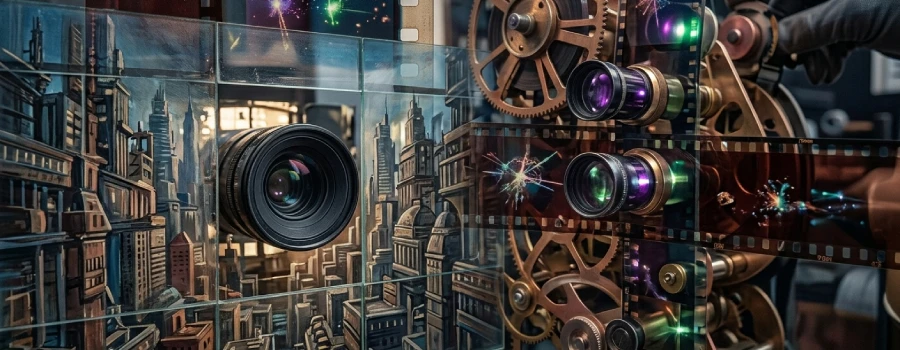
Expanding environments beyond physical sets required painted artistry and photographic tricks. Matte painters created intricate backgrounds on glass panels, positioning them between camera and subject. This technique allowed filmmakers to place actors in vast landscapes or futuristic cities without building massive sets.
Optical printers offered another essential tool. These specialized cameras could combine multiple pieces of film, creating composite shots that appeared seamless. Effects artists used them to add laser blasts, remove wires, and blend live-action footage with miniature elements.
Blade Runner showcased both techniques brilliantly. The dystopian Los Angeles skyline emerged from detailed matte paintings combined with miniature buildings and atmospheric effects. These layers built a rich, believable world that felt lived-in despite being entirely constructed.
The Unsung Artists Behind Painted Worlds
Matte painters needed both artistic talent and technical precision. Their work had to match the film’s photography exactly in terms of perspective, lighting, and color temperature. Moreover, they worked under pressure, knowing their paintings would appear on massive theater screens where every brushstroke became visible.
Albert Whitlock pioneered many matte painting techniques used throughout the industry. His work appeared in hundreds of films, often unnoticed because it blended so perfectly with live-action footage. That invisibility marked the highest achievement in this craft.
Why Practical Effects Still Matter Today
Modern filmmakers increasingly return to physical techniques. Directors recognize that practical effects offer actors something tangible to interact with, improving performances. Furthermore, audiences can often sense the difference between physical objects and digital creations, even subconsciously.
Christopher Nolan champions practical effects whenever possible. Inception featured a rotating hallway built as a full-scale rotating set rather than relying solely on CGI. Tenet crashed an actual airplane into a building instead of generating the sequence digitally.
The most effective contemporary films blend both approaches:
- Using practical effects for foreground elements that actors touch and interact with directly
- Employing digital effects to enhance backgrounds and add impossible details
- Building partial sets and extending them digitally rather than creating everything virtually
- Filming real explosions, water, and fire effects for authentic physics and lighting
Learning From Masters of Physical Filmmaking
Studying practical effects history reveals problem-solving approaches applicable beyond cinema. These craftspeople faced limitations and turned constraints into creative opportunities. Budget restrictions and technological boundaries forced innovative thinking rather than limiting imagination.
Effects artist Phil Tippett developed go-motion animation for The Empire Strikes Back. This technique added motion blur to stop-motion animation, making creatures appear more realistic. His work bridged traditional animation and modern motion capture, influencing digital animation techniques used today.
Moreover, practical effects required extensive pre-production planning. Teams storyboarded sequences meticulously, determining exact camera angles and timing before shooting began. Such discipline produced efficient productions and better final results.
Preserving Practical Knowledge for Future Generations
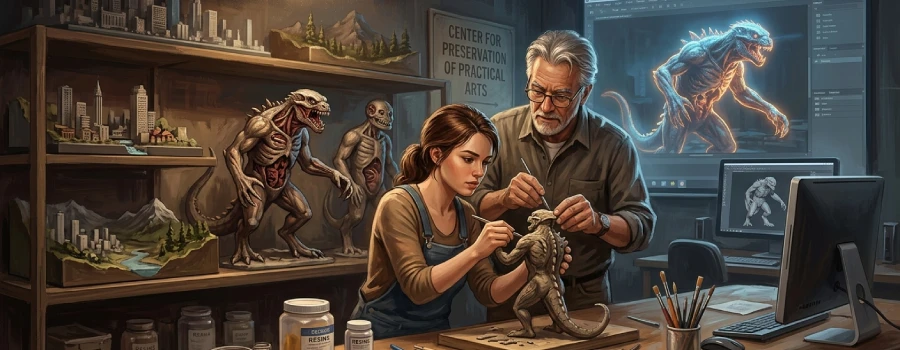
As digital effects become standard, practical skills risk being lost. Fewer apprenticeships exist for aspiring miniature builders or creature fabricators. However, some organizations work to preserve this knowledge.
Film schools increasingly include practical effects courses. Students learn foundational techniques that inform their understanding of visual effects broadly. Ultimately, knowing how to achieve effects practically makes them better collaborators when working with digital artists.
Independent filmmakers often embrace practical effects out of necessity. Limited budgets can’t afford extensive CGI, so creative teams develop ingenious practical solutions. This limitation produces distinctive visual styles that set their work apart from expensive studio productions.
The Lasting Legacy Lives On Screen
Practical effects history demonstrates that creativity thrives within constraints. Those classic science fiction films endure partly because their effects feel grounded in physical reality. Objects have weight, textures appear authentic, and lighting behaves naturally because everything existed in three-dimensional space.
Modern audiences still respond to this authenticity. Films like Mad Max: Fury Road earned praise for spectacular practical stunts and effects work. The visceral impact of real vehicles colliding and flipping creates excitement that digital simulations struggle to match.
Appreciating these techniques enriches how we watch movies. Next time you revisit a science fiction classic, consider the human ingenuity behind each shot. Teams of artists, engineers, and craftspeople collaborated to create movie magic that still captivates decades later. Their legacy reminds us that sometimes the best special effects are the ones you can touch.