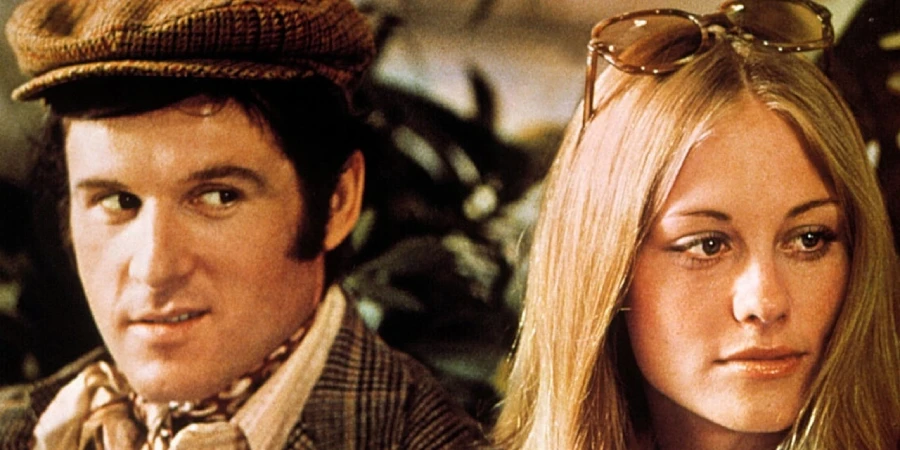

Elaine May’s The Heartbreak Kid (1972) is a razor-sharp, dark romantic comedy that explores ego, desire, and the delusions people invent to justify their choices.
Detailed Summary
Lenny Marries in Haste
The film begins with Lenny Cantrow, a self-centered New Yorker played brilliantly by Charles Grodin, marrying Lila Kolodny (Jeannie Berlin). Within hours of the wedding, it becomes painfully clear that Lenny is having doubts. Lila talks too loudly, eats messily, and doesn’t fit Lenny’s fantasy image of the ideal wife. The comedic cruelty of the film begins here: Lenny’s dissatisfaction isn’t just shallow, it’s almost pathological.
Honeymoon Disaster in Miami
On their honeymoon in Miami, Lenny’s discomfort escalates. Lila spends most of the time in their hotel room recovering from a painful sunburn, and Lenny uses this “free time” to explore the beach—where he meets Kelly Corcoran, a college girl played by Cybill Shepherd. Kelly is confident, poised, and exactly the kind of polished fantasy Lenny believes he deserves.
Lenny becomes instantly obsessed. In one of the movie’s most memorable stretches, he invents increasingly ridiculous excuses to avoid being with Lila so he can pursue Kelly.
Lenny’s Delusional Pursuit
Lenny courts Kelly with relentless, almost embarrassing determination. Her wealthy and intimidating father, Mr. Corcoran, sees right through Lenny and famously interrogates him over dinner. Still, Lenny pushes forward, convinced he has discovered his true soulmate.
Meanwhile, Lila remains heartbreakingly loyal and clueless, expressing nothing but excitement about their future together.
The Breakup That Defines the Movie
Lenny finally decides to tell Lila he wants out. The breakup scene in their hotel room is painful, raw, and darkly funny. Lila, devastated, can’t understand why Lenny changed so suddenly. Lenny offers shallow excuses, revealing his complete emotional immaturity.
The moment is a turning point not just for the plot, but also for how the audience views Lenny: he’s not just insensitive—he’s almost childishly selfish.

Movie Ending
Lenny returns to Minnesota to pursue Kelly, even though her family views him as an unstable, opportunistic outsider. In one of the film’s most brilliant sequences, Lenny’s persistence finally wears Kelly down. She accepts his proposal, though not with enthusiasm or passion—more with a shrug, as if to say, “Fine, why not.”
Their wedding is a cold, awkward affair. Kelly’s father watches with a mix of disgust and resignation. Lenny beams as if he’s won some great prize, still trapped in his fantasy.
The film ends at the wedding reception, where Lenny tries to mingle with Kelly’s friends. But they’re nothing like the Manhattan intellectuals he’s used to, and he quickly becomes an outsider in this new world. He sits with a group of college boys, bragging about his future with Kelly while they stare blankly.
In the final moments, Lenny’s smile falters. The realization sinks in: this marriage might be just another impulsive mistake. The chilling brilliance of the ending is that Lenny has no idea how to break this cycle. His dissatisfaction is endless.
Are There Post-Credits Scenes?
No, the 1972 film does not include any post-credits scenes.
Type of Movie
The film is a dark romantic comedy blended with sharp social satire. It uses humor to expose uncomfortable truths about ego, relationships, and self-deception.
Cast
- Charles Grodin – Lenny Cantrow
- Cybill Shepherd – Kelly Corcoran
- Jeannie Berlin – Lila Kolodny
- Eddie Albert – Mr. Corcoran
- Audra Lindley – Mrs. Corcoran
Film Music and Composer
The soundtrack features period-appropriate pop influences, with Cilla Black’s “You’re My World” serving as a recurring, somewhat ironic theme. The score emphasizes the romantic idealism Lenny projects onto his fantasies, heightening the film’s comedic contrast.


Filming Locations
The film was primarily shot in:
- New York City – establishing Lenny’s urban background and fast-paced lifestyle
- Miami Beach, Florida – the honeymoon sequences, using the sunny and flashy setting as a stark contrast to Lenny’s internal turmoil
- Minnesota – Kelly’s hometown, representing the conservative, wealthy Midwestern world that conflicts with Lenny’s identity
The shift in locations visually reinforces Lenny’s journey through incompatible fantasies and realities.
Awards and Nominations
The Heartbreak Kid received significant critical acclaim and several nominations:
- Jeannie Berlin – Oscar nomination for Best Supporting Actress
- Eddie Albert – Oscar nomination for Best Supporting Actor
- Neil Simon – Oscar nomination for Best Adapted Screenplay
The film is often considered one of Elaine May’s finest works.
Behind the Scenes Insights
- Elaine May encouraged improvisation, enhancing the film’s naturalistic awkwardness.
- Jeannie Berlin is Elaine May’s daughter; May pushed her to perform scenes with an unpolished, real emotional tone.
- Cybill Shepherd later stated that working with Grodin created a genuine tension that benefitted their on-screen dynamic.
- Eddie Albert stayed in character even off camera to maintain the intimidating presence of Kelly’s father.
Inspirations and References
The film is based on Bruce Jay Friedman’s short story “A Change of Plan”. Neil Simon’s adaptation adds sharper humor and deeper social critique, particularly around class differences and romantic idealism.
Alternate Endings and Deleted Scenes
No significantly different alternate ending has been publicly documented, but some deleted scenes included:
- Extended sequences of Lila and Lenny’s honeymoon arguments
- A longer version of the awkward wedding reception
These were trimmed to maintain tight comedic pacing.
Book Adaptations and Differences
Though based on Friedman’s short story, the movie adds more satirical depth, particularly in:
- The portrayal of Kelly’s upper-class environment
- The intensification of Lenny’s obsessive and delusional behavior
- The expanded honeymoon sequences
The original story is more understated and less comedic.
Memorable Scenes and Quotes
Key Scenes
- Lenny meeting Kelly for the first time on the beach
- The painfully awkward dinner with the Corcoran family
- Lenny breaking up with Lila in the hotel
- Kelly reluctantly accepting Lenny’s proposal
- The final wedding reception, where Lenny finally realizes the emptiness of his fantasy
Iconic Quotes
- “I think I married the wrong girl.”
- “Love isn’t everything.”
- “I’m not going to let you ruin my daughter’s life.” – Mr. Corcoran
- “She’s the girl for me.” – Lenny, convincing himself
Easter Eggs and Hidden Details
- The recurring use of “You’re My World” underscores Lenny’s eternally shifting romantic obsessions.
- Elaine May often framed Lenny uncomfortably close to highlight his self-absorption.
- Background extras in Miami and Minnesota were real locals, giving the film a grounded authenticity.
Trivia
- The film was remade in 2007 starring Ben Stiller, though the tone differs drastically.
- Charles Grodin considered Lenny one of his most challenging characters due to the character’s moral emptiness.
- Eddie Albert called his role “the angriest father in cinema history.”
- Cybill Shepherd was only 21 during filming.
Why Watch?
Because it’s one of the sharpest, funniest, and most brutally honest explorations of self-delusion ever put on screen. Elaine May’s direction is masterfully understated, and the performances elevate every scene. If you enjoy comedy that cuts deep, this is essential viewing.
Director’s Other Works (Movies)
- A New Leaf (1971)
- Mikey and Nicky (1976)
- Ishtar (1987)
Recommended Films for Fans
- The Graduate (1967)
- The Heartbreak Kid (2007)
- Carnal Knowledge (1971)
- Annie Hall (1977)
- Broadcast News (1987)