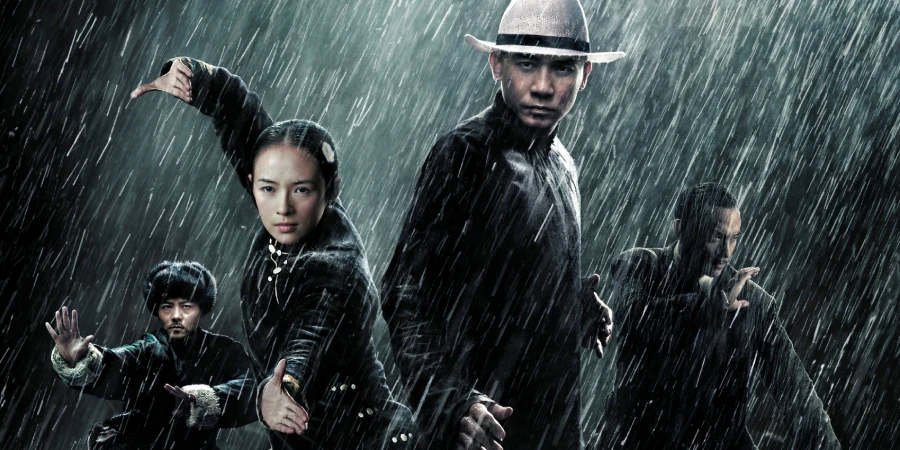

The Grandmaster is not a conventional kung fu movie. Directed by Wong Kar-wai, it blends martial arts, romance, philosophy, and history into a visually poetic experience. This is a film about legacy, loss, discipline, and time, told through fists, footsteps, rain, and silence.
Detailed Summary
Ip Man and the World of Southern Kung Fu
The story begins in 1930s Foshan, where Ip Man is already a respected Wing Chun master. He lives comfortably, practices daily, and believes that kung fu is not about dominance but self-cultivation and restraint. Early scenes establish his philosophy: true mastery lies in knowing when not to fight.
When Northern martial artists arrive to challenge the South, Ip Man is chosen to represent Foshan. This sets up the film’s central theme: tradition versus change.
Gong Yutian’s Retirement and the Choice of an Heir
Gong Yutian, the Grandmaster of the North, plans to retire and unify Northern and Southern kung fu schools symbolically. His daughter, Gong Er, opposes this decision. She believes her father’s legacy is being handed over too easily and challenges Ip Man in secret.
Their duel is not just physical. It is a battle of pride, unspoken attraction, and generational responsibility. Gong Er wins by exploiting a technical flaw, but this victory costs her dearly in ways that will only become clear later.
War, Exile, and the Shattering of Lives
The Japanese invasion of China changes everything. Foshan collapses. Ip Man loses his wealth, status, and security. Reduced to poverty, he eventually flees to Hong Kong, where he begins teaching Wing Chun not out of prestige, but survival.
This section emphasizes one of the film’s core ideas: kung fu cannot stop history.
Gong Er’s Tragic Path of Vengeance
After Gong Yutian is murdered by his former disciple Ma San, Gong Er dedicates her life to revenge. She defeats Ma San using her family’s secret technique, the 64 Hands, but in doing so, she breaks a sacred oath.
Her choice is devastating:
- She forfeits marriage
- She abandons teaching
- She destroys her own future
Unlike Ip Man, who adapts and survives, Gong Er chooses memory over life.
The Slow Passing of Time
Years pass quietly. Ip Man becomes a respected teacher in Hong Kong, unknowingly shaping the future of martial arts. Gong Er fades into obscurity, her health deteriorating, her legacy unpassed on.
Their paths cross one final time, not as fighters, but as people who understand what has been lost.
Movie Ending
Gong Er dies young, having never passed on her family’s martial art. Her final confession reveals the core tragedy of the film: she won every fight, yet lost her life. Her mastery became a dead end. Kung fu, without continuity, dies with the practitioner.
Ip Man, in contrast, survives. He teaches, adapts, and unknowingly ensures that Wing Chun spreads across the world. Yet survival does not mean victory. He lives with regret, knowing that what he shared with Gong Er was never fulfilled.
The film closes by reminding us that history remembers what survives, not what was sacrificed. Gong Er’s name fades. Ip Man’s legacy grows. Neither outcome is portrayed as triumphant.
This is not a heroic ending. It is a truthful one.
Are There Post-Credits Scenes?
No. The Grandmaster does not include post-credits or mid-credits scenes. The story ends definitively, in line with the film’s reflective tone.
Type of Movie
The Grandmaster is a martial arts drama infused with historical biography and romantic tragedy. Rather than focusing on competition or action alone, it uses kung fu as a language to explore identity, time, and personal cost.
Cast
- Tony Leung Chiu-wai – Ip Man
- Zhang Ziyi – Gong Er
- Chang Chen – The Razor
- Zhao Benshan – Ding Lianshan
- Song Hye-kyo – Cheung Wing-sing
Zhang Ziyi’s performance is especially notable, delivering quiet intensity and restrained sorrow.
Film Music and Composer
The score is composed by Shigeru Umebayashi and Nathaniel Méchaly. The music combines traditional Chinese instrumentation with minimalist orchestration, reinforcing the film’s themes of nostalgia and impermanence. Several pieces were later reused in other films due to their emotional impact.
Filming Locations and Their Importance
- Foshan, China – Represents tradition, stability, and cultural roots
- Hong Kong – Symbolizes survival, adaptation, and modernity
- Northeastern China (Manchuria) – Cold, harsh landscapes reflecting Gong Er’s emotional isolation
Rain, snow, and darkness are used deliberately, turning weather into a storytelling device.
Awards and Nominations
- Won 12 Hong Kong Film Awards, including Best Film and Best Director
- Zhang Ziyi won Best Actress at multiple Asian film festivals
- Nominated for Best Cinematography and Best Art Direction internationally
While not an Oscars contender, it is widely regarded as one of the most artistically respected martial arts films ever made.
Behind the Scenes Insights
- Wong Kar-wai spent over 10 years developing the script
- Actors trained in martial arts for up to three years
- Multiple versions of the film exist (Chinese cut, international cut)
- Rain scenes were shot repeatedly to achieve perfect visual rhythm
- Zhang Ziyi suffered physical exhaustion due to intense training
Inspirations and References
- Loosely based on the life of Ip Man, Bruce Lee’s teacher
- Inspired by traditional Chinese martial arts philosophy
- Influenced by classic wuxia literature and Wong Kar-wai’s own romantic cinema
This is not a factual biopic, but a poetic interpretation of history.
Alternate Endings and Deleted Scenes
Several subplots were shortened or removed, especially:
- Expanded backstory of Gong Er’s childhood
- Additional scenes of Ip Man’s early marriage
No radically different ending exists, but longer cuts offer more emotional context.
Book Adaptations and Differences
The film is not directly adapted from a single book, though it draws from historical records and oral accounts. Unlike traditional Ip Man biographies, the film prioritizes emotional truth over factual completeness.
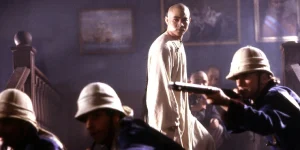
Memorable Scenes and Quotes
Key Scenes
- The rain-soaked opening fight in Foshan
- Gong Er and Ip Man’s candlelit duel
- Gong Er confronting Ma San in the snow
- Ip Man teaching in a small Hong Kong apartment
Iconic Quotes
- “Kung fu is about endurance.”
- “Life moves forward, but memory stays.”
- “Some doors, once closed, can never be opened again.”
Easter Eggs and Hidden Details
- The number of steps in certain fights mirrors Bagua principles
- Gong Er’s costumes subtly change color as her fate darkens
- Background martial artists represent real kung fu lineages
- Rain intensity matches emotional stakes scene by scene
Trivia
- The film uses real kung fu masters in minor roles
- Wong Kar-wai insisted on natural lighting for night scenes
- Tony Leung learned Wing Chun from Ip Man’s actual lineage
- Some scenes were shot over dozens of takes
Why Watch?
Watch this film if you want:
- A martial arts movie that respects silence as much as action
- A tragic love story without clichés
- Stunning cinematography that feels like moving poetry
- A deeper understanding of what legacy really costs
This is not fast food cinema. It is a slow, elegant meal.
Director’s Other Works
- In the Mood for Love (2000)
- Chungking Express (1994)
- 2046 (2004)
- Happy Together (1997)
- Ashes of Time (1994)
Recommended Films for Fans
- Ip Man (2008)
- Crouching Tiger, Hidden Dragon (2000)
- Hero (2002)
- House of Flying Daggers (2004)
- A Touch of Zen (1971)