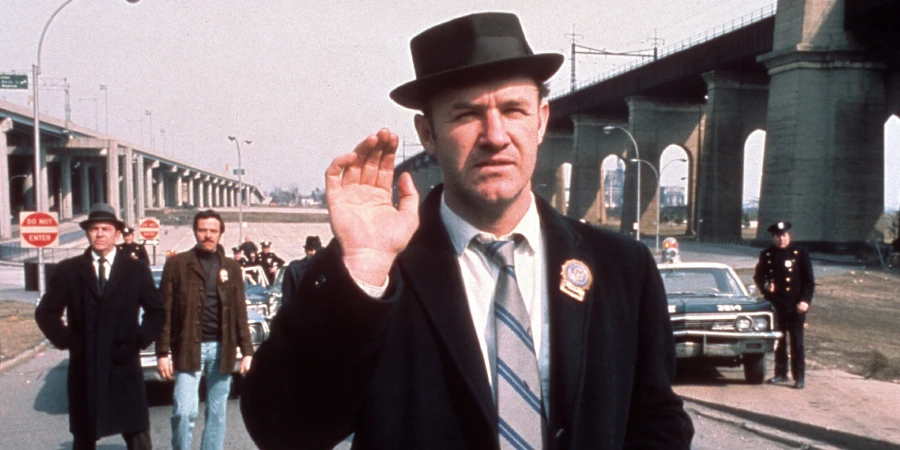
The French Connection is widely considered one of the most influential crime films ever made. Directed by William Friedkin and starring Gene Hackman, the film revolutionized the police thriller genre with its gritty realism, documentary-style camerawork, and one of the most famous car chases in cinema history.
The story is inspired by a real-life narcotics investigation that uncovered a massive heroin smuggling operation between New York City and Marseille, often referred to as the French Connection. The film went on to become a critical and commercial success and remains a cornerstone of 1970s American cinema.
Detailed Summary
The French Heroin Pipeline
The film opens in Marseille, where a wealthy French drug trafficker, Alain Charnier, oversees a massive shipment of heroin bound for the United States. The drugs are hidden inside a car and prepared for shipment to New York City.
From the very beginning, the movie establishes the scale of the drug operation. This is not street-level crime; it is an international trafficking network worth tens of millions of dollars.
Meet “Popeye” Doyle and Buddy Russo
In New York, two narcotics detectives are introduced:
- Jimmy “Popeye” Doyle
- Buddy “Cloudy” Russo
Doyle, played by Gene Hackman, is aggressive, obsessive, and morally ambiguous. Russo, played by Roy Scheider, is more level-headed but loyal to his partner.
While observing small-time criminals in a bar, they notice something unusual: a group of low-level crooks suddenly appear to have large amounts of money. This sparks Doyle’s suspicion and leads them toward a much larger operation.
Discovering the Smuggling Operation
Doyle and Russo begin surveillance on a suspect named Sal Boca. Following him leads them to Alain Charnier, a sophisticated French trafficker who appears to be orchestrating the heroin deal.
What follows is a long sequence of tense stakeouts and surveillance operations throughout New York. The detectives track movements, phone calls, and suspicious meetings, slowly piecing together the scale of the smuggling scheme.
This investigative approach was groundbreaking at the time. Instead of flashy action scenes, the movie focuses heavily on methodical police work and patient observation.
The Legendary Car Chase
One of the film’s most iconic moments occurs when Doyle attempts to capture Charnier’s hitman, Pierre Nicoli.
Nicoli hijacks an elevated subway train. Doyle jumps into a car and chases the train through the streets of Brooklyn.
The result is one of the most intense chase scenes ever filmed. Director William Friedkin shot the sequence largely without permits, using real city traffic. The raw danger is palpable as Doyle speeds through intersections and narrowly avoids collisions while trying to keep up with the train above.
Eventually Doyle shoots Nicoli on the train platform, killing him.
Closing in on the Heroin Shipment
The detectives finally locate the car used to smuggle the heroin into the country. However, when they dismantle the vehicle expecting to find the drugs, they come up empty-handed.
The heroin has been hidden so cleverly that even experienced detectives initially miss it. This discovery only fuels Doyle’s obsession to catch Charnier.
Eventually the drugs are discovered concealed inside the car’s rocker panel.
Movie Ending
The final act centers on a police operation designed to intercept the heroin deal and capture the traffickers.
Police replace the real drugs with fake packages and attempt to arrest everyone involved once the exchange takes place. The operation leads them to a warehouse where the suspects gather.
Inside the building, a tense cat-and-mouse chase unfolds through dark corridors and storage rooms. Doyle becomes increasingly reckless and obsessed with capturing Charnier.
During the chaos, Doyle hears a noise in the darkness and fires his gun.
The man he shoots is not Charnier.
It is his partner’s fellow detective, mistakenly killed during the confusion.
Meanwhile, Alain Charnier escapes.
The film ends abruptly and bleakly. Doyle continues chasing a shadowy figure into the darkness of the warehouse and fires again, but the outcome is never shown.
Afterward, title cards reveal what happened to the real individuals involved in the case:
- Several criminals received relatively short prison sentences.
- Many suspects disappeared.
- Alain Charnier was never captured.
The ending reinforces the film’s central theme: crime investigations are messy, morally ambiguous, and rarely deliver clean victories.
Are There Post-Credits Scenes?
No. The French Connection does not include a post-credits scene. Like most films from the early 1970s, the story concludes with the final text cards and does not continue after the credits.
Type of Movie
The French Connection is a crime thriller and police procedural that blends gritty realism with suspense. It emphasizes investigative work, moral ambiguity, and raw street-level policing rather than stylized action.
Cast
- Gene Hackman – Jimmy “Popeye” Doyle
- Roy Scheider – Buddy “Cloudy” Russo
- Fernando Rey – Alain Charnier
- Tony Lo Bianco – Sal Boca
- Marcel Bozzuffi – Pierre Nicoli
- Bill Hickman – Mulderig
Film Music and Composer
The film’s tense and minimalistic score was composed by Don Ellis. Instead of traditional orchestral melodies, Ellis used dissonant jazz elements and experimental sounds to enhance the gritty realism of the film.
The soundtrack plays a subtle role, often allowing ambient city noise to dominate scenes.
Filming Locations
The movie was filmed largely on location in New York City, which was essential to the film’s raw and authentic tone.
Important locations include:
- Brooklyn Elevated Subway Line – used during the famous car chase sequence
- Marseille – opening scenes of the smuggling operation
- Various streets and neighborhoods across New York, often filmed guerrilla-style without full permits
These real environments gave the film its documentary-like realism.
Awards and Nominations
The film was a major success at the 44th Academy Awards.
Wins:
- Best Picture
- Best Director – William Friedkin
- Best Actor – Gene Hackman
- Best Film Editing
- Best Adapted Screenplay
Nominations:
- Best Supporting Actor – Roy Scheider
- Best Cinematography
- Best Sound
Behind the Scenes Insights
- Director William Friedkin filmed the famous car chase without full city permits, using real traffic.
- Several near-accidents occurred during the chase scene.
- Fernando Rey was accidentally cast due to a casting mix-up, but Friedkin kept him after meeting him.
- Gene Hackman initially disliked his character, finding Doyle racist and unpleasant.
- The car chase driver Bill Hickman had previously worked on the famous chase scene in Bullitt.
Inspirations and References
The film is based on the non-fiction book The French Connection by Robin Moore.
It was inspired by the real-life investigation conducted by NYPD detectives Eddie Egan and Sonny Grosso, who uncovered a major heroin smuggling network in the 1960s.
Interestingly, both detectives appear briefly in the movie.
Alternate Endings and Deleted Scenes
The film largely kept its original bleak ending. However:
- Some longer surveillance scenes were trimmed to tighten pacing.
- Additional background about the criminal network was removed to maintain the film’s focus on Doyle.
Book Adaptations and Differences
Although the film is based on The French Connection, several differences exist:
- The movie focuses heavily on Doyle’s obsession, which is less emphasized in the book.
- Real investigations involved multiple agencies, but the film simplifies the story.
- The timeline of events was condensed for dramatic effect.
Memorable Scenes and Quotes
Key Scenes
- The Brooklyn elevated train car chase, widely regarded as one of the greatest action sequences ever filmed
- Doyle and Russo conducting long surveillance sequences across New York
- Doyle dismantling the smuggling car only to initially find nothing
- The chaotic warehouse shootout ending
Iconic Quotes
- “Do you pick your feet in Poughkeepsie?” — Jimmy “Popeye” Doyle
- “Never trust a man who wears a better suit than you.”
Easter Eggs and Hidden Details
- Real detective Eddie Egan plays Doyle’s supervisor in the film.
- Many background characters in New York scenes were unaware filming was happening.
- Several scenes used actual police officers instead of actors.
- The car used in the chase was a 1971 Pontiac LeMans, which became iconic after the film.
Trivia
- Gene Hackman almost turned down the role of Doyle.
- The film’s budget was about $1.8 million, but it earned over $50 million.
- The chase sequence influenced countless later films.
- Doyle’s character is intentionally flawed and often morally questionable.
Why Watch?
Because it fundamentally changed the crime genre.
Its gritty realism, morally ambiguous characters, and raw filmmaking style influenced decades of police thrillers. The film’s legendary chase scene, documentary-like tension, and powerful performance by Gene Hackman make it essential viewing for anyone interested in film history.
Director’s Other Works (Movies)
Films directed by William Friedkin:
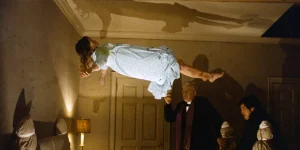
- The Exorcist (1973)
- Sorcerer (1977)
- Cruising (1980)
- To Live and Die in L.A. (1985)
- Bug (2006)
- Killer Joe (2011)
Recommended Films for Fans
If you enjoyed The French Connection, these films capture similar gritty crime storytelling: