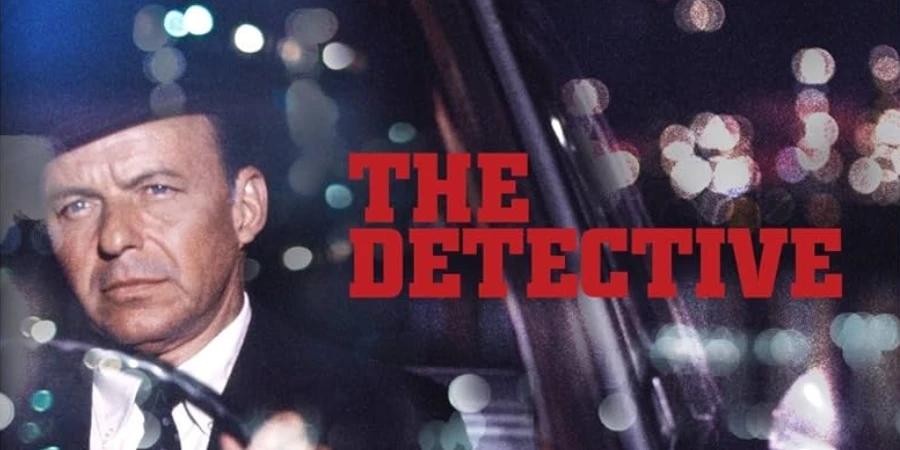

The Detective is a gritty crime drama starring Frank Sinatra and directed by Gordon Douglas. Released during a time when Hollywood was beginning to explore darker and more mature themes, the film tackles corruption, murder, sexuality, and moral ambiguity inside the police force. Adapted from a controversial novel, the film pushed boundaries for mainstream American cinema in the late 1960s.
Detailed Summary
The Murder Investigation Begins
New York detective Joe Leland (Frank Sinatra) is assigned to investigate the brutal murder of a wealthy, openly gay man named Colin MacIver. MacIver is found beaten and tortured in his apartment in what appears to be a crime fueled by hatred and rage.
The case quickly becomes politically sensitive. The victim’s sexuality attracts media attention, and pressure mounts on the police department to find the killer quickly.
During the investigation, Leland questions several suspects, including a mentally unstable young man named Felix Tesla. The interrogation becomes intense, and under extreme pressure, Tesla confesses to the crime.
The department quickly closes the case, declaring the murder solved.
But Leland is not convinced.
Doubts About the Confession
As time passes, Leland begins to suspect that Tesla’s confession may have been forced. Evidence doesn’t quite match the story. Small details in the crime scene contradict Tesla’s account.
Meanwhile, Leland’s personal life begins to unravel. His marriage to Karen is strained, and his obsessive commitment to the case isolates him emotionally.
The more he investigates, the more he realizes that the department may have rushed to judgment just to avoid scandal.
A Second Crime Changes Everything
A seemingly unrelated case appears: a wealthy real estate developer named Lawrence Sherman is murdered. Initially, it looks like a burglary gone wrong.
But Leland notices similarities between this crime and the MacIver murder.
Digging deeper, he discovers that Sherman had secret dealings, political connections, and enemies within powerful circles. The more he investigates, the more dangerous the truth becomes.
Corruption and Cover-Ups
Leland eventually uncovers a disturbing possibility: MacIver’s murder may have been connected to a larger conspiracy involving corruption, political pressure, and hidden relationships among powerful men.
His investigation reveals that the police department may have knowingly convicted the wrong man to close the embarrassing case quickly.
This realization places Leland in direct conflict with his own superiors.
Movie Ending
In the film’s final act, Leland pieces together the full truth.
Felix Tesla, the man who confessed to the MacIver murder, was innocent. His confession had been extracted under extreme pressure during interrogation. The police department preferred a quick resolution rather than an accurate one.
The real killer turns out to be Lawrence Sherman — the wealthy businessman who was later murdered himself.
Sherman had secretly been involved with MacIver and killed him during a violent confrontation fueled by shame, rage, and fear of exposure. Because MacIver was openly gay, Sherman feared that the relationship becoming public would destroy his reputation and career.
After killing MacIver, Sherman allowed the police to pin the crime on Tesla.
Later, Sherman himself was murdered by someone seeking revenge for his corrupt business practices.
By the time Leland uncovers the truth, Tesla has already committed suicide in prison, believing he had no hope left.
This revelation devastates Leland. The system he dedicated his life to protecting had destroyed an innocent man.
Leland writes a detailed report exposing the miscarriage of justice. His superiors pressure him to keep quiet and protect the department’s reputation.
Instead, he refuses to participate in the cover-up.
In the final scenes, Leland submits the truth in his report and leaves the station with a heavy conscience. The film ends on a somber note: justice may have been revealed, but it arrived far too late to save the innocent.
The ending reinforces the film’s central theme: institutions meant to deliver justice can sometimes fail catastrophically when pride and politics take precedence over truth.
Are There Post-Credits Scenes?
No. The Detective ends traditionally without any post-credits or mid-credits scenes. Once the final scene concludes, the credits roll and the story is complete.
Type of Movie
The film is primarily a crime drama and neo-noir police procedural. It blends detective investigation with social commentary, exploring moral dilemmas, institutional corruption, and personal guilt within the justice system.
Cast
- Frank Sinatra – Joe Leland
- Lee Remick – Karen Leland
- Ralph Meeker – Captain Wagner
- Jack Klugman – Dave Schoenstein
- Robert Duvall – Paul Sanderson
- Tony Musante – Felix Tesla
- William Windom – Lawrence Sherman
Notably, this film contains one of Robert Duvall’s early screen performances before he became a major Hollywood star.
Film Music and Composer
The score was composed by Jerry Goldsmith, one of the most respected film composers in Hollywood history.
Goldsmith’s music enhances the movie’s dark tone through tense orchestration and subtle suspense themes, helping build the atmosphere of urban anxiety and moral tension.

Filming Locations
The movie was filmed largely in New York City, which plays an essential role in the film’s atmosphere.
Key locations include:
- Manhattan streets and apartment buildings
- Police precinct interiors recreated on studio sets
- Urban nightlife locations reflecting the city’s gritty social landscape
Filming in New York added a sense of realism and authenticity to the detective story, reinforcing the film’s documentary-like police procedural style.
Awards and Nominations
Although controversial for its themes at the time, the film received some recognition:
- Edgar Allan Poe Award nomination (Best Motion Picture) from the Mystery Writers of America
- Praise from critics for Frank Sinatra’s dramatic performance
While it didn’t become a major awards winner, the film later gained appreciation for its bold storytelling.
Behind the Scenes Insights
- The movie is based on a controversial novel that dealt openly with homosexuality, which was still a taboo subject in Hollywood during the 1960s.
- Frank Sinatra reportedly considered Joe Leland one of his most serious acting roles.
- Several scenes originally written in the novel were toned down to satisfy studio censors.
- Director Gordon Douglas worked carefully to maintain the novel’s darker tone despite studio pressure.
- The film was shot during a transitional era in Hollywood when crime movies were becoming more psychologically complex.
Inspirations and References
The movie is based on the novel The Detective by Roderick Thorp.
Thorp’s novel was groundbreaking because it explored themes rarely addressed in crime fiction at the time, including:
- sexuality and social stigma
- police brutality
- corruption within law enforcement
- moral ambiguity in justice
Alternate Endings and Deleted Scenes
There are no widely documented alternate endings for the film.
However, several scenes were shortened or removed during editing, including:
- Extended interrogation sequences with Felix Tesla
- Additional scenes showing Leland’s failing marriage
- A longer version of the department’s internal debate about closing the case
These cuts were mainly done to keep the film’s pacing tight and to meet the studio’s runtime expectations.
Book Adaptations and Differences
While the movie follows the novel’s core investigation, several differences exist:
- The book portrays the police department as even more corrupt and politically manipulative.
- Some characters were simplified for the film adaptation.
- The novel includes more explicit discussions of sexuality and social hypocrisy.
- Leland’s personal struggles are explored more deeply in the book.
Despite these changes, the film retains the novel’s central message about the dangers of institutional injustice.
Memorable Scenes and Quotes
Key Scenes
- The brutal discovery of MacIver’s body, which sets the tone for the entire film.
- The intense interrogation of Felix Tesla, where the pressure to confess becomes disturbing.
- Leland’s quiet realization that Tesla may be innocent.
- The final confrontation where Leland exposes the truth behind Sherman and the cover-up.
Iconic Quotes
- “We’re supposed to protect people, not destroy them.” — Joe Leland
- “A confession doesn’t always mean the truth.”
- “Sometimes the system works… sometimes it just survives.”
Easter Eggs and Hidden Details
- The film subtly reflects 1960s social tensions around sexuality and civil rights.
- Some background newspaper headlines foreshadow the political scandal tied to Sherman.
- Sinatra’s character Joe Leland was originally written to be slightly older, closer to Sinatra’s real age.
- The film contains visual nods to classic noir cinematography through shadow-heavy lighting.
Trivia
- Frank Sinatra later returned to play Joe Leland in the sequel film The First Deadly Sin.
- The movie was considered very controversial at release due to its depiction of homosexuality.
- Robert Duvall filmed his scenes in only a few days.
- The story’s author Roderick Thorp would later write the novel that inspired Die Hard.
Why Watch?
The Detective is worth watching because it was ahead of its time. The film tackles themes of wrongful conviction, systemic corruption, and moral responsibility long before such topics became common in crime dramas.
Frank Sinatra delivers a surprisingly serious performance, portraying a detective struggling with the realization that the system he trusts might be fundamentally flawed.
If you enjoy thoughtful crime stories that go beyond simple whodunits, this film is a fascinating piece of late-1960s cinema.
Director’s Other Works (Movies)
Films directed by Gordon Douglas include:
- In Like Flint (1967)
- They Call Me Mister Tibbs! (1970)
- Rio Conchos (1964)
- Robin and the 7 Hoods (1964)
- Tony Rome (1967)
Recommended Films for Fans
If you enjoyed The Detective, you might also like: