
John Huston’s The Asphalt Jungle is one of the foundational films of the heist genre and a towering achievement of classic film noir. Adapted from W.R. Burnett’s novel, the film strips crime of glamour and replaces it with cold realism, moral decay, and human weakness. What makes it timeless is not the robbery itself, but the people behind it and the inevitability of their downfall.
Detailed Summary
The Mastermind Returns to the City
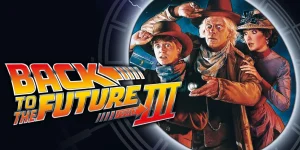
Recently released from prison, the brilliant criminal mind Doc Riedenschneider (Sam Jaffe) returns to the city with a carefully calculated plan: a jewel heist that he believes can be executed with precision and minimal risk. He needs money, backers, and a team.
Doc approaches shady lawyer Alonzo Emmerich (Louis Calhern), who agrees to finance the job, though secretly planning to betray everyone involved because he is drowning in debt.
Assembling the Crew
Doc recruits a group of specialists, each deeply flawed and human.
Dix Handley (Sterling Hayden), a tough but weary getaway driver who dreams of returning to his family’s Kentucky horse farm.
Gus Minissi (James Whitmore), a skilled but nervous safecracker.
Cobby (Marc Lawrence), the bookmaker who acts as middleman.
Each man joins for his own reason, and Huston carefully shows us their lives outside the crime, grounding them in reality.
The Heist
The jewel robbery itself is portrayed with meticulous, almost documentary-like precision. There is no music, no dramatization, just the quiet tension of professionals at work. The plan goes smoothly until a small accident: Gus is injured while cracking the safe.
This injury sets off a chain reaction that slowly unravels the entire operation.
Emmerich’s Betrayal
After the jewels are stolen, Emmerich reveals his true plan. Instead of paying the crew, he attempts to cheat them and keep the jewels. Dix senses something is wrong, and a confrontation erupts. The tension between criminals becomes more dangerous than the crime itself.
From this point, the story becomes less about the heist and more about inevitable collapse.


Movie Ending
Everything falls apart in tragic, methodical fashion. Emmerich’s lies are exposed, and facing financial ruin and public disgrace, he takes his own life. Gus is arrested while seeking medical help for his injury. Doc, who dreams only of enjoying life after one last job, is caught because he cannot resist lingering to watch a young girl dance, revealing his human weakness at the worst possible moment.
Dix, wounded during a shootout with the police, manages to escape the city with the stolen money. He drives toward his childhood dream: returning to the Kentucky horse farm he once knew. Severely injured and exhausted, he reaches the farm but collapses in a field as horses run freely around him. He dies quietly in the grass, finally home but too late to live the life he wanted.
The ending is hauntingly poetic. No one wins. No one escapes. The dream of “one last job” is exposed as a lie. Crime here is not thrilling; it is futile and tragic.
Are There Post-Credits Scenes?
No. As a classic film from 1950, The Asphalt Jungle ends definitively with no post-credits material.
Type of Movie
The Asphalt Jungle is a classic film noir crime drama that focuses on psychological realism, moral ambiguity, and the slow disintegration of a meticulously planned crime.
Cast
- Sterling Hayden as Dix Handley
- Louis Calhern as Alonzo Emmerich
- Sam Jaffe as Doc Riedenschneider
- James Whitmore as Gus Minissi
- Marc Lawrence as Cobby
- Jean Hagen as Doll Conovan
- Marilyn Monroe as Angela Phinlay (a small but memorable early role)
Film Music and Composer
The score was composed by Miklós Rózsa, whose tense, restrained music enhances the fatalistic mood rather than dramatizing the action.
Filming Locations
Although set in an unnamed Midwestern American city, the movie was largely shot in Los Angeles, using real urban streets at night to create an authentic, gritty atmosphere. These locations contribute significantly to the film’s documentary-like realism, making the city feel like a living, indifferent force surrounding the characters.
Awards and Nominations
- Academy Award nomination for Best Director (John Huston)
- Academy Award nomination for Best Adapted Screenplay
- Academy Award nomination for Best Supporting Actor (Sam Jaffe)
- Recognized by the Library of Congress for preservation in the National Film Registry
Behind the Scenes Insights
- John Huston insisted on a realistic portrayal of criminals as ordinary people, not caricatures.
- Marilyn Monroe’s brief role attracted significant attention and helped launch her career.
- The heist sequence influenced countless later crime films with its procedural style.
- Huston shot many scenes on real streets at night, uncommon for studio films of the era.
Inspirations and References
The film is based on the novel The Asphalt Jungle by W.R. Burnett, a writer known for gritty crime stories. The movie’s tone and structure heavily influenced later heist films like Rififi and Ocean’s Eleven.
Alternate Endings and Deleted Scenes
No major alternate ending is known, but several character moments were trimmed to keep the pacing tight. Early drafts reportedly contained more backstory for Dix’s rural past.
Book Adaptations and Differences
The film remains largely faithful to Burnett’s novel but simplifies certain character backgrounds and compresses subplots to maintain narrative focus.
Memorable Scenes and Quotes
Key Scenes
- The silent, methodical jewel heist sequence
- Emmerich’s tense confrontation with Dix
- Doc’s arrest while distracted by the dancer
- Dix dying in the Kentucky field among the horses
Iconic Quotes
- Doc: “Crime is only a left-handed form of human endeavor.”
- Dix: “All I want is a little place to call my own.”
Easter Eggs and Hidden Details
- Marilyn Monroe’s character has very little screen time yet leaves a lasting impression.
- The city is never named, adding to the film’s universal quality.
- Many background extras were real locals rather than actors.
Trivia
- The film is considered one of the first true “heist procedural” movies.
- Sterling Hayden’s performance became a blueprint for later noir anti-heroes.
- The film was controversial for its sympathetic portrayal of criminals.
Why Watch?
Because it shows crime without glamour and dreams without fulfillment. It is a masterclass in character-driven tension and the fatalism that defines great noir.
Director’s Other Works (Movies)
- The Maltese Falcon (1941)
- The Treasure of the Sierra Madre (1948)
- The African Queen (1951)
- The Misfits (1961)
- Fat City (1972)
Recommended Films for Fans
- Rififi (1955)
- The Killing (1956)
- Heat (1995)
- Thief (1981)
- Le Cercle Rouge (1970)