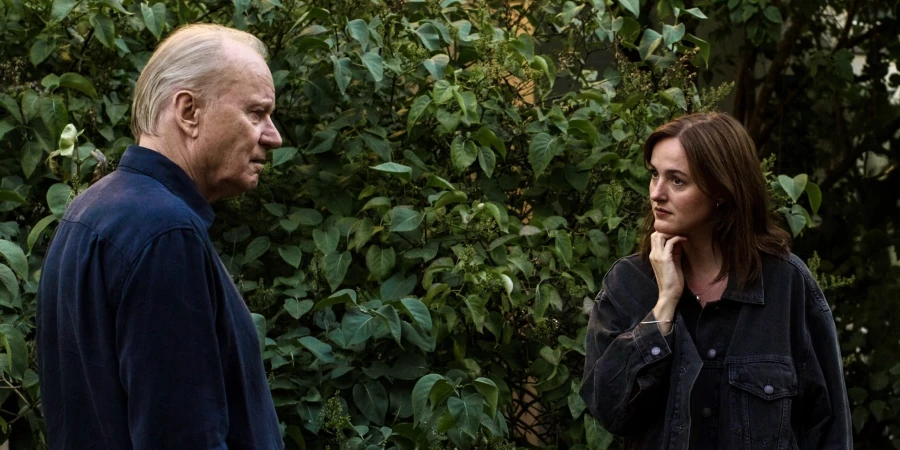

The film Sentimental Value might be the most intimate dissection of memory, art, and regret you’ll see this decade. It forces you into rooms of quiet torment where characters speak through half sentences and silence weighs heavier than any line of dialogue. Director Joachim Trier blends family melodrama with cinematic self‑reflection in a way that feels uncomfortably truthful. This movie doesn’t just ask questions — it lives inside them.
Detailed Summary
Gustav’s Return
The story begins with Gustav Borg, a once‑lauded filmmaker, returning to Oslo after his ex‑wife’s death. His daughters, Nora and Agnes, greet him with cold civility rather than warmth. Nora resents him most deeply, having built a successful stage career while he was absent. Agnes keeps her emotional distance, wedging her own quiet life between them.
The Script Offer
Gustav presents Nora with a script he has written about a mother’s life — a story that mirrors their family tragedy but focuses obliquely on their late mother. Nora refuses the part, convinced he’s weaponizing art to rewrite their past rather than truly engage with it. The refusal fractures their reunion further.
Rachel Kemp Enters
Frustrated and desperate, Gustav casts Rachel Kemp, a young American actress, as the lead in his film. Rachel cannot speak Norwegian and must rely on him as translator, which stirs jealousy in Nora and tension in Agnes. The presence of an outsider lays bare the fissures in the family.
Agnes’s Confrontation
Meanwhile, Agnes learns that Gustav cast her son in his film without asking her. She confronts Gustav about boundaries and consent, breaking her own pattern of avoidance. In the National Archives, Agnes unearths their grandmother’s wartime documents and Gustav’s early scripts, revealing the seemingly inherited trauma that has shaped their family’s behaviour.
Breaking Points and Revelations
Tensions peak when Rachel quits mid‑shoot and Gustav collapses drunk outside the ancestral home. Hospitalized and facing his own fragility, Gustav’s façade of control cracks. Nora learns that the script’s emotional core isn’t merely about loss — it mirrors his deep, unspoken longing to repair their relationship.


Movie Ending
In the final act, Gustav secures funding and convinces Nora to join the film. They relocate production from the family house to a modern soundstage. Nora’s climactic performance — opposite her on‑screen son — becomes a mirror of her real life: raw, unguarded, and aching with unresolved grief. As the camera pulls back, we realize the final scene was shot on a set, not in the ancestral home. That visual shift tells the audience that healing might be possible but remains a construct shaped by art, not reality.
The reconciliation between Gustav and Nora doesn’t land with a tidy embrace. Instead, it surfaces in small, quiet moments of recognition: shared eye contact, mutual understanding, and the hard knowledge that some wounds remain but can be seen without crumbling under their weight.
Are There Post‑Credits Scenes?
No. The credits roll over silence, leaving the emotional resolution to echo in your mind. The absence of any extra scene underscores that this is a film meant to live with you rather than hand you a coda.
Type of Movie
Sentimental Value is a dramatic family meditation with arthouse sensibilities. It blends introspective character study with meta‑commentary on filmmaking itself. The tone shifts from melancholic to tender, with moments of dark humour rooted in truth rather than levity.
Cast
- Renate Reinsve – Nora Borg
- Stellan Skarsgård – Gustav Borg
- Inga Ibsdotter Lilleaas – Agnes Borg
- Elle Fanning – Rachel Kemp
- Anders Danielsen Lie – Jakob
- Cory Michael Smith – Sam
Film Music and Composer
The score is composed by Hania Rani, whose minimalist arrangements underscore emotional beats without overwhelming them. Sparse piano motifs and ambient textures emphasize internal conflict, particularly in scenes of family confrontation and personal revelation. The soundtrack also features selections that reflect the characters’ inner worlds.


Filming Locations
The film was shot primarily in Oslo, Norway, grounding its narrative in the cold, quiet spaces of Nordic life. The Borg family home — on Thomas Heftyes gate in Oslo’s Frogner district — anchors the visual storytelling. Interiors were often filmed on soundstages to precisely control emotional framing, while select scenes use real Oslo streets and archives to reinforce the link between memory and place.
Awards and Nominations
Sentimental Value garnered widespread acclaim, including 76 wins and 216 nominations across festivals and critics awards. At the 98th Academy Awards, it won Best International Feature Film and received nods for Best Picture, Best Director, and four acting categories. It also won Best Film Not in the English Language at the BAFTAs.
Behind the Scenes Insights
- Director Joachim Trier co‑wrote the script with Eskil Vogt, continuing their long‑standing collaboration.
- The ancestral family home location was chosen for its metaphorical weight and previous ties to Trier’s earlier work.
- Several scenes were shot in real archival spaces in Oslo to mirror the film’s themes of memory.
- Elle Fanning reportedly learned basic Norwegian phrases to enhance authenticity.
Inspirations and References
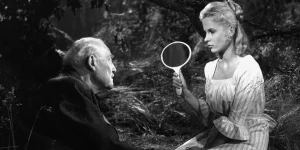
The film draws on themes of generational trauma found in European cinema giants like Bergman and Fellini, as well as Norwegian history and familial archives. It also nods to meta‑cinema where art and life blur, recalling aspects of 8½ and The Worst Person in the World.
Alternate Endings and Deleted Scenes
Early cuts reportedly included a version where Nora never agrees to act in her father’s film, forcing Gustav to complete it alone. Test audiences found this too bleak, leading to the more nuanced reconciliation we see in the final release.
Book Adaptations and Differences
Sentimental Value is not based on a book. Its narrative is an original screenplay by Trier and Vogt.



Memorable Scenes and Quotes
Key Scenes
- Nora’s refusal of her father’s script.
- Rachel’s awkward first day on set.
- Agnes’s visit to the National Archives.
- Gustav’s collapse outside the ancestral home.
Iconic Quotes
- “You can write a script about us, but can you face us?”
- “Film captures truth only when it hurts.”
- “Memory is the set we build to rehearse regret.”
Easter Eggs and Hidden Details
- The ancestral home appears in earlier Trier work.
- Gustav’s film mirrors Karin’s wartime records.
- Background artwork includes photos of Trier’s own family archives.
Trivia
- The film received a 15‑minute standing ovation at Cannes 2025.
- It became Norway’s first Oscar winner in Best International Feature.
- The movie’s pacing and depth drew comparisons to European arthouse classics on Reddit discussions.
Why Watch?
This is not a film that shouts; it whispers truths about love, failure, and forgiveness. Its emotional depth rewards patience, and its performances are searing in their honesty. Sentimental Value will stay with you long after the credits.
Director’s Other Movies
- The Worst Person in the World (2021)
- Oslo, August 31st (2011)
- Reprise (2006)
Recommended Films for Fans
- A Separation (2011)
- The Son’s Room (2001)
- Amour (2012)
- Manchester by the Sea (2016)