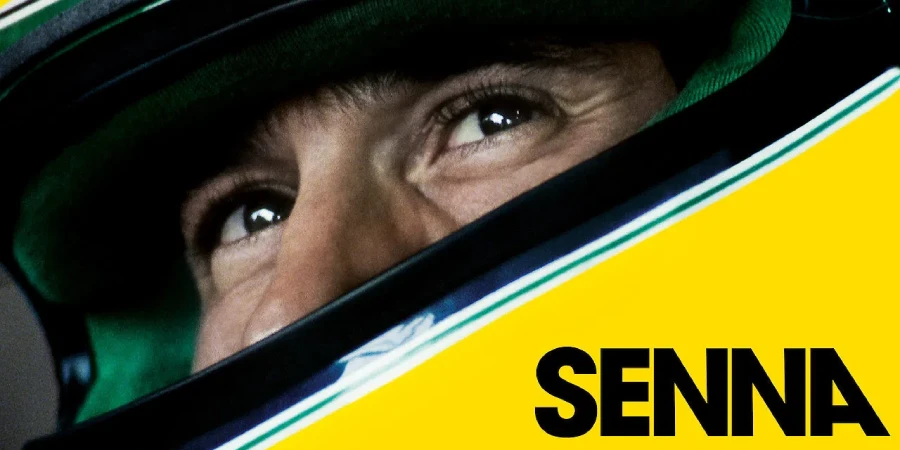

Senna (2010) is not simply a documentary about a racing driver. It is a cinematic tragedy constructed entirely from history’s own celluloid. Director Asif Kapadia crafts a narrative of breathtaking highs and devastating lows. Consequently, the film transforms archival footage into a deeply personal and mythic story about a man who transcended his sport.
Detailed Summary
The Early Years in Europe
The film opens with a young Ayrton Senna, a Brazilian prodigy who dominated the world of go-karting. He moves to England in the early 1980s to compete in Formula Ford. Despite incredible success, he struggles with homesickness, briefly returning to Brazil before his burning ambition pulls him back to Europe.
His natural talent is immediately obvious. He wins championships with an almost supernatural car control, especially in wet conditions.
A Star is Born in Formula One
Senna makes his Formula One debut in 1984 with the uncompetitive Toleman team. The Monaco Grand Prix that year becomes his coming-out party. In torrential rain, where others struggled, Senna masterfully carves through the field from 13th on the grid.
He was rapidly catching race leader Alain Prost when officials controversially stopped the race, denying Senna a certain victory. Nonetheless, his performance announced the arrival of a major new force in the sport.
The McLaren Years and the Prost Rivalry
In 1988, Senna joins the dominant McLaren team, partnering with reigning world champion Alain Prost. Initially, their relationship is one of mutual respect. However, their intense competitiveness soon fractures their partnership, creating one of the most legendary rivalries in sports history.
The rivalry comes to a head at the 1989 Japanese Grand Prix in Suzuka. To win the championship, Senna must win the race. He attempts a daring overtake on Prost, who turns in on him, causing a collision that takes both cars off the track.
Prost retires from the race, but Senna gets a push-start from the marshals, pits for repairs, and heroically rejoins to win. Subsequently, he is disqualified by FIA officials, led by Frenchman Jean-Marie Balestre, for cutting the chicane. The film strongly implies this was a political decision to hand the championship to fellow Frenchman Alain Prost.
The next year, 1990, the situation is reversed. Senna leads the championship heading into Suzuka. Prost, now driving for Ferrari, needs to beat Senna. At the first corner, Senna deliberately crashes into Prost, taking them both out and securing his second world title. It was a calculated act of revenge for the previous year’s events.
Final Glory and a Fateful Move
Senna secures his third and final world championship in 1991. Notably, he achieves a lifelong dream by finally winning his home race, the Brazilian Grand Prix, despite his car being stuck in sixth gear. He is so exhausted he has to be lifted from the cockpit.
By 1994, Prost has retired, and Senna moves to the powerhouse Williams team. However, new regulations banned the electronic driver aids that had made the Williams car so dominant. As a result, the new car is unstable and difficult to drive.
The Imola Tragedy
The film’s final act focuses on the San Marino Grand Prix at Imola in 1994. The weekend is plagued by horror from the beginning. Senna’s protégé, Rubens Barrichello, suffers a violent crash during practice but survives.
During qualifying on Saturday, Austrian driver Roland Ratzenberger is killed in a high-speed crash. Senna is deeply affected, and F1 doctor Sid Watkins advises him to quit racing and go fishing. Senna replies that he cannot quit.
On race day, Senna takes the lead. On the seventh lap, his car inexplicably veers off the track at the high-speed Tamburello corner and smashes into a concrete wall. Medical staff find an Austrian flag in his cockpit; he had planned to honor Ratzenberger after the race. Senna is airlifted to a hospital but is soon pronounced dead, sending shockwaves across the world.

Movie Ending
The ending of Senna transitions from the high-octane world of racing to a mood of profound national and global mourning. After depicting the harrowing crash at Imola, the film cuts to news reports from around the world announcing his death. The focus shifts entirely to the aftermath and Senna’s legacy.
We see his funeral in São Paulo, Brazil, where millions lined the streets. The Brazilian government declared three days of national mourning. Archival interviews with figures like Alain Prost show them visibly shaken, highlighting how the rivalry had been built on a deep, if complicated, respect.
The film closes not on the crash, but on footage of a smiling, youthful Senna during his karting days. This choice emphasizes the joyful spirit and pure love of racing that defined him, leaving the audience with an image of the man, not the tragedy.
Are There Post-Credits Scenes?
No, there are no post-credits scenes in Senna. The film presents a complete and self-contained narrative. Its emotional conclusion with Senna’s funeral and a final look at his early life serves as a definitive end.
Type of Movie
Senna is a biographical documentary. It uses archival footage exclusively to tell its story, eschewing modern interviews or narration for a more immersive, in-the-moment feel. The tone is thrilling and intense during the racing sequences but becomes deeply emotional, somber, and ultimately tragic as it chronicles the final chapter of Senna’s life.
Cast
As a documentary, the film features real-life individuals in archival footage and voiceovers.
- Ayrton Senna – Himself
- Alain Prost – Himself
- Ron Dennis – Himself (Team Principal, McLaren)
- Frank Williams – Himself (Team Principal, Williams)
- Jean-Marie Balestre – Himself (President, FIA)
- Sid Watkins – Himself (F1 Medical Delegate)
- Viviane Senna – Herself (Ayrton’s sister)
- Reginaldo Leme – Himself (Brazilian F1 commentator)
Film Music and Composer
The powerful score for Senna was composed by Brazilian musician Antonio Pinto. Pinto is known for his work on films like City of God (2002) and Lord of War (2005). His music brilliantly complements the documentary’s emotional arc.
The score blends orchestral and electronic elements, creating tension in the racing scenes and profound sadness in the film’s tragic final moments. It works in tandem with the roaring engines, becoming an essential part of the storytelling instead of just background noise.
Filming Locations
Being an archival documentary, Senna does not have traditional “filming locations.” Instead, it is a collage of footage from historic Formula One race tracks around the globe. Key locations that serve as settings for the story include:
- Autodromo Enzo e Dino Ferrari (Imola, Italy): The location of Senna’s fatal crash.
- Suzuka Circuit (Suzuka, Japan): The site of the infamous 1989 and 1990 championship-deciding collisions with Prost.
- Circuit de Monaco (Monte Carlo, Monaco): Where Senna first announced his genius in the 1984 rain-soaked race.
- Autódromo José Carlos Pace (Interlagos, Brazil): Senna’s home track, where he achieved his emotional first win in 1991.
Awards and Nominations
Senna was a critical triumph and received numerous accolades. The film won two BAFTA Awards: one for Best Documentary and another for Best Editing. It also won the World Cinema Audience Award in the documentary category at the Sundance Film Festival.
Behind the Scenes Insights
- Director Asif Kapadia made the groundbreaking decision to avoid traditional “talking head” interviews, relying solely on historical footage to keep the viewer immersed in the past. All commentary is from voiceovers recorded at the time or for the film.
- The production team was granted unprecedented access to decades of Formula One Management’s archives, much of which had never been seen by the public before.
- Alain Prost was initially hesitant but ultimately agreed to be interviewed for the film. His perspective adds crucial depth and nuance to the central rivalry.
- The filmmakers condensed over 15,000 hours of footage into a tight, 106-minute narrative focused on the human drama between Senna and Prost.
Inspirations and References
The film is a direct documentation of the life and career of Ayrton Senna da Silva, a real-life sporting icon. Its sole inspiration is his story. Kapadia and his team drew inspiration from dramatic narrative filmmaking, structuring the real-world events into a classic three-act story of a hero’s rise, his epic conflict with a rival, and his tragic fall.
Alternate Endings and Deleted Scenes
While no official “alternate ending” has been released, the director’s cut of the film is nearly an hour longer than the theatrical version. This extended cut includes more details about Senna’s personal life, his relationships, and his business dealings. It also features more interviews and provides greater context on the political battles within Formula One, offering a fuller, albeit less tightly paced, portrait of the man.
Book Adaptations and Differences
Senna is not based on a specific book. It is an original documentary work based on exhaustive research and a vast library of archival video footage. It draws from the historical record rather than adapting a pre-existing literary narrative.
Memorable Scenes and Quotes
Key Scenes
- Monaco 1984: A young Senna in an inferior Toleman car masterfully hunts down Alain Prost in the pouring rain, proving his extraordinary talent.
- Suzuka 1989: The infamous collision at the chicane where Prost turns in on Senna, leading to Senna’s win, disqualification, and a furious confrontation with officials.
- Brazil 1991: Senna struggles with a failing gearbox to win his home Grand Prix for the first time, screaming in a mix of pain and elation on the podium.
- The Final Lap: The chilling onboard footage from Senna’s car on his final lap at Imola, which cuts out moments before the fatal impact.
Iconic Quotes
- “If you no longer go for a gap that exists, you are no longer a racing driver.” – Senna, explaining his aggressive driving philosophy.
- “Being a racing driver means you are racing with other people. And if you no longer go for a gap that exists, you are no longer a racing driver because we are competing.” – Senna, in the heated driver’s briefing before the 1990 season finale.
- “I can’t quit. I have to go on.” – Senna to Sid Watkins, after the death of Roland Ratzenberger at Imola.
Easter Eggs and Hidden Details
- Austrian Flag: After Ratzenberger’s death, Senna obtained an Austrian flag which he intended to wave after winning the race at Imola. The flag was found in his cockpit after the crash, a poignant detail the film highlights.
- Prost’s Narration: Throughout the film, Prost’s voiceover often defends his actions. This gives the “antagonist” of the story a chance to present his side, adding a layer of complexity to their rivalry.
- Onboard Camera Evolution: The film subtly showcases the evolution of onboard camera technology, from the shaky, grainy footage of the 1980s to the more stable shots of the 1990s, mirroring his journey through the sport.
Trivia
- The film had two main versions: an international release and a Brazilian release. The latter features more commentary from Brazilian sports journalists who knew Senna personally.
- Director Asif Kapadia would later use the same archival-only documentary style for his acclaimed films Amy (2015), about Amy Winehouse, and Diego Maradona (2019).
- The Senna family was heavily involved in the film’s production, providing access to private home videos that show a more personal, off-track side of Ayrton.
Why Watch?
This film transcends the sports documentary genre. It is a powerful, gut-wrenching story about genius, faith, and mortality. You do not need to be a Formula One fan to be captivated by Senna’s journey and the intense human drama at its core.
Director’s Other Movies
- The Warrior (2001)
- Amy (2015)
- Diego Maradona (2019)
Recommended Films for Fans
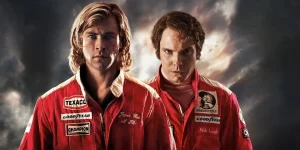
- Rush (2013)
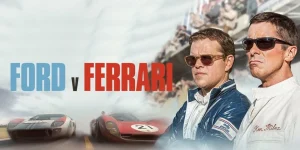
- Ford v Ferrari (2019)
- Schumacher (2021)
- Amy (2015)