
Saving Mr. Banks is a warm, emotionally layered drama that explores the often painful intersection between art, memory, and compromise. While it wears the friendly face of a Disney movie, underneath lies a deeply personal story about grief, control, and letting go.
Detailed Summary
The Call from Walt Disney
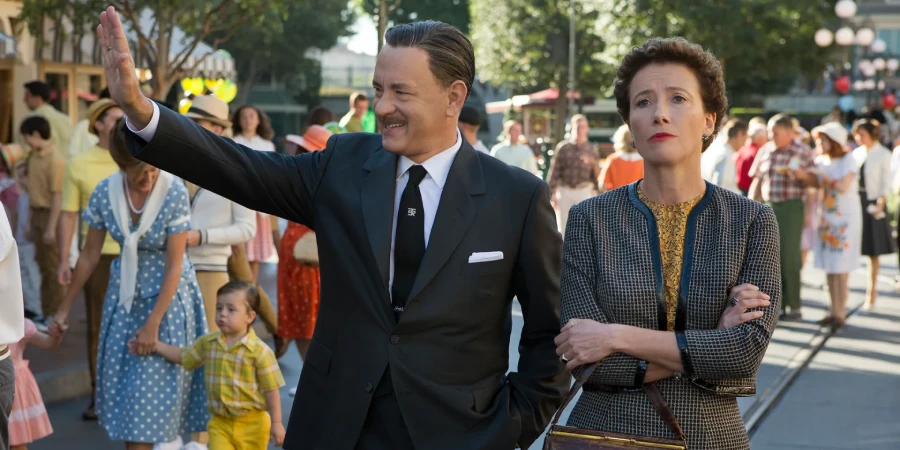
The story begins in the early 1960s when Walt Disney has been trying for nearly 20 years to convince author P. L. Travers to sell the film rights to her beloved book Mary Poppins. Travers finally agrees to travel from London to Los Angeles, but only to consider the proposal, not to approve it outright.
From the moment she arrives in Hollywood, it’s clear this will not be easy. Travers is rigid, sharp-tongued, and deeply distrustful of Disney’s cheerful optimism. Every detail matters to her, from accents to colors to words.
Clashing Worlds: Hollywood vs. Literary Purism
As Travers meets Disney’s songwriting duo Richard and Robert Sherman, along with screenwriter Don DaGradi, the creative clashes intensify. Travers despises musical numbers, animation, and sentimentality. Disney, on the other hand, believes stories should uplift and entertain families.
The screenplay meetings become battlegrounds, often humorous on the surface but emotionally tense underneath. Travers insists on absolute control, repeatedly threatening to leave and cancel the project entirely.
Flashbacks to Childhood Australia
Interwoven with the Hollywood story are flashbacks to Travers’ childhood in early 20th-century Australia. We see young Ginty (Pamela Travers) and her deeply loving but deeply flawed father, Travers Goff. He is charming, imaginative, and devoted to his daughter, but also an alcoholic whose addiction slowly destroys their family.
These scenes gradually reveal that Mary Poppins is not just a story to Travers, but a coping mechanism, a way to rewrite her own painful past and preserve her father’s dignity.
Walt Disney’s Emotional Insight
Walt Disney slowly begins to understand that this fight is not really about creative control. It’s about loss, shame, and unresolved grief. He shares his own childhood memories and explains that stories can help people heal, even if they change along the way.
This emotional breakthrough shifts the tone of the negotiations and allows Travers to confront her own memories rather than endlessly protect them.

Movie Ending
In the final act, Travers appears to return to London, seemingly having rejected Disney’s adaptation. Walt Disney, refusing to give up, travels to London to meet her personally. In an intimate and emotionally charged conversation, he gently but firmly addresses the heart of her resistance: her father.
Disney explains that the movie is not trying to mock or diminish him, but to forgive him. He reframes Mary Poppins not as a betrayal of Travers’ past, but as a gift to her younger self, one that allows the father figure to be redeemed rather than erased.
Travers finally agrees to the film, though she insists on retaining some creative input. The story concludes at the premiere of Mary Poppins in 1964. Travers watches the finished movie for the first time, visibly emotional. When she begins to cry during the screening, it’s ambiguous whether her tears are from pain, healing, or both. Walt Disney approaches her and asks if she enjoyed it. She doesn’t give a clear answer, but her reaction suggests that she has finally let go, even if it hurts.
The ending deliberately avoids a neat emotional resolution, emphasizing that healing is often incomplete, but still meaningful.
Are There Post-Credits Scenes?
No. Saving Mr. Banks does not include any post-credits or mid-credits scenes. The emotional weight of the ending is intended to stand on its own without additional material.
Type of Movie
Saving Mr. Banks is a biographical drama with strong elements of historical fiction. It blends real-life figures with dramatized events to explore emotional truth rather than strict historical accuracy.
Cast
- Emma Thompson as P. L. Travers
- Tom Hanks as Walt Disney
- Colin Farrell as Travers Goff
- Paul Giamatti as Ralph, the chauffeur
- Jason Schwartzman as Richard Sherman
- B. J. Novak as Robert Sherman
Film Music and Composer
The score was composed by Thomas Newman, whose subtle, emotionally restrained style perfectly complements the film’s reflective tone. He also weaves in musical motifs inspired by Mary Poppins without overwhelming the narrative.


Filming Locations
- Los Angeles, California – recreated 1960s Disney Studios and Hollywood
- Burbank, California – studio interiors and Disney offices
- Queensland, Australia – used to depict Travers’ childhood landscapes
These locations are essential because the film constantly contrasts sunlit optimism (Hollywood) with somber memory (Australia), visually reinforcing Travers’ inner conflict.
Awards and Nominations
- Academy Awards (2014):
- Best Actress (Emma Thompson) – Nominee
- Best Original Score – Nominee
- BAFTA Awards:
- Best Actress – Nominee
- Golden Globe Awards:
- Best Actress (Drama) – Nominee
While it didn’t win major awards, Emma Thompson’s performance is widely regarded as one of her finest.
Behind the Scenes Insights
- Emma Thompson spent months studying P. L. Travers’ recordings and letters to capture her speech patterns.
- Disney required the film to avoid showing Walt Disney smoking, despite historical accuracy.
- The Sherman Brothers consulted on the script, though some events were fictionalized for emotional impact.
- Colin Farrell described his role as one of the most emotionally draining of his career.
Inspirations and References
- The real-life collaboration between Walt Disney and P. L. Travers
- P. L. Travers’ book Mary Poppins
- Biographical accounts of the Sherman Brothers
- Classic Hollywood studio-era filmmaking
Alternate Endings and Deleted Scenes
No alternate ending has been released. Several deleted scenes reportedly expanded Travers’ childhood and her strained relationship with her mother, but they were removed to maintain pacing and narrative focus.
Book Adaptations and Differences
The film is not a direct adaptation of a single book, but rather a dramatized interpretation of real events. In reality, P. L. Travers was reportedly more critical of the final Mary Poppins film than the movie suggests. The screenplay softens her ultimate approval to create a more emotionally resonant arc.
Memorable Scenes and Quotes
Key Scenes
- Travers listening to the Sherman Brothers play “Let’s Go Fly a Kite”
- Walt Disney’s personal visit to London
- The Mary Poppins premiere scene
Iconic Quotes
- Walt Disney: “Sometimes a story can help you heal.”
- P. L. Travers: “I’m not sentimental.”
- Travers Goff: “Promise me you won’t ever stop believing.”
Easter Eggs and Hidden Details
- Subtle musical cues from Mary Poppins appear before they are officially written in the story.
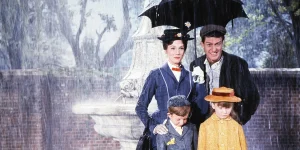
- The red color motif mirrors Mary Poppins’ iconic outfit.
- Walt Disney’s office decor matches archival photographs with near-exact precision.
Trivia
- P. L. Travers did not attend the real Mary Poppins premiere invitation-only screening happily.
- Emma Thompson and Tom Hanks had never starred together before this film.
- The title refers to Travers’ emotional need to “save” the memory of her father.
Why Watch?
If you enjoy films about creative struggle, emotional compromise, and the hidden cost of storytelling, this movie offers far more depth than its Disney branding suggests. It’s thoughtful, restrained, and quietly devastating in the best way.
Director’s Other Movies
- The Blind Side (2009)
- The Founder (2016)
- The Highwaymen (2019)
Recommended Films for Fans
- Finding Neverland (2004)
- Goodbye Christopher Robin (2017)
- Trumbo (2015)
- Capote (2005)