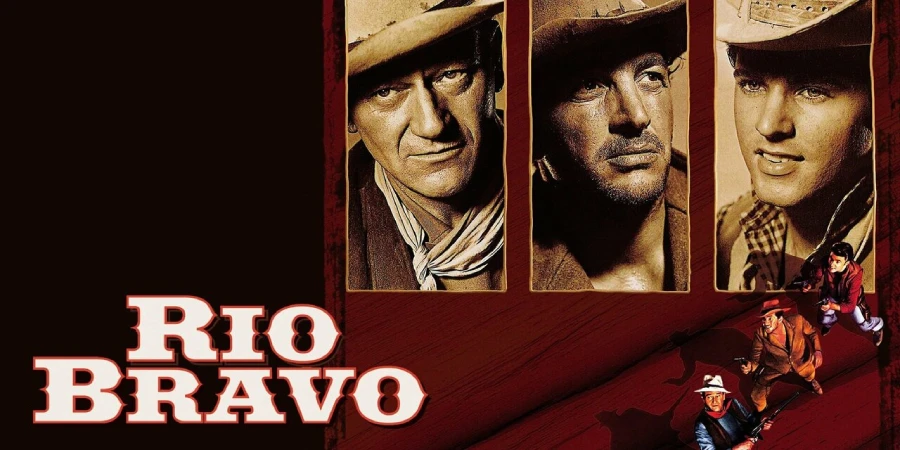

Howard Hawks’ Rio Bravo is often described as one of the most character-driven Westerns ever made. Rather than focusing on large-scale gunfights or sweeping frontier politics, the film zeroes in on loyalty, professionalism, and quiet courage. It’s a slow-burn classic that helped redefine the genre.
Detailed Summary
A Sheriff Who Refuses Help
Sheriff John T. Chance (John Wayne) arrests Joe Burdette, the brother of a powerful local rancher. From this moment on, Chance knows trouble is coming. Burdette’s men surround the town, waiting for a chance to break Joe out of jail. Chance makes one thing clear early on: he will not accept help from men who can’t pull their own weight.
The Redemption of Dude
“Dude” (Dean Martin) is a former deputy who has fallen into alcoholism. He’s mocked and humiliated in the opening scenes, but Chance still believes in him. When Dude finally stands up for himself and helps Chance, his redemption arc becomes the emotional backbone of the film. This is not just a Western about guns; it’s about self-respect.
Enter Colorado Ryan
Colorado Ryan (Ricky Nelson), a young and skilled gunfighter, arrives in town and quietly proves himself. Though Chance initially resists accepting his help, Colorado earns his place through competence rather than bravado. His presence represents the next generation of lawmen.
Feathers Disrupts the Routine
Feathers (Angie Dickinson) brings romantic tension and wit into the story. She challenges Chance emotionally, pushing against his stoic, duty-first worldview. Their verbal sparring adds warmth and humor to an otherwise tense siege narrative.
The Town Under Siege
As Burdette’s men tighten their grip on the town, the jail becomes a pressure cooker. The group—Chance, Dude, Colorado, and the elderly but sharp Stumpy—prepare for the inevitable showdown. Small moments, like guarding shifts and shared meals, emphasize professional trust over heroics.
Music as a Moment of Calm
In an unusual but memorable sequence, Dude and Colorado sing together in the jail. This scene slows the pace deliberately, reinforcing the idea that courage sometimes looks like simply holding your ground and waiting.

Movie Ending
The final act delivers a methodical, suspense-driven climax rather than a chaotic shootout. Joe Burdette is finally moved from the jail, triggering the ambush everyone has been expecting. Chance and his men are outnumbered, but not outmatched.
Burdette’s gang takes hostages, escalating the stakes. Instead of rushing in guns blazing, Chance stays calm and strategic. The conflict culminates in a decisive shootout using dynamite—a clever and controlled explosion of violence that contrasts with the film’s otherwise restrained tone.
Joe Burdette is killed, his gang neutralized, and order is restored. Dude fully reclaims his dignity and role as a deputy, no longer defined by his addiction. Chance, having proven he can balance duty with vulnerability, finally allows himself to embrace a future with Feathers. The ending is firm, satisfying, and emotionally earned, closing the story without ambiguity.
Are There Post-Credits Scenes?
No. Rio Bravo predates the concept of post-credits scenes. Once the film ends, the story is fully concluded with no additional material after the credits.
Type of Movie
Rio Bravo is a Western drama that emphasizes character dynamics, professionalism, and moral responsibility rather than constant action. Its deliberate pacing and dialogue-driven tension set it apart from more spectacle-heavy Westerns.
Cast
- John Wayne as John T. Chance
- Dean Martin as Dude
- Angie Dickinson as Feathers
- Ricky Nelson as Colorado Ryan
- Walter Brennan as Stumpy
- Claude Akins as Joe Burdette
Film Music and Composer
The score was composed by Dimitri Tiomkin, whose music subtly reinforces tension without overwhelming scenes. The inclusion of diegetic songs performed by Dean Martin and Ricky Nelson adds intimacy and character depth rather than functioning as traditional musical numbers.
Filming Locations
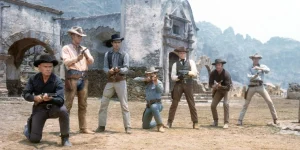
The film was shot primarily at Old Tucson Studios in Arizona, a location famous for classic Westerns. The controlled, almost claustrophobic town layout reinforces the siege atmosphere. The limited geography helps focus attention on character interactions rather than vast landscapes, which was a deliberate artistic choice.
Awards and Nominations
While Rio Bravo did not dominate major award ceremonies, it earned:
- An Academy Award nomination for Best Music (Scoring of a Dramatic or Comedy Picture)
Over time, its reputation has grown far beyond its initial awards recognition, and it is now widely regarded as a Western classic.
Behind the Scenes Insights
- Howard Hawks made Rio Bravo partly as a response to High Noon (1952), rejecting the idea of a lawman begging townspeople for help.
- John Wayne strongly supported the film’s theme of professional self-reliance.
- Dean Martin was reportedly highly professional on set despite playing an alcoholic.
- The jailhouse singing scene was controversial at the time but later became iconic.
Inspirations and References
- The film was inspired by Hawks’ belief in competence-driven heroism.
- It was a thematic rebuttal to High Noon (1952).
- Later films like Assault on Precinct 13 openly borrowed its “siege” structure.
Alternate Endings and Deleted Scenes
No confirmed alternate endings exist. Hawks was known for meticulous planning, and Rio Bravo was released largely as intended. Some minor character moments were trimmed, but none significantly altered the narrative or ending.
Book Adaptations and Differences
Rio Bravo was based on a short story by B.H. McCampbell, but the film expands significantly on character development, particularly Dude and Feathers. The movie’s emotional depth far exceeds the source material.
Memorable Scenes and Quotes
Key Scenes
- Dude standing up to his tormentors in the saloon
- The jailhouse singing sequence
- The final dynamite-based showdown
Iconic Quotes
- “I don’t want help from anybody that doesn’t know how to use a gun.”
- “A man ought to do what he thinks is right.”
Easter Eggs and Hidden Details
- Howard Hawks reused character archetypes from earlier films like Only Angels Have Wings.
- The jail layout mirrors Hawks’ preference for enclosed, pressure-filled spaces.
- Ward Bond, a frequent John Wayne collaborator, appears uncredited.
Trivia
- The film runs over two hours, unusually long for a Western of its era.
- Ricky Nelson’s casting was controversial but helped attract younger audiences.
- Quentin Tarantino has cited Rio Bravo as a personal favorite.
Why Watch?
Because Rio Bravo proves that tension doesn’t require constant action. It’s a masterclass in character, dialogue, and moral clarity. If you enjoy Westerns that value professionalism, loyalty, and earned heroism, this film is essential viewing.
Director’s Other Works (Movies)
- Red River (1948)
- The Big Sleep (1946)
- Gentlemen Prefer Blondes (1953)
- El Dorado (1966)
- Only Angels Have Wings (1939)