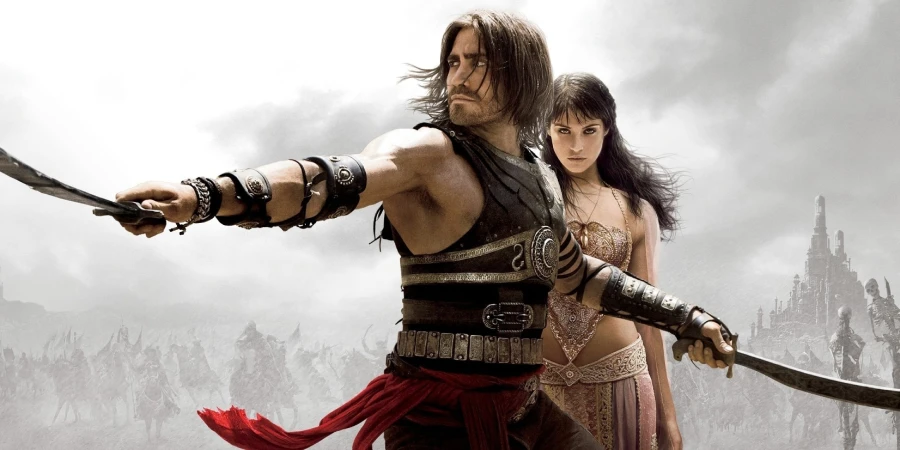

Prince of Persia: The Sands of Time is Disney’s big-budget fantasy-action adaptation of the beloved video game series by Ubisoft. Directed by Mike Newell, the film mixes epic battles, mystical lore, time manipulation, and a classic adventure-romance formula.
Detailed Summary
Origins of the Prince
The film opens in ancient Persia, where Dastan, a street orphan, impresses King Sharaman with his courage and integrity. The king adopts him, raising him alongside his biological sons, Tus and Garsiv. This backstory establishes Dastan as a prince by character, not by blood, a key theme that runs throughout the story.
The Siege of Alamut
Years later, Persia launches an attack on the holy city of Alamut, accused of supplying weapons to enemies of the empire. Dastan leads a daring assault and captures a mysterious dagger, unknowingly binding himself to an ancient artifact capable of controlling time.
Inside Alamut, Dastan encounters Princess Tamina, guardian of the dagger and sworn protector of its secret. She immediately recognizes the danger the artifact represents.
Betrayal and Flight
During a celebratory feast after the victory, King Sharaman is assassinated. Evidence is planted to frame Dastan, forcing him to flee with Tamina. The brothers, especially Tus, believe Dastan to be guilty, turning him into a fugitive.
This portion of the film shifts into a chase-driven adventure, blending sword fights, parkour-style escapes, and growing tension between Dastan and Tamina.
The Sands of Time Revealed
Tamina explains that the dagger controls the Sands of Time, allowing the user to rewind brief moments of reality. However, releasing all the sands would destroy the world, resetting time back to creation itself.
As Dastan experiments with the dagger, he begins to understand both its power and its temptation. Their relationship evolves from distrust to mutual respect, and eventually, romance.
The True Villain Emerges
The real mastermind behind the assassination is revealed to be Nizam, Dastan’s uncle. Motivated by resentment and ambition, Nizam plans to unleash the Sands of Time to travel back to the moment before his brother’s birth, ensuring his own rise to power.


Movie Ending
In the final act, Nizam successfully gains control of the dagger and attempts to release the Sands of Time at the sacred temple. Dastan confronts him, but events spiral toward catastrophe.
Dastan makes the ultimate decision: he activates the dagger one last time, traveling back to the moment before King Sharaman’s assassination. Armed with knowledge of future events, he exposes Nizam’s treachery before the murder can occur.
Nizam is arrested, the attack on Alamut is revealed to be based on false pretenses, and the timeline is effectively reset. Importantly, Tamina remembers nothing of their shared journey, though subtle hints suggest a deeper connection remains.
The film ends with Dastan returning the dagger to Tamina, choosing trust over power. Their relationship is reborn, this time without tragedy hanging over it, and the Sands of Time remain sealed—safe, but never forgotten.
Are There Post-Credits Scenes?
No. Prince of Persia: The Sands of Time does not feature any mid-credits or post-credits scenes. The story concludes definitively within the main runtime, with no sequel teases.
Type of Movie
Prince of Persia: The Sands of Time is a fantasy action-adventure film that blends sword-and-sandal spectacle with magical mythology and light romance, designed for broad blockbuster appeal.
Cast
- Jake Gyllenhaal as Dastan
- Gemma Arterton as Princess Tamina
- Ben Kingsley as Nizam
- Toby Kebbell as Garsiv
- Richard Coyle as Tus
- Alfred Molina as Sheik Amar
Film Music and Composer
The score was composed by Harry Gregson-Williams, known for epic, rhythmic soundtracks. His music combines Middle Eastern motifs with modern orchestral energy, enhancing both the action and the mythic atmosphere.


Filming Locations
- Pinewood Studios (UK) – Primary studio work and interior palace scenes
- Morocco – Desert landscapes and city exteriors
- Iranian-inspired sets – Designed to reflect Persian architecture authentically
These locations give the film its sweeping, sun-drenched aesthetic and reinforce the epic scale of the Persian Empire.
Awards and Nominations
- Nominated for Teen Choice Awards (Action Adventure category)
- Recognized for visual effects and production design in technical circles
While not a major awards contender, the film was praised for its scale and craftsmanship.
Behind the Scenes Insights
- Jake Gyllenhaal trained extensively in parkour, sword fighting, and acrobatics
- Over 7,000 costumes were created for the production
- Ben Kingsley described Nizam as “a villain who believes he is the hero”
- Ubisoft worked closely with Disney to preserve core elements from the game
Inspirations and References
- Based on Prince of Persia: The Sands of Time (2003) video game
- Inspired by Persian mythology and classic adventure films like Indiana Jones
- The dagger design closely mirrors its video game counterpart
Alternate Endings and Deleted Scenes
- Early drafts featured a darker ending, where the dagger would be destroyed permanently
- Several character-building scenes involving Dastan’s brothers were removed for pacing
- An extended romance arc between Dastan and Tamina was trimmed in the final cut
Book Adaptations and Differences
The film loosely adapts the video game rather than a novel. Major differences include:
- Dastan is an original character (not the game’s prince)
- Tamina replaces Farah from the game
- The tone is more family-friendly and less tragic than the source material

Memorable Scenes and Quotes
Key Scenes
- The wall-scaling assault on Alamut
- First use of the dagger to reverse time
- The sandstorm temple finale
Iconic Quotes
- “Even when destiny is written, it can be changed.”
- “You cannot outrun your fate.”
- “What you seek is not power, but forgiveness.”
Easter Eggs and Hidden Details
- The dagger’s mechanics mirror gameplay rewind animations
- Architecture references real Persian ruins
- The Sands’ glow matches the game’s visual effects color palette
Trivia
- This was Disney’s most expensive film at the time
- Jake Gyllenhaal performed many of his own stunts
- The film was intended as the start of a franchise
Why Watch?
If you enjoy epic fantasy adventures, charismatic leads, and time-manipulation stories, this film offers a fast-paced, visually rich experience that doesn’t take itself too seriously while still delivering emotional stakes.
Director’s Other Works (Movies)
- Harry Potter and the Goblet of Fire (2005)
- Donnie Brasco (1997)
- Four Weddings and a Funeral (1994)
- Mona Lisa Smile (2003)