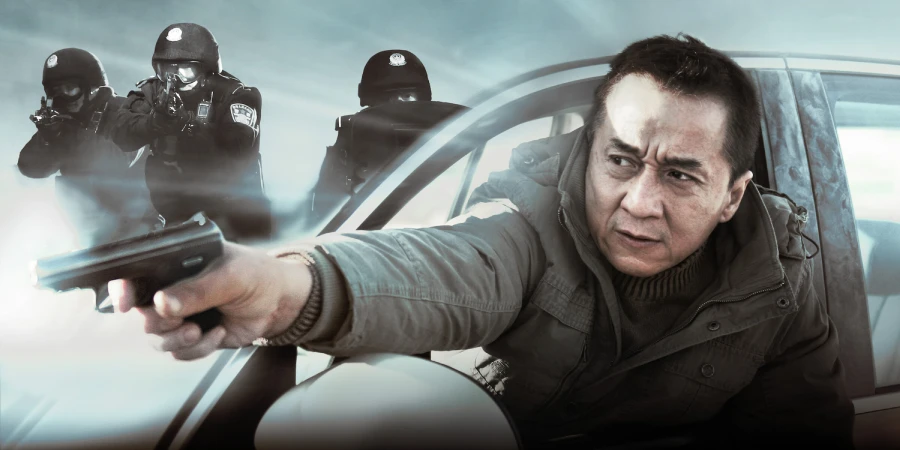

Police Story: Lockdown (also known as Police Story 2013) is a darker, more dramatic reboot of the legendary Police Story franchise. Unlike the earlier, stunt-heavy and often comedic entries, this film leans into psychological tension, moral ambiguity, and emotional weight, offering a more mature Jackie Chan performance.
Detailed Summary
A Broken Cop Returns
The film centers on Zhong Wen, a veteran police officer estranged from both his profession and his daughter, Miao Miao. He is no longer the confident, smiling hero audiences are used to; instead, he is tired, guilt-ridden, and emotionally distant. His attempt to reconnect with his daughter becomes the emotional backbone of the story.
The Invitation to the Bar
Zhong Wen reluctantly agrees to meet Miao Miao at a bar called Wu Bar, owned by her boyfriend Wu Jiang. From the moment Zhong Wen enters the bar, the atmosphere feels wrong. The bar is isolated, the guests are eccentric, and tension quietly simmers beneath polite conversations.
The Hostage Situation Unfolds
The evening quickly turns into a nightmare when Wu Jiang reveals his true intentions. He locks the bar down and takes everyone hostage, including Zhong Wen. The police surround the building, and Zhong Wen finds himself trapped inside, powerless and stripped of his authority.
Psychological Warfare
Rather than immediate violence, Wu Jiang engages in psychological manipulation. Through conversations, flashbacks, and confrontations, it becomes clear that Wu Jiang has a deeply personal vendetta against the police. Zhong Wen is forced to relive past cases, moral compromises, and the emotional neglect of his daughter.
Truths Revealed
As the standoff continues, the film slowly exposes Wu Jiang’s past and the tragic incident that shaped his hatred for law enforcement. Zhong Wen realizes that he is not just a hostage, but a symbol of everything Wu Jiang despises.
Movie Ending
In the final act, Wu Jiang forces Zhong Wen to confront the consequences of his past actions as a police officer. It is revealed that Wu Jiang’s fiancée died during a previous police operation led by Zhong Wen. Although Zhong Wen followed protocol, the emotional cost of that decision destroyed Wu Jiang’s life.
Wu Jiang orchestrated the hostage situation not simply for revenge, but to make Zhong Wen feel helpless, just as he once did. As tensions escalate, Wu Jiang prepares to provoke the police into storming the bar, hoping to die and expose what he sees as the police system’s moral emptiness.
In a critical moment, Zhong Wen chooses empathy over force. He openly accepts responsibility—not legally, but emotionally—for the pain caused. This human connection destabilizes Wu Jiang’s resolve. The situation ends without a triumphant victory: Wu Jiang is arrested alive, emotionally broken rather than defeated.
The film closes with Zhong Wen reconciling with his daughter. There is no celebratory tone—only quiet reflection. Zhong Wen remains a police officer, but now deeply aware that justice is not always clean, heroic, or emotionally painless.
Are There Post-Credits Scenes?
No. Police Story: Lockdown does not include any mid-credits or post-credits scenes. The story ends definitively with its final emotional beat.
Type of Movie
Police Story: Lockdown is a crime thriller and action drama that prioritizes psychological tension and emotional conflict over traditional martial arts spectacle.
Cast
- Jackie Chan as Zhong Wen
- Liu Ye as Wu Jiang
- Jing Tian as Miao Miao
- Huang Bo as Detective Li
- Yu Rongguang as Police Chief
Film Music and Composer
The score was composed by Loudboy, whose music emphasizes suspense and melancholy rather than heroic motifs. The restrained soundtrack reinforces the film’s somber tone and emotional gravity.

Filming Locations
The film was primarily shot in Beijing, China, with the majority of the story unfolding inside the bar set.
The confined setting is crucial:
- It heightens claustrophobia and tension
- It reinforces the feeling of entrapment
- It allows the story to focus on character psychology rather than spectacle
Awards and Nominations
- Nominated for Best Actor (Jackie Chan) at several Asian film award ceremonies
- Praised for its tonal shift and mature storytelling, though it received mixed responses from long-time franchise fans
Behind the Scenes Insights
- Jackie Chan intentionally avoided elaborate stunts to reflect Zhong Wen’s age and emotional state
- The director aimed to make a “Police Story for adults”
- Many scenes were rehearsed like stage plays due to the limited setting
- Jackie Chan described this role as one of his most emotionally exhausting performances
Inspirations and References
- Inspired by modern hostage thrillers rather than classic Hong Kong action films
- Draws thematic influence from films like Dog Day Afternoon and Inside Man
- Reflects real-world debates about police accountability and moral responsibility
Alternate Endings and Deleted Scenes
- An alternate ending reportedly involved Wu Jiang dying during the standoff, but it was scrapped to preserve the film’s message about empathy over violence
- Several action-heavy sequences were removed to maintain realism and pacing
Book Adaptations and Differences
This film is not based on a book. It is an original story loosely connected to the Police Story franchise, sharing only the thematic identity of law enforcement rather than narrative continuity.
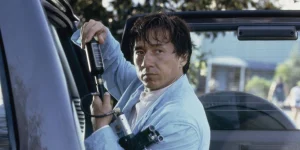

Memorable Scenes and Quotes
Key Scenes
- The slow reveal of Wu Jiang locking down the bar
- Zhong Wen silently watching old police footage of himself
- The final emotional confrontation between Zhong Wen and Wu Jiang
Iconic Quotes
- “Being right doesn’t mean you’re not guilty.”
- “You took my future, even if you followed the rules.”
Easter Eggs and Hidden Details
- Subtle visual callbacks to earlier Police Story films in police badges and dialogue
- Zhong Wen’s badge number references Jackie Chan’s debut year
- Background news reports hint at other unresolved police incidents
Trivia
- This is one of the few Jackie Chan films where he does not perform a major fight scene
- The bar set was fully constructed and redesigned multiple times during shooting
- Jackie Chan also served as a producer on the film
Why Watch?
If you want to see Jackie Chan in a serious, dramatic role that challenges his heroic image, this film is essential viewing. It offers emotional depth, moral complexity, and restrained tension rather than nostalgia-driven action.
Director’s Other Works (Movies)
- Backkom Bear: Mars Mission (2023)
- China Salesman (2017)
- Little Big Soldier (2010)
Recommended Films for Fans
- The Foreigner (2017)
- New Police Story (2004)
- Infernal Affairs (2002)
- Drug War (2012)
- Inside Man (2006)