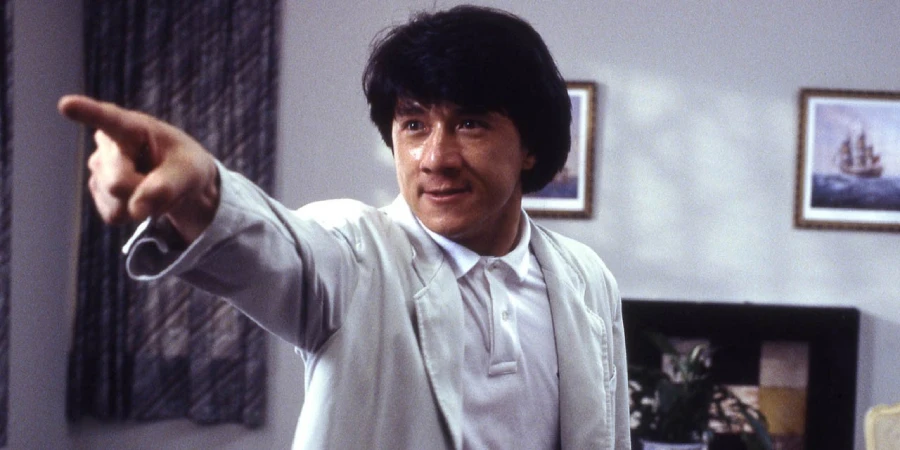

Police Story 2 is the direct sequel to Jackie Chan’s groundbreaking action hit Police Story (1985). Released in 1988 and again directed by Jackie Chan himself, the film doubles down on outrageous stunts, bone-crunching action, and slapstick comedy, while also expanding the emotional and professional consequences of being Hong Kong’s most unlucky cop.
This time, the chaos isn’t just on the streets — it follows Inspector Chan Ka-Kui everywhere, including his personal life.
Detailed Summary
Aftermath of the First Film: A Cop Nobody Wants
The movie opens by showing the consequences of Ka-Kui’s actions in the first film. Although he stopped a major crime lord, the massive property damage he caused turns him into a liability within the police force. As punishment, he is reassigned from high-profile police work to a boring desk job in traffic duty.
This demotion immediately sets the tone: Ka-Kui is still a hero, but bureaucracy and politics are now his biggest enemies.
Bomb Threats and Rising Tensions
A series of mysterious bombings begins to plague Hong Kong. A criminal mastermind demands money from the police, threatening further explosions if his demands are not met. Although officially sidelined, Ka-Kui can’t ignore the danger and starts investigating on his own.
At the same time, his relationship with May (Maggie Cheung) deteriorates further. His inability to balance duty and love becomes a recurring emotional thread, adding depth to the otherwise explosive narrative.
The Return of Old Enemies
Things get worse when Cho, a criminal from the first film, is released from prison and immediately seeks revenge against Ka-Kui. This creates a dual threat: bomb terrorists on one side and a personal vendetta on the other.
Ka-Kui is caught between internal police politics, criminal retaliation, and public pressure, making him more isolated than ever.
Escalation Toward Chaos
As bombings intensify, Ka-Kui uncovers clues pointing toward a construction-company-based terrorist group using fear as leverage. The investigation leads to increasingly dangerous confrontations, including some of the film’s most famous large-scale action sequences.
Despite being ordered to stay away, Ka-Kui pushes forward, driven by guilt, duty, and sheer stubbornness.
Movie Ending
The film’s final act takes place at a massive construction site, which becomes the setting for one of Jackie Chan’s most ambitious and dangerous climaxes. Ka-Kui confronts the mastermind behind the bombings, who plans to escape after collecting ransom money from the police.
The situation spirals out of control as bombs are armed and civilians are placed in immediate danger. Ka-Kui engages in a brutal, extended fight across scaffolding, concrete structures, and heavy machinery, risking fatal falls at every turn.
In the most iconic moment, Ka-Kui slides down a massive hanging cable from the top of the building, crashing through multiple glass structures before landing on the ground — a stunt Jackie Chan performed himself and one that nearly resulted in serious injury.
The villain is ultimately defeated and arrested, the bombs are disarmed, and the immediate threat is neutralized. However, the ending is not purely triumphant. Ka-Kui’s career remains uncertain, and the film emphasizes that heroism comes at a personal cost. His relationship with May is left strained but hopeful, suggesting growth rather than a fairy-tale resolution.
The ending reinforces the series’ central idea: justice is messy, painful, and rarely rewarded.
Are There Post-Credits Scenes?
No, Police Story 2 does not include a post-credits scene. However, like many Jackie Chan films, the end credits feature outtakes and stunt bloopers, showcasing failed takes, injuries, and behind-the-scenes moments. These sequences are practically a tradition and serve as both entertainment and proof of the film’s real physical risks.
Type of Movie
Police Story 2 is an action-comedy martial arts film that blends high-impact stunt-driven action with slapstick humor, grounded police drama, and social commentary about bureaucracy and responsibility.
Cast
- Jackie Chan as Inspector Chan Ka-Kui
- Maggie Cheung as May
- Teddy Robin Kwan as Superintendent
- Bill Tung as Uncle Bill
- Chor Yuen as the main antagonist
Film Music and Composer
The score was composed by Michael Lai, whose music supports both the comedic timing and the escalating tension of the action scenes. The soundtrack leans heavily into rhythmic cues that emphasize motion, danger, and chaos rather than emotional melodrama.

Filming Locations
The movie was filmed extensively in Hong Kong, using real urban locations, streets, and construction sites.
These locations are crucial because:
- They allow practical stunts instead of studio tricks
- They give the action a gritty, authentic feel
- The construction site finale visually represents a city constantly rebuilding itself — much like Ka-Kui’s career
Awards and Nominations
While Police Story 2 did not receive major international awards, it was widely praised in Hong Kong for its stunt work and action choreography. Over time, it has gained cult and critical recognition as a milestone in physical action cinema.
Behind the Scenes Insights
- Jackie Chan suffered multiple injuries during filming, including near-misses that could have been fatal
- The final cable-slide stunt was performed without safety wires
- Many explosions were done practically, with minimal special effects
- Chan directed while starring, often reworking scenes on set for better timing
Inspirations and References
The film continues the tradition of Buster Keaton-style physical comedy, mixed with Bruce Lee’s intensity and Hong Kong police dramas of the 1980s. Jackie Chan has often cited silent-era comedians as a major influence on the Police Story series.
Alternate Endings and Deleted Scenes
Some shorter character-focused scenes involving May were reportedly trimmed to improve pacing. No fully alternate ending was filmed, but several extended fight beats were shortened for theatrical release.
Book Adaptations and Differences
Police Story 2 is not based on a book or novel. It is an original screenplay, developed directly from the success of the first film.
Memorable Scenes and Quotes
Key Scenes
- The opening traffic police sequence showing Ka-Kui’s humiliation
- The first bomb detonation and public panic
- The construction site finale with the cable-slide stunt
Iconic Quotes
- “I’m a cop. It’s my job to risk my life.”
- “Why does trouble always find me?”
Easter Eggs and Hidden Details
- Several background actors are members of Jackie Chan’s stunt team, reused across his films
- Police badge numbers reference internal production jokes
- Some action beats mirror moments from Police Story (1985) as self-parody
Trivia
- Jackie Chan considers the final stunt one of the most dangerous of his career
- The film was partially re-shot to increase action intensity
- Maggie Cheung performed many of her own stunts
Why Watch?
If you want to see real action without CGI, genuine danger, and a masterclass in physical filmmaking, Police Story 2 is essential viewing. It’s louder, riskier, and more emotionally grounded than many modern action films.
Director’s Other Works (with Years)
- Police Story (1985)
- Project A (1983)
- Project A Part II (1987)
- Armour of God (1986)
- Drunken Master II (1994)