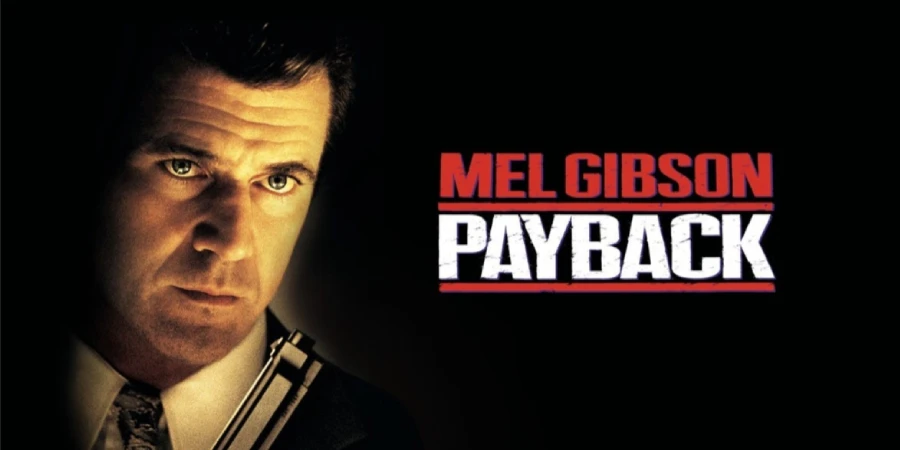

Payback is a gritty, darkly comedic neo-noir revenge film directed by Brian Helgeland and starring Mel Gibson as the ruthless antihero Porter. The movie blends hard-boiled crime elements with black comedy and vintage noir brutality.
Detailed Summary
The Betrayal: Porter Left for Dead
Porter, a professional thief, teams up with his wife Lynn and accomplice Val Resnick to steal a large sum of money. After the successful heist, Val double-crosses Porter with Lynn’s help. He gets shot several times and is left for dead. The money is taken to repay Val’s debts to a high-level crime syndicate known as The Outfit. Against all odds, Porter survives.
Porter’s Obsession With His Money
After months of recovery without hospitals or police, Porter returns with a single goal: reclaim his share of the money. Not millions, not even thousands—just $70,000, the exact money he’s owed. His stubborn fixation shocks everyone; no one can believe he’s risking everything for such a “small” amount. This almost absurd amount of money becomes the film’s running joke, underlining Porter’s unforgiving moral code: he wants only what’s his.
The Road to The Outfit
Porter works his way up the criminal ladder, brutally confronting gangsters, cops, drug dealers, and hitmen. He tortures, manipulates, and outsmarts them, eventually gaining the attention of The Outfit’s senior leadership. Along the way, he reconnects with Rosie, a call-girl who genuinely cares for him, and the two form a low-key but meaningful bond.
The Outfit Strikes Back
With his persistence causing chaos, Porter’s enemies capture Rosie to bait him. Instead of backing down, Porter uses the syndicate’s greed against itself, provoking leadership figures to betray one another. People die not because he kills them, but because they try to double-cross him first. Porter keeps his icy focus on the money instead of revenge for revenge’s sake. It’s a business transaction to him—bloody business.
Movie Ending
In the climax, Porter arranges a false ransom exchange by tricking the Outfit into believing he’s holding one of their men hostage. He actually places a bomb in the exchange vehicle. As the bomb goes off and the top crime leader Bronson arrives too late, chaos erupts within the organization. In the end, Porter rescues Rosie, walks away from the collapsing criminal empire, and finally gets his $70,000. With his debt settled and the Outfit fractured, Porter vanishes into the night in an old car with Rosie, finally leaving the cycle of violence behind—not with millions, but with exactly what belongs to him. A dark, ironic ending fitting for a stubborn anti-hero who follows his own code.
Are There Post-Credits Scenes?
No, Payback (1999) does not include any post-credits scenes. The story concludes definitively before the credits roll.
Type of Movie
The film is a neo-noir crime thriller infused with dry dark comedy and cold, violent realism. It embraces the morally ambiguous, gritty style of 1970s crime cinema.
Cast
- Mel Gibson as Porter
- Gregg Henry as Val Resnick
- Maria Bello as Rosie
- David Paymer as Arthur Stegman
- Kris Kristofferson as Bronson
- William Devane as Carter
- Lucy Liu as Pearl
- Deborah Kara Unger as Lynn
Film Music and Composer
The score was composed by Chris Boardman, delivering a jazz-infused, noir-styled soundscape mixed with contemporary criminal tension. The music echoes older crime classics while remaining sharp and modern.

Filming Locations and Importance
Filming took place mainly in Chicago, with additional scenes shot in Los Angeles. The urban industrial landscapes, steel bridges, alleys, and smoky bars mirror Porter’s cold mentality and the movie’s cynical tone. The setting almost becomes its own character, emphasizing a world where morality is rusting and everyone is compromised.
Awards and Nominations
Although Payback did not collect major awards, it gained strong cult status after release and is frequently praised for its gritty tone, minimalist storytelling, and Mel Gibson’s performance.
Behind the Scenes Insights
- Director Brian Helgeland was originally fired during production due to the film’s dark tone; Mel Gibson oversaw the studio-mandated re-shoots.
- There exists a Director’s Cut, significantly darker, with a completely different third act.
- Lucy Liu improvised some of her character’s intense dialogue and mannerisms, emphasizing Pearl’s sadistic dominance.
- The studio wanted a more “likable” Porter; the original cut portrayed him as even colder and more violent.
Inspirations and References
The film is based on Donald E. Westlake’s novel The Hunter, written under the pseudonym Richard Stark. Westlake’s series featuring the character Parker helped define the modern professional criminal archetype. The novel’s influence echoes in other films like Point Blank (1967).
Alternate Endings and Deleted Scenes
The Director’s Cut features dramatic changes:
- A different villain and finale
- A harsher tone where Porter remains morally irredeemable
- Less humor, more bleak realism
- Rosie plays a smaller emotional role
Fans often consider the Director’s Cut more faithful to the book, and far darker than the theatrical release.
Book Adaptations and Differences
In the original novel, the main character is named Parker, not Porter. He is colder, more violent, and lacks emotional attachments—especially the toned-down romance in the film. The book also avoids comedic elements, sticking to brutal noir minimalism. The film softens his character, making him slightly more sympathetic and charismatic.
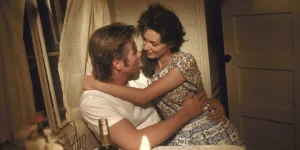

Memorable Scenes and Quotes
Key Scenes
- Porter smashing Val’s toes with a hammer to get information.
- The interrogation scene where Porter calmly negotiates torture like a business call.
- Lucy Liu’s psychotic domination scene in the nightclub office.
- The chaotic final exchange with the bomb-rigged limousine.
Iconic Quotes
- “It’s not about revenge. I just want my money.”
- “Thirty grand? You’re willing to die for thirty grand?” – “No. I’m willing to kill for it.”
- “Never let the tail wag the dog.”
Easter Eggs and Hidden Details
- Porter’s character keeps everything exact—even bullets used, drinks, and cash totals, reinforcing his obsessive fairness code.
- The $70,000 is intentionally small to highlight the absurdity of criminal honor.
- The film’s washed-out blue tone is a homage to old-school noir photography.
Trivia
- Mel Gibson’s version softened the ending to make Porter more “likable.”
- The Director’s Cut was not widely seen until years later, gaining cult praise.
- The novel’s author refused to allow the character name Parker unless the adaptation stayed faithful—hence the name change to Porter.
Why Watch?
Watch Payback if you enjoy crime films with a morally gray antihero, unapologetic violence, sharp noir humor, and a satisfying, clever revenge arc. It offers two distinct viewing experiences depending on whether you choose the theatrical version or the Director’s Cut—both powerful in their own way.
Director’s Other Works
- A Knight’s Tale (2001)
- 42 (2013)
- Legend (2015)
- L.A. Confidential (1997) – as screenwriter