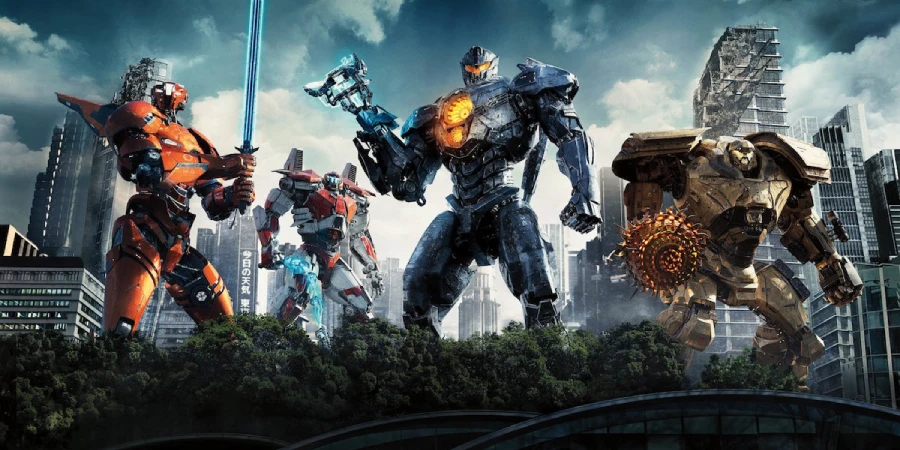
Pacific Rim: Uprising is the 2018 sequel to Guillermo del Toro’s monster-meets-mecha spectacle Pacific Rim. This time, the director’s chair is taken by Steven S. DeKnight, and the film shifts toward a faster, flashier, and more youth-driven sci-fi action tone. Bigger robots, new pilots, and a very different kind of Kaiju threat define this sequel.
Detailed Summary
The World After the Kaiju War
Ten years after humanity’s victory over the Kaiju, the world is no longer united in fear. The Jaeger program is downsized, privatized, and partially commercialized. Young pilots train with simulators, Kaiju attacks are considered history, and complacency has replaced urgency. This fragile peace sets the stage for disaster.
Jake Pentecost Enters the Story
Jake Pentecost (John Boyega), son of legendary hero Stacker Pentecost, lives in his father’s shadow. Once a promising Jaeger pilot, Jake abandoned the program and now survives through black-market tech deals. After being arrested with teenage prodigy Amara Namani, who built a homemade mini-Jaeger, Jake is forced back into the Pan-Pacific Defense Corps (PPDC).
The Rise of Rogue Jaegers
The film’s central twist arrives early: unmanned, AI-controlled Jaegers begin attacking cities. These drones, developed by the Shao Corporation, are meant to replace human pilots entirely. When they malfunction, it becomes clear that something far more sinister is at work. The Kaiju threat was never truly gone.
Kaiju Evolution and Hybrid Threats
The Kaiju return, but they’re different. Smarter. Faster. Able to merge. Even more disturbing, their DNA has been secretly fused with Jaeger technology, creating Kaiju-Jaeger hybrids. This revelation reframes the original war as only phase one of a much larger alien invasion plan.
Legacy Characters and New Blood
Mako Mori (Rinko Kikuchi), a fan-favorite from the first film, returns in a leadership role, bridging the old generation with the new. Meanwhile, a new team of cadet pilots steps into the spotlight, emphasizing teamwork and growth rather than individual heroics.
Movie Ending
In the final act, multiple Kaiju converge on Mount Fuji, revealing the Precursors’ true objective: trigger the Pacific Ring of Fire and cause global extinction through massive volcanic eruptions. The plan relies on precise positioning, showing that the Kaiju are no longer brute-force weapons but strategic tools.
During the battle, Mako Mori is killed, a moment that sharply divides audiences and marks a turning point in the film’s emotional stakes. Jake steps fully into his father’s legacy, assuming command as humanity’s last hope.
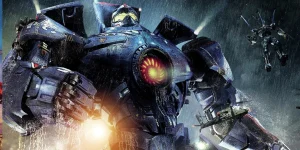
The Jaegers engage the Kaiju in an all-out assault. One Kaiju merges with another, forming a colossal mega-Kaiju. In the climax, Jake and Nate Lambert pilot Gipsy Avenger, using a combination of plasma weapons, gravity sling maneuvers, and raw sacrifice to defeat the creature at the volcano’s edge.
The Kaiju are destroyed, the eruption is stopped, and Earth is saved once again. However, the victory feels temporary. The Precursors are still out there, and humanity now understands that Earth itself is only a target in a much larger war.
Are There Post-Credits Scenes?
Yes. There is a mid-credits scene. It shows surviving leaders of the PPDC deciding that humanity will take the fight to the Precursors’ home world. This scene clearly sets up a sequel that, as of now, has not been produced.
Type of Movie
Pacific Rim: Uprising is a science-fiction action blockbuster with strong elements of military sci-fi and giant monster (kaiju) cinema. Compared to the original, it leans more toward fast-paced action and youthful energy than atmospheric world-building.
Cast
- John Boyega as Jake Pentecost
- Scott Eastwood as Nate Lambert
- Cailee Spaeny as Amara Namani
- Jing Tian as Liwen Shao
- Rinko Kikuchi as Mako Mori
- Burn Gorman as Dr. Hermann Gottlieb
- Charlie Day as Dr. Newton Geiszler
Film Music and Composer
The score is composed by Lorne Balfe, replacing Ramin Djawadi from the first film. Balfe delivers a more electronic, aggressive soundtrack, emphasizing momentum and scale. While effective, many fans note that it lacks the iconic musical identity of the original.

Filming Locations
Filming took place primarily in Australia, including Sydney and Queensland studios. Australia’s large-scale production facilities allowed for extensive green-screen work and massive set pieces. The urban battle environments were designed to feel denser and more vertical than in the first film, reinforcing the sense of escalation.
Awards and Nominations
The film did not receive major award recognition. It was nominated for a handful of visual effects and sound design awards at genre-focused ceremonies, but overall critical reception was mixed, limiting its awards presence.
Behind the Scenes Insights
- Steven S. DeKnight wanted a younger ensemble cast to reflect a new generation inheriting the war
- John Boyega also served as a producer, heavily influencing Jake’s character arc
- Over 1,000 visual effects artists worked on the film simultaneously
- The Jaeger designs were intentionally slimmer and faster to contrast the original film’s heavier, industrial feel
Inspirations and References
The movie continues the legacy of Japanese kaiju cinema, particularly Godzilla and Neon Genesis Evangelion. It also draws inspiration from modern drone warfare and AI ethics, reframing the Kaiju threat through technological hubris rather than pure alien invasion.
Alternate Endings and Deleted Scenes
Several deleted scenes reportedly explored deeper tension between Jake and Mako, as well as expanded material on the Precursors’ motivations. No alternate ending was officially released, but early drafts reportedly featured a darker conclusion with heavier global destruction.
Book Adaptations and Differences
The film is not directly based on a novel but expands the Pacific Rim franchise lore. Novelizations and comics released alongside the film delve deeper into the Precursors and the political structure of the PPDC, areas the movie only briefly touches on.
Memorable Scenes and Quotes
Key Scenes
- The rogue Jaeger attack on Sydney
- Amara revealing her self-built mini-Jaeger
- The mega-Kaiju formation near Mount Fuji
- The final gravity-sling maneuver
Iconic Quotes
- Jake Pentecost: “My father didn’t believe in luck. He believed in people.”
- Dr. Newton Geiszler: “The Kaiju were just the beginning.”
Easter Eggs and Hidden Details
- Gipsy Avenger’s design subtly references Gipsy Danger’s reactor core
- PPDC insignias include dates referencing battles from the first film
- Background monitors display Kaiju classifications never mentioned in dialogue
Trivia
- John Boyega insisted Jake Pentecost not be a copy of his father
- The mega-Kaiju has the highest on-screen mass of any creature in the franchise
- Some Jaeger weapons were designed but never used in the final cut
Why Watch?
If you enjoy giant robots, explosive action, and fast-paced sci-fi, this film delivers pure spectacle. While it sacrifices some of the original’s atmosphere, it compensates with scale, momentum, and franchise-expanding ideas.
Director’s Other Works
- Daredevil (TV Series, 2015–2018)
- Spartacus (TV Series, 2010–2013)
- Buffy the Vampire Slayer (1997–2003) – writer/producer