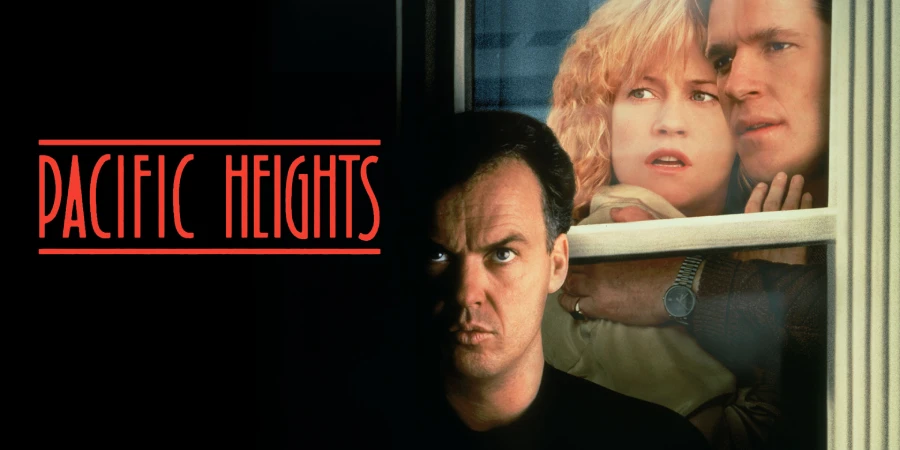

The American Dream of homeownership quickly sours into a waking nightmare in Pacific Heights. This film brilliantly preys on the universal fear of inviting a monster into your home. Moreover, it chillingly illustrates how legal systems designed to protect tenants can be weaponized against landlords. The true horror, consequently, isn’t a ghost in the attic but a sociopath in the first-floor apartment.
Detailed Summary
The Dream House
Young, unmarried couple Drake Goodman and Patty Palmer sink their entire savings into a magnificent Victorian home in San Francisco’s exclusive Pacific Heights neighborhood. The house, however, is a massive financial commitment. To afford the mortgage, they decide to renovate and rent out the two first-floor apartments. They pour their sweat and money into the project. As a result, their future becomes inextricably tied to the success of this real estate venture.
The Perfect Tenant
In need of a tenant for the larger downstairs unit, they meet Carter Hayes. He drives a Porsche and presents himself as a wealthy, stable investment counselor. Carter is initially charming and persuasive. He pays a large portion of his deposit in cash, promising to wire the rest. Despite some red flags, like a lack of references, Drake and Patty are desperate for the income. Therefore, they hand him the keys, unknowingly sealing their fate.
The Nightmare Begins
Almost immediately, Carter’s promises unravel. The wired money never arrives. He avoids all contact, changing the locks on his apartment. Loud, strange noises begin emanating from his unit at all hours. Drake and Patty discover he is intentionally breeding a massive cockroach infestation. Their attempts to evict him legally hit a wall; Carter, it turns out, is an expert at manipulating tenant-protection laws to his advantage. He knows exactly how long he can go without paying rent before facing consequences.
Legal Loopholes and Escalation
The situation rapidly deteriorates. Carter’s psychological warfare escalates into physical threats. During one confrontation, he goads Drake into assaulting him, which leads to Drake’s arrest. The stress of the situation, furthermore, causes a pregnant Patty to suffer a miscarriage. While Drake is dealing with legal trouble, Carter continues his campaign of terror, even making advances toward Patty. Consequently, the couple’s relationship, finances, and sanity are pushed to the absolute brink.
Turning the Tables
After being released, Drake realizes the conventional legal path is useless. He decides he must become like Carter to defeat him. Drake begins his own investigation, uncovering Carter’s real identity and his long history as a con artist who ruins wealthy people. Meanwhile, Carter successfully gets Drake and Patty’s home foreclosed on and he moves on to his next victim, a wealthy woman named Ann. Drake, however, tracks him down. He then cleverly uses Carter’s own tactics to drain his stolen fortune and frame him for embezzlement, forcing a desperate Carter back to the house for a final confrontation.
Movie Ending
The climax unfolds as a desperate and financially ruined Carter Hayes returns to the Pacific Heights house. He corners Patty, believing she and Drake are responsible for his downfall. Drake, who anticipated this move, is waiting for him. A brutal fight ensues throughout the now-chaotic and damaged home. Ultimately, the struggle concludes in the basement where Drake, in a moment of frantic self-defense, impales Carter on a pipe fitting from the house’s plumbing system. Carter dies, his reign of terror finally over. The final scene shows Drake and Patty, battered but together, standing in their reclaimed home as the police investigate. They have survived, but the experience has irrevocably changed them.
Are There Post-Credits Scenes?
No, there are no post-credits or mid-credits scenes in Pacific Heights. Once the final credits begin to roll, the film is officially over.
Type of Movie
Pacific Heights is a psychological thriller. The film builds suspense not through jump scares but through a relentless, claustrophobic sense of dread. In addition, it functions as a dark social commentary on the vulnerabilities within the legal system. The tone is tense and unnerving from start to finish, effectively transforming a domestic drama into a genuine horror story.
Cast
- Melanie Griffith – Patty Palmer
- Matthew Modine – Drake Goodman
- Michael Keaton – Carter Hayes
- Mako – Toshio Watanabe
- Nobu McCarthy – Mira Watanabe
- Laurie Metcalf – Stephanie MacDonald
- Tippi Hedren – Florence Peters
Film Music and Composer
The tense and synth-heavy score for Pacific Heights was composed by the legendary Hans Zimmer. His music is crucial to the film’s atmosphere. The score audibly mirrors the escalating conflict, moving from deceptively calm melodies to jarring, percussive themes as Carter’s madness unfolds. Notably, the main theme effectively captures the sinister undertones lurking beneath a beautiful facade, much like Carter Hayes himself. Zimmer’s work here is a fantastic example of late 80s/early 90s thriller scoring.


Filming Locations
The film was shot almost entirely on location in and around San Francisco, California. The iconic Victorian house used for the exterior shots is a real residence located at the corner of 19th and Texas Streets in the Potrero Hill neighborhood, not the more affluent Pacific Heights. This specific location was chosen for its impressive but slightly isolated appearance. Ultimately, using a real, tangible house instead of a soundstage grounds the horror in a relatable reality, making the film’s events feel terrifyingly plausible.
Awards and Nominations
While Pacific Heights did not receive major mainstream awards like the Oscars or Golden Globes, it found recognition in other circuits. Its most notable win was at the 1991 Cognac Festival du Film Policier. At this French film festival, director John Schlesinger won the Critics Award for his work on the film.
Behind the Scenes Insights
- Michael Keaton took the role of Carter Hayes specifically to play against type, as he had just become a global superstar playing the hero in Batman (1989).
- Director John Schlesinger was known for more prestigious dramas like Midnight Cowboy. Consequently, his move to a genre thriller was considered a surprising but interesting choice by critics.
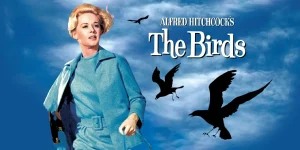
- Melanie Griffith’s mother, actress Tippi Hedren (The Birds), has a small but memorable role as Ann, Carter’s wealthy final target.
- Producers initially considered Harrison Ford for the role of Carter Hayes, but he was uncomfortable playing such a purely evil character at that point in his career.
Inspirations and References
Pacific Heights was inspired by a real-life ordeal experienced by the film’s screenwriter, Daniel Pyne. He and his wife had rented out a portion of their home to a tenant who turned out to be a nightmare. This tenant exploited legal loopholes to live rent-free and harass them. Pyne channeled his frustration and fear from this experience into the script, creating a fictionalized but emotionally authentic story of landlord-tenant conflict gone horribly wrong.
Alternate Endings and Deleted Scenes
Test audiences were shown a slightly different and more ambiguous ending. In this alternate version, after Carter is killed, police question Drake about the events. Their interrogation implies that Drake might face legal consequences for his actions, specifically for taking the law into his own hands and for Carter’s death. However, the studio opted for the more clear-cut and satisfying theatrical ending where Drake and Patty are clearly positioned as victims who simply defended themselves.
Book Adaptations and Differences
Pacific Heights is not based on a book. It is an original screenplay written by Daniel Pyne, drawn from his personal experiences with a problematic tenant.

Memorable Scenes and Quotes
Key Scenes
- The Cockroach Infestation: The horrifying reveal of Carter’s deliberate cockroach-breeding operation is a moment of pure skin-crawling dread, cementing him as a truly disturbed individual.
- The First Confrontation: Carter calmly hammering while Drake frantically tries to reason with him establishes their dynamic. It shows Carter is completely in control and immune to normal social pressure.
- Drake’s Revenge: Drake’s methodical takedown of Carter’s new life is immensely satisfying. He uses Carter’s own identity theft and financial manipulation tactics against him, signaling a major shift in the film’s power dynamic.
- The Final Fight: The brutal, desperate brawl in the half-demolished house serves as a violent and cathartic release of the film’s built-up tension, culminating in Carter’s demise.
Iconic Quotes
- “It’s not a question of ‘like.’ I’m a good tenant. I pay my rent on time, I’m quiet, I don’t bother anyone.” – Carter Hayes, during his deceptive initial interview.
- “You want to know what I’m doing? I’m renovating.” – Carter Hayes, gaslighting Drake about the destructive noises.
- “Drake, this isn’t a game. It’s my home. It’s my life.” – Patty Palmer, trying to make Drake understand the severity of their situation.
- “You just don’t get it, do you? I’m in your house… and there’s nothing you can do about it.” – Carter Hayes, menacingly spelling out his control over them.
Easter Eggs and Hidden Details
- Legal Foreshadowing: In an early scene, Drake and Patty’s lawyer, Stephanie, warns them about the difficulties of evicting tenants in San Francisco. This line explicitly foreshadows the legal nightmare that is to come.
- Tool Symbolism: Carter is often seen with tools, but he uses them for destruction (hammering walls) rather than construction. This subtly underscores his character as a deconstructor of lives and property.
- Tippi Hedren’s Cameo: The casting of Tippi Hedren, star of Alfred Hitchcock’s The Birds, as Carter’s final victim is a nod to the classic thriller genre and its “Hitchcockian” suspense.
Trivia
- The film’s working title was The Tenant.
- Michael Keaton reportedly ad-libbed many of his character’s unsettling mannerisms and lines to make Carter Hayes feel more unpredictable.
- The property value of the actual house used for filming in Potrero Hill increased significantly after the movie’s release.
- Matthew Modine and Melanie Griffith had previously worked together on the TV movie And the Band Played On, which was released after Pacific Heights but filmed around the same time.
Why Watch?
This film is a masterful exercise in tension. Michael Keaton delivers an iconic, bone-chilling performance as the charming sociopath. Furthermore, it taps into a primal fear of losing control over your own home, making it an unforgettable and deeply unsettling thriller.
Director’s Other Movies
- Billy Liar (1963)
- Darling (1965)
- Midnight Cowboy (1969)
- Sunday Bloody Sunday (1971)
- The Day of the Locust (1975)
- Marathon Man (1976)
- The Falcon and the Snowman (1985)
Recommended Films for Fans
- The Hand That Rocks the Cradle (1992)
- Single White Female (1992)
- Unlawful Entry (1992)
- Fatal Attraction (1987)
- The Stepfather (1987)
- Cape Fear (1991)