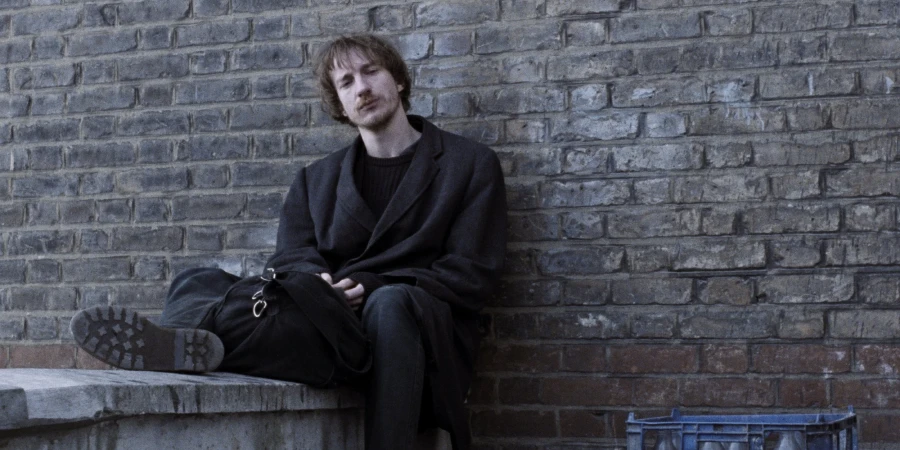

Mike Leigh’s Naked (1993) is not an easy film, and it never tries to be. It is abrasive, philosophical, darkly funny, and often deeply uncomfortable. Centered on a volatile antihero drifting through London, the film confronts nihilism, misogyny, loneliness, power, and moral decay with unflinching honesty. This is cinema that doesn’t ask for your sympathy—it challenges your endurance.
Detailed Summary
Johnny on the Run
The film opens in Manchester with Johnny fleeing after a violent sexual encounter that immediately establishes him as intelligent, charismatic, and deeply troubling. He steals a car and heads to London, setting the tone for a narrative driven more by character than plot.
Arrival in London: Louise and Sophie
Johnny arrives at the apartment of Louise, his ex-girlfriend, who lives with her withdrawn roommate Sophie. Louise allows him to stay despite their painful history. Johnny quickly dominates the space with verbal cruelty, philosophical monologues, and emotional manipulation. Sophie, already fragile, becomes an easy target.
Street Philosophy and Verbal Warfare
Much of the film follows Johnny wandering London at night, engaging strangers in long, unsettling conversations. He debates apocalypse, God, time, class, and meaninglessness, often humiliating or intimidating those he encounters. These scenes define the film’s identity: talkative, confrontational, and intellectually aggressive.
Enter Jeremy: Power Without Intelligence
Parallel to Johnny is Jeremy, a wealthy, sadistic landlord who represents institutional power without conscience. Unlike Johnny, who uses language as a weapon, Jeremy uses money and physical dominance. Their contrast is crucial: one is a failed prophet, the other a successful predator.
Emotional Collapse
As Johnny’s physical health deteriorates and his mental instability worsens, his cruelty escalates. Louise finally ejects him from her life. Sophie’s emotional collapse—arguably triggered by Johnny’s presence—becomes one of the film’s most devastating consequences.

Movie Ending
Johnny, now physically beaten, sick, and exhausted, returns to Louise’s apartment one final time. This time, Louise has changed. She no longer tolerates his abuse, his intellect, or his nihilism. She tends to his injuries briefly but ultimately refuses to save him—emotionally or otherwise. This rejection is not cruel; it is necessary.
Johnny leaves at dawn, barely able to walk. He limps down an empty London street, muttering fragments of thought, still alive but utterly diminished. There is no redemption, no punishment in the traditional sense—only continuation. The film ends with Johnny disappearing into the city, suggesting that people like him don’t resolve; they persist.
Importantly, Jeremy also escapes consequences, reinforcing the film’s bleak worldview: the world does not reward morality or punish cruelty in any orderly way.
Are There Post-Credits Scenes?
No. Naked ends definitively with its final image. There are no post-credits or mid-credits scenes, and nothing to soften the emotional impact once the screen cuts to black.
Type of Movie
Naked is a psychological drama with strong elements of social realism. It is also deeply philosophical, often functioning as a bleak existential essay disguised as a character study.
Cast
- David Thewlis as Johnny
- Lesley Sharp as Louise
- Katrin Cartlidge as Sophie
- Greg Cruttwell as Jeremy
- Claire Skinner as Sandra
David Thewlis delivers one of the most fearless and divisive performances in 1990s cinema.
Film Music and Composer
The film features a minimalist score by Andrew Dickson, used sparingly. Silence dominates much of the runtime, emphasizing discomfort and realism. Music never tells you how to feel—it leaves you alone with Johnny.
Filming Locations
Naked was shot almost entirely on location in London, particularly in:
- East London streets
- Council flats
- Empty nighttime cityscapes
These locations are essential to the film’s identity. London is not romanticized; it becomes a cold, indifferent maze, reflecting Johnny’s inner emptiness.
Awards and Nominations
- Cannes Film Festival (1993)
- Best Director – Mike Leigh (Won)
- Best Actor – David Thewlis (Won)
- British Independent Film Awards nominations
- BAFTA recognition for acting and direction
The film was critically celebrated despite (and because of) its divisive nature.
Behind the Scenes Insights
- Mike Leigh developed the script through extensive improvisation with actors.
- David Thewlis reportedly struggled emotionally during filming due to Johnny’s toxicity.
- Many monologues were refined collaboratively rather than strictly scripted.
- The film was shot on a relatively low budget, enhancing its raw realism.
Inspirations and References
- Existential philosophy (Nietzsche, biblical apocalypse imagery)
- British social realism
- Leigh’s own interest in power dynamics and moral responsibility
- Post-Thatcher-era disillusionment in the UK
Alternate Endings and Deleted Scenes
There are no known alternate endings. Mike Leigh has stated the ending reflects exactly what he intended. Some improvised dialogue was cut for pacing, but no major narrative threads were removed.
Book Adaptations and Differences
Naked is not based on a book. It is an original screenplay developed through Mike Leigh’s unique collaborative process.

Memorable Scenes and Quotes
Key Scenes
- Johnny’s apocalyptic rant to a night security guard
- The silent breakdown of Sophie
- Jeremy’s wordless acts of cruelty
- Johnny’s final walk into the morning light
Iconic Quotes
- Johnny: “The point is there is no point.”
- Johnny: “You’re all just waiting to die, aren’t you?”
- Louise: “You don’t have the right to destroy people.”
Easter Eggs and Hidden Details
- Repeated clock imagery subtly reinforces Johnny’s obsession with time and apocalypse
- Biblical references are embedded in Johnny’s rants without direct quotation
- The city’s emptiness mirrors Sophie’s emotional withdrawal scene-by-scene
Trivia
- David Thewlis won Best Actor at Cannes despite being relatively unknown at the time
- The film polarized audiences, with walkouts reported at early screenings
- Johnny appears in almost every scene, making it a physically demanding role
Why Watch?
Watch Naked if you want challenging cinema that refuses comfort. This is a film that interrogates intelligence, cruelty, masculinity, and moral emptiness without offering answers. It is disturbing, brilliant, and unforgettable.
Director’s Other Works (Movies)
- High Hopes (1988)
- Secrets & Lies (1996)
- Topsy-Turvy (1999)
- Vera Drake (2004)
- Another Year (2010)
Recommended Films for Fans
- Taxi Driver (1976)
- Meantime (1983)
- Bad Lieutenant (1992)
- Requiem for a Dream (2000)
- You Were Never Really Here (2017)
- The Tenant (1976)