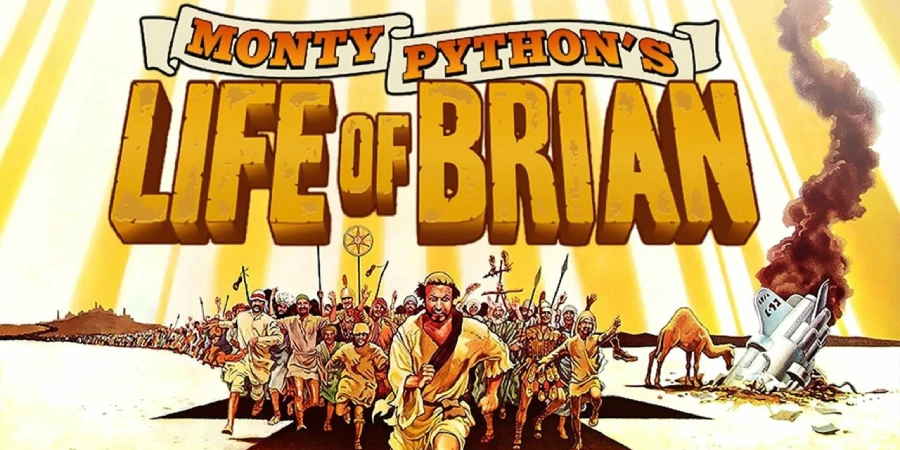

Monty Python’s Life of Brian is one of the most daring and controversial comedies ever made. Released in 1979, it cleverly disguises razor-sharp satire beneath absurd humor, targeting blind faith, political fanaticism, and the human tendency to follow without thinking. Despite decades passing, the film remains painfully relevant and hilariously fearless.
Detailed Summary
A Star Is (Accidentally) Born
Brian Cohen is born in Bethlehem on the same night as Jesus Christ, just a few doors down. Due to a mix-up involving the Three Wise Men, Brian is briefly mistaken for the Messiah before the error is realized. This opening already sets the tone: history-changing misunderstandings driven by human foolishness.
An Ordinary Man in an Extraordinary Time
Brian grows up as a regular Jewish man under Roman occupation. He’s frustrated, politically aware, and increasingly drawn into revolutionary movements. His life is shaped not by destiny, but by coincidence, misunderstandings, and the chaos of extremist politics.
Revolutionaries Who Can’t Agree on Anything
Brian joins an anti-Roman resistance group, the People’s Front of Judea, whose members spend more time arguing about semantics than actually resisting Rome. This segment is a brilliant satire of ideological infighting, showing how movements collapse under their own egos.
Mistaken for the Messiah
Through a series of absurd events, Brian is once again mistaken for a divine figure. His attempts to deny this status only strengthen people’s belief in him. The more rational he becomes, the more fanatical the crowd grows, highlighting how logic is often powerless against mass belief.
Prophets, Followers, and Absurd Faith
Brian delivers what is essentially a message of personal responsibility, but it’s immediately misinterpreted. People argue over his sandal, his gourd, and his every word. This section ruthlessly exposes how religions and ideologies can form from misheard sentences and symbolic nonsense.
Capture and Condemnation
Brian is eventually arrested by the Romans for his involvement with rebels. His followers scatter instantly, proving their loyalty was conditional and shallow. As he faces execution, the systems he resisted and the people who worshipped him both fail him completely.
Movie Ending
Brian is sentenced to crucifixion, a punishment treated with disturbing casualness by Roman authorities. As he hangs on the cross, he desperately calls out for help. His mother appears briefly, angry and helpless, unable to save him. Various characters pass by, including former allies, none willing or able to intervene.
The revolutionary groups arrive, but instead of rescuing Brian, they argue endlessly and leave him behind. Even those who claim to believe in him abandon him when action is required.
In the final moments, other crucified prisoners begin singing “Always Look on the Bright Side of Life.” What begins as dark humor turns into a chilling conclusion: people normalize suffering when it’s not their own. Brian dies off-screen, not as a martyr or savior, but as a man crushed by systems, stupidity, and indifference.
The ending is funny, bleak, unforgettable, and deliberately uncomfortable.
Are There Post-Credits Scenes?
No. Monty Python’s Life of Brian does not include post-credits scenes. The film ends definitively, allowing its final message to linger without softening the impact.
Type of Movie
This is a satirical comedy that blends historical parody with philosophical critique. It uses absurd humor to explore religion, politics, and mass psychology without directly attacking faith itself.
Cast
- Graham Chapman as Brian Cohen
- John Cleese as Reg / various roles
- Michael Palin as Pontius Pilate / various roles
- Terry Jones as Brian’s mother Mandy
- Eric Idle as Mr. Cheeky / singer
- Terry Gilliam as assorted characters
(All Monty Python members play multiple roles.)
Film Music and Composer
The music was composed by Geoffrey Burgon, who also worked on Monty Python and the Holy Grail. The standout musical moment is “Always Look on the Bright Side of Life,” written and performed by Eric Idle, which became an iconic anthem of ironic optimism.

Filming Locations
- Tunisia – Used extensively for desert scenes and Jerusalem settings
The same locations were previously used for Jesus of Nazareth, adding an extra layer of irony. - Matmata and Monastir – Provided authentic ancient architecture and landscapes
These locations grounded the absurdity in realism, making the satire even sharper.
Awards and Nominations
- Nominated for BAFTA Best Original Screenplay
- Won Evening Standard British Film Award – Best Film
Despite controversy, it was critically praised for its intelligence and originality.
Behind the Scenes Insights
- Several religious groups protested the film before its release, often without having seen it.
- George Harrison personally helped finance the movie because he wanted to see it made.
- The cast insisted the film was not about Jesus, a point often ignored by critics.
- Terry Jones, a medieval historian, ensured historical details were surprisingly accurate.
Inspirations and References
- Biblical epics of the 1950s and 1960s
- Real-world political factions and sectarian movements
- Philosophical skepticism and Enlightenment thinking
- The Bible itself, approached through irony rather than mockery
Alternate Endings and Deleted Scenes
No alternate ending was filmed. However, several dialogue-heavy scenes involving revolutionary debates were shortened to improve pacing. The crucifixion ending was always intended as the final statement.
Book Adaptations and Differences
The film was later adapted into a novelization by Monty Python. The book includes expanded internal monologues and additional jokes but follows the same narrative and ending as the film.

Memorable Scenes and Quotes
Key Scenes
- The sermon mishearing scene (“Blessed are the cheesemakers”)
- Pontius Pilate’s speech impediment
- The stoning scene with disguised women
- The mass crucifixion finale
Iconic Quotes
- “You’re all individuals!” – “Yes, we’re all individuals!”
- “What have the Romans ever done for us?”
- “Blessed are the cheesemakers.”
Easter Eggs and Hidden Details
- Latin grammar correction graffiti scene reflects John Cleese’s classical education.
- The film subtly mirrors real-world religious schisms through fictional factions.
- Roman efficiency is exaggerated but historically rooted.
Trivia
- Banned in several countries upon release.
- Still screened in academic theology and philosophy discussions.
- Eric Idle performed “Always Look on the Bright Side of Life” at real funerals by request.
Why Watch?
Because it’s fearlessly honest, intellectually sharp, and still funny after multiple viewings. It challenges authority, mocks extremism, and reminds viewers to think for themselves—all while making them laugh.
Director’s Other Works (Terry Jones)
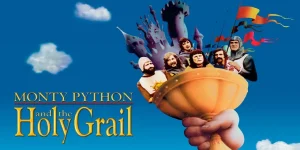
- Monty Python and the Holy Grail (1975)
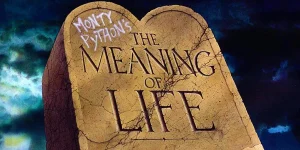
- Monty Python’s The Meaning of Life (1983)
- Erik the Viking (1989)
- Personal Services (1987)