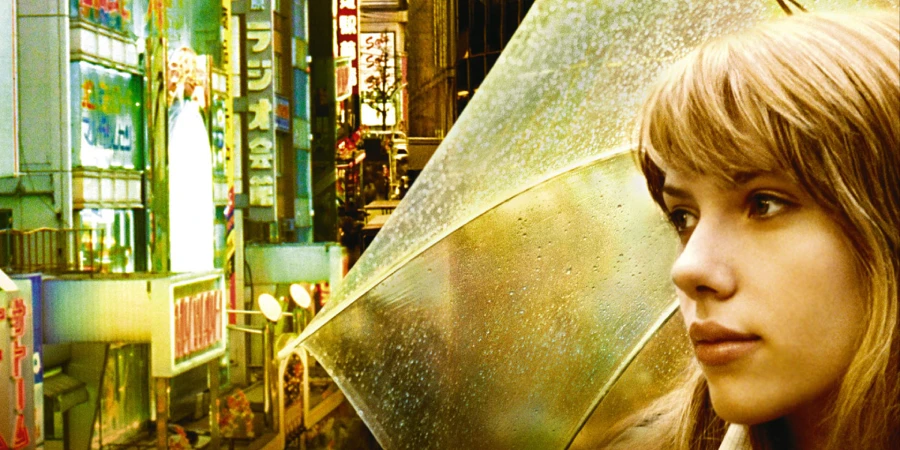

Lost in Translation (2003), directed by Sofia Coppola, is one of the most quietly powerful films of the 2000s. With its minimalist storytelling, emotional restraint, and delicate humor, it explores loneliness, connection, and identity against the neon-soaked backdrop of Tokyo.
Detailed Summary
Bob Arrives in Tokyo
Bob Harris (Bill Murray), an aging American movie star, arrives in Tokyo to film a whiskey commercial. He’s exhausted, emotionally detached, and clearly questioning his life choices. His wife sends him carpet samples and home renovation notes, which only deepen his sense of alienation.
Charlotte’s Inner Crisis
Charlotte (Scarlett Johansson), a young philosophy graduate, is staying at the same hotel. She accompanies her celebrity-photographer husband but finds herself emotionally abandoned. She wanders Tokyo, visiting temples and listening to self-help CDs, trying to find meaning in her life.
Their First Connection
Bob and Charlotte keep crossing paths—first in the elevator, then in the hotel bar. Their shared insomnia becomes a bridge, leading them into late-night conversations that feel more intimate than anything happening in their personal lives back home.
Navigating Tokyo’s Surreal Beauty
Their bond deepens through humorous and surreal experiences: quirky TV shows, karaoke nights, eccentric directors, chaotic photo shoots, and encounters with other expatriates. These moments add levity while also emphasizing the cultural disorientation both characters feel.
The Emotional Peak
As they grow closer, Charlotte feels jealous when Bob spends a night with the hotel lounge singer—a moment that forces both characters to face the limits and fragility of their relationship. Despite this tension, they reconnect and rediscover comfort in each other’s presence.
Movie Ending
The final scenes of Lost in Translation are among the most debated in modern cinema—and for good reason.
Bob is headed back to the airport, about to leave Japan (and Charlotte) behind. Their last goodbye in the hotel lobby feels mechanical, overly polite, and emotionally repressed. But when Bob spots Charlotte walking on a crowded Tokyo street, he stops the car, jumps out, and follows her.
He catches up with her. They hug tightly. Both are on the verge of tears. Their connection feels real, urgent, and fragile.
Then Bob whispers something inaudible into her ear.
Coppola deliberately does not reveal the line. It’s meant to stay theirs, not ours. The ambiguity preserves the intimacy of their connection—something the audience is invited to feel but not fully own.
They share a brief, tender kiss. Charlotte smiles through tears. Bob leaves, and Charlotte stands in the crowd, at peace for the first time in the film.
The ending suggests that they changed each other: not through romance, but through a moment of human understanding that arrived exactly when they needed it most.
Are There Post-Credits Scenes?
No, the film does not have any mid-credits or post-credits scenes. The ending is intentionally quiet and final.
Type of Movie
The film is a melancholic romantic drama with comedic undertones. It’s introspective rather than plot-driven, focusing more on emotional landscapes than physical events.
Cast
- Bill Murray as Bob Harris
- Scarlett Johansson as Charlotte
- Giovanni Ribisi as John
- Anna Faris as Kelly
- Fumihiro Hayashi as the Commercial Director
Film Music and Composer
The soundtrack blends ambient, dreamlike tracks with indie rock influences.
Key contributors include:
- Air
- My Bloody Valentine
- Phoenix
- Squarepusher
The film’s score was composed by Kevin Shields, co-founder of My Bloody Valentine. The music is essential to the film’s mood, giving Tokyo a soft, nostalgic glow.

Filming Locations and Their Importance
Shot primarily in Tokyo, Japan, with real locations and no large production closures, the film thrives on authenticity. Important locations include:
- Park Hyatt Tokyo (Shinjuku) – The hotel setting where Bob and Charlotte bond. It symbolizes both emotional isolation and unexpected intimacy.
- Shibuya Crossing – Represents overwhelming urban chaos.
- Daikanyama neighborhood – Provides quieter, reflective spaces for Charlotte.
- New York Bar (Park Hyatt) – The jazz bar where most of their late-night conversations unfold, symbolizing escape.
These locations serve as emotional and thematic backdrops, underscoring the contrast between internal loneliness and external overstimulation.
Awards and Nominations
Lost in Translation received widespread acclaim.
Academy Awards (2004):
- Won: Best Original Screenplay (Sofia Coppola)
- Nominated: Best Picture, Best Actor (Bill Murray), Best Director (Sofia Coppola)
Golden Globes:
- Won: Best Picture (Musical/Comedy), Best Actor, Best Screenplay
BAFTA Awards:
- Won: Best Actor, Best Editing, Best Actress, Best Performance (Murray)
Behind the Scenes Insights
- Bill Murray agreed to the film verbally, and Coppola famously had trouble contacting him before production—she just trusted he would show up.
- Many street scenes were filmed guerrilla-style without permits to preserve realism.
- The whisper at the end was intentionally unscripted.
- Coppola wrote the character of Bob with Bill Murray specifically in mind.
- Johansson was only 17 during filming, which added to her character’s sense of vulnerability.
Inspirations and References
- Inspired by Sofia Coppola’s own experiences feeling adrift while staying at the Park Hyatt Tokyo.
- The character Kelly is widely interpreted as a parody of early-2000s celebrity culture.
- The tone and minimalist storytelling draw from Wong Kar-wai films, especially In the Mood for Love.
Alternate Endings and Deleted Scenes
There are no official alternate endings, but several minor scenes were cut for pacing. These include extended hotel sequences and more interactions with Charlotte’s husband, which Coppola removed to keep the focus on the central duo.
Book Adaptations and Differences
Lost in Translation is not based on a book. It’s an original screenplay. However, its themes resemble modernist literature exploring alienation and existential searching.

Memorable Scenes and Quotes
Key Scenes
- Bob struggling through the bizarre whiskey commercial shoot.
- Charlotte visiting a Buddhist temple and quietly crying.
- Karaoke night featuring “More Than This”—one of the film’s most heartfelt moments.
- The final whispered goodbye.
Iconic Quotes
- “The more you know who you are and what you want, the less things upset you.”
- “I just don’t know what I’m supposed to be.”
- “Can you keep a secret? I’m trying to organize a prison break.”
Easter Eggs and Hidden Details
- The commercial director speaking incomprehensibly long lines is a playful commentary on communication breakdowns.
- Kelly’s interviews parody real celebrity press junkets from the early 2000s.
- The constant use of reflections (windows, mirrors) visually mirrors the characters’ internal reflections.
Trivia
- Coppola wrote the script in four weeks.
- The hotel scenes were shot on real floors and bars, not sets.
- Bill Murray improvised many lines, including parts of the karaoke scene.
- The film cost around $4 million to make and grossed over $100 million worldwide.
Why Watch?
Because it’s a quietly profound, emotionally truthful film that captures loneliness, human connection, and the surreal experience of being lost in another culture. It’s not loud—it’s intimate, atmospheric, and deeply relatable.
Director’s Other Movies
- The Virgin Suicides (1999)
- Marie Antoinette (2006)
- Somewhere (2010)
- The Bling Ring (2013)
- The Beguiled (2017)
- On the Rocks (2020)
Recommended Films for Fans
- Blue Jay (2016)
- Her (2013)
- Before Sunrise (1995)
- Tokyo Story (1953)
- Another Round (2020)
- Eternal Sunshine of the Spotless Mind (2004)
- In the Mood for Love (2000)
- Me and You and Everyone We Know (2005)
- Chungking Express (1994)
- A Ghost Story (2017)