
Every year, thousands of films face extinction. Nitrate film stock crumbles into dust, magnetic tapes demagnetize, and digital files corrupt beyond recognition. Without intervention, entire decades of cinema could vanish from our collective memory. Film preservation methods now stand as the only barrier between classic movies and oblivion.
Modern archivists employ cutting-edge technology — including tools shaped by the evolution of movie special effects — alongside traditional techniques to rescue endangered films. Their work ensures future generations can experience cinema’s greatest achievements. This battle to save our visual heritage requires constant innovation and substantial resources.
Why Film Preservation Methods Matter Now More Than Ever
Cinema captures cultural moments that define entire generations. Yet the very materials that hold these stories are surprisingly fragile. Celluloid film degrades over time, especially early nitrate stock that can literally ignite under poor storage conditions.
Digital formats present their own challenges. Hard drives fail, file formats become obsolete, and streaming platforms remove content without warning. Consequently, preservationists must adapt their strategies to protect both analog and digital materials.
Major film archives estimate that half of all American films made before 1950 no longer exist. Silent era cinema suffered the worst losses, with approximately 75% of those films — including the forgotten brilliance of pre-code Hollywood cinema — lost forever.
These staggering statistics underscore the urgency of modern preservation efforts.



Traditional Film Preservation Techniques Still in Use
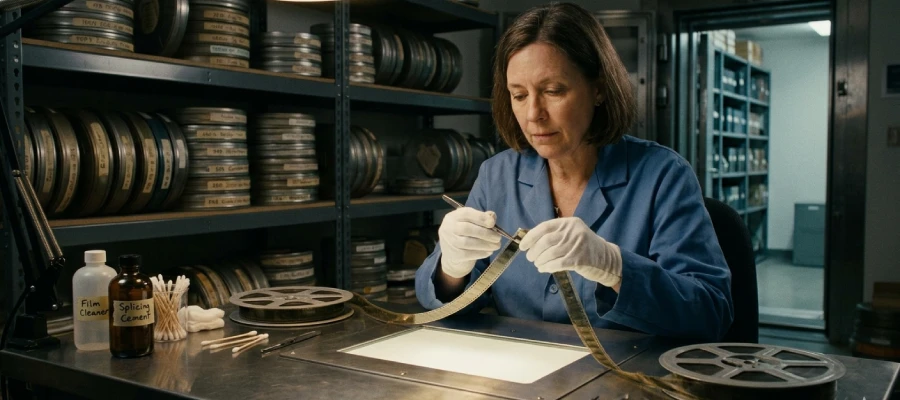
Physical film preservation begins with proper storage. Archivists maintain climate-controlled vaults where temperature and humidity remain constant. These facilities protect reels from the environmental factors that accelerate decay.
Photochemical Restoration Processes
Photochemical methods remain essential for analog film stock. Technicians create new prints from original negatives, transferring images frame by frame onto fresh stock. This time-tested approach preserves the authentic look and texture of celluloid.
Moreover, experts can repair physical damage through meticulous hand work. Torn frames get spliced, scratches receive careful attention, and color fading gets corrected through optical printing techniques.
Key steps in photochemical preservation include:
- Inspecting every frame for damage or deterioration
- Cleaning film reels with specialized solutions
- Creating separation masters on archival stock
- Producing multiple backup copies for redundancy
- Storing original materials in optimal vault conditions
Digital Film Restoration Revolutionizes the Field
Digital technology has transformed how preservationists approach their work. High-resolution scanning captures every detail from original film elements. Specialized software then allows frame-by-frame correction of flaws that would be impossible to fix through traditional means.
4K and even 8K scanning has become standard practice at major archives. These ultra-high resolutions preserve minute details that might otherwise disappear. In addition, digital workflows enable multiple technicians to work on different aspects of a restoration simultaneously.
Advanced Software Tools for Cinema Restoration
Modern restoration software can automatically detect and repair common defects. Dirt, scratches, and frame jitter get corrected through algorithmic analysis. However, human expertise remains crucial for artistic decisions about color grading and image stabilization.
Machine learning now assists in particularly challenging restorations. AI algorithms — the same technology fueling the debate over whether AI will replace directors and writers — can intelligently fill in missing frames or reconstruct damaged portions of an image. Nonetheless, archivists carefully supervise these processes to maintain historical accuracy.
Digital restoration capabilities include:
- Removing dust, scratches, and water damage digitally
- Stabilizing shaky footage through motion analysis
- Correcting color fading based on reference materials
- Reconstructing missing frames using adjacent imagery
- Reducing grain while preserving original texture
Hybrid Approaches Combine Best of Both Worlds
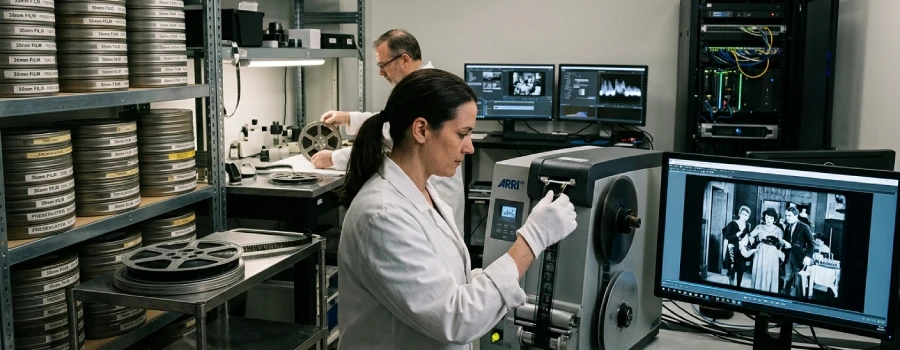
Leading archives now embrace hybrid preservation strategies. Photochemical methods preserve the analog authenticity of original materials. Digital techniques then enable broader access and easier duplication.
This dual approach provides maximum protection against future loss. Physical film elements remain archived for long-term stability. Meanwhile, digital masters facilitate public screenings, streaming releases, and academic research.
Creating Multiple Preservation Formats
Redundancy serves as insurance against technological obsolescence. Archives maintain films in multiple formats across different geographical locations. This strategy ensures that even catastrophic events cannot erase important works.
International cooperation strengthens these efforts. Organizations share resources, expertise, and storage capacity across borders. As a result, rare films gain protection from institutions worldwide.
Funding Challenges and Partnership Solutions
Film preservation requires substantial financial investment. A single feature restoration can cost between $50,000 and $200,000 depending on complexity. Archives constantly seek funding through grants, partnerships, and public support.
Studios increasingly recognize preservation’s commercial value. Restored classics generate revenue through special editions, streaming rights, and theatrical re-releases — a testament to why the big screen still matters even in the streaming age. These projects demonstrate that saving cinema can also make business sense.
Crowdfunding campaigns have democratized restoration efforts. Film fans directly support projects they care about. Platforms like Kickstarter have successfully funded restorations of cult classics and forgotten masterpieces.
Notable Organizations Leading Preservation Efforts
Several institutions champion film preservation methods worldwide:
- The Film Foundation collaborates with archives globally on restoration projects
- Academy Film Archive preserves culturally significant American cinema
- British Film Institute maintains one of the world’s largest film collections
- Cineteca di Bologna specializes in restoring silent era masterpieces, particularly the Italian neorealism films that changed the language of cinema
- Library of Congress selects films annually for the National Film Registry
Emerging Technologies Shape Future Preservation
New storage media promise longer lifespans than current options. Researchers explore DNA storage and synthetic materials that could preserve films for millennia. These experimental techniques might revolutionize how archives protect their collections.
Cloud-based storage offers geographical redundancy but raises concerns about corporate control. Archives must balance convenience against long-term ownership and access guarantees.
Blockchain technology could create permanent records of provenance and ownership. Interestingly, this might help track films through their entire preservation history.



Keeping Cinema Alive for Tomorrow’s Audiences
Film preservation methods continue evolving to meet new challenges. Every restored movie represents countless hours of painstaking work by dedicated professionals. Their efforts ensure that cinema’s artistic legacy survives for future generations.
Supporting preservation initiatives matters. Watch restored classics when they return to theaters. In a market where nostalgia rules Hollywood, purchasing special edition releases directly funds future restoration work. Donate to archives and film foundations that protect our shared cultural heritage.
The films we save today become tomorrow’s windows into our past. Without active preservation, irreplaceable pieces of human creativity disappear forever. Together, we can ensure that cinema’s greatest achievements remain accessible to audiences yet unborn.