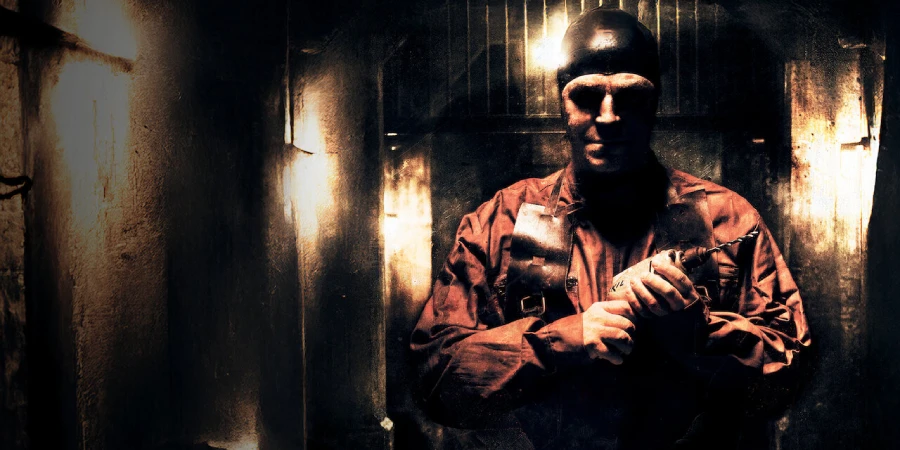

Hostel: Part II is the direct sequel to Eli Roth’s controversial 2005 horror hit. Released in 2007, the film expands the brutal universe of the Elite Hunting Club, shifting focus from male backpackers to female tourists and exploring the disturbing economics behind human trafficking for pleasure.
This is not a subtle movie. It is darker, meaner, and far more cynical about wealth, power, and morality.
Detailed Summary
The Aftermath of the First Film
The movie opens by revealing the fate of Paxton, the sole survivor from Hostel (2005). Although he managed to escape Slovakia, trauma has consumed him. His paranoia and guilt make it impossible to return to normal life.
Meanwhile, the Elite Hunting Club tracks him down, reminding viewers immediately that escape does not equal freedom in this world.
Introduction of the New Victims
Three American art students traveling in Europe become the new protagonists:
- Beth
- Whitney
- Lorna
They are intelligent, independent, and financially privileged compared to the victims of the first film. This is important because Hostel: Part II constantly contrasts wealth vs vulnerability.
While in Rome, they meet a charming local woman who convinces them to visit a Slovakian spa town, once again luring tourists into danger under the illusion of beauty, culture, and freedom.
The Elite Hunting Club from the Inside
Unlike the first film, the sequel spends significant time showing the buyers.
Two businessmen, Todd and Stuart, participate in the Elite Hunting Club’s bidding system, where victims are auctioned off like luxury goods. This perspective shift is one of the film’s most disturbing elements, portraying murder as corporate entertainment.
The movie makes it clear: money does not corrupt — it reveals.
Capture and Separation
Upon arrival in Slovakia, the women are drugged and kidnapped. Each is sold to different clients.
- Lorna is tortured to death off-screen, emphasizing cruelty without spectacle.
- Whitney is killed brutally with a scythe, one of the film’s most graphic sequences.
- Beth survives longer, allowing the narrative to fully explore the psychology of both victim and executioner.
Beth’s Psychological Turn
Beth is purchased by a wealthy woman named Elizabeth Bathory, a direct reference to the historical “Blood Countess.”
Instead of begging or panicking, Beth realizes something crucial: the Elite Hunting Club respects power and money above all else. She manipulates the rules of the organization itself.
This realization becomes the emotional and thematic core of the film.

Movie Ending
Beth is taken to the torture facility where Elizabeth intends to kill her in order to bathe in her blood, believing it preserves youth.
In a shocking reversal, Beth manages to kill Elizabeth first, beating her with a scythe in a moment of raw survival instinct. Instead of fleeing, Beth makes a bold and disturbing decision.
She takes Elizabeth’s severed head and calmly presents it to the Elite Hunting Club administrators.
Rather than punishing her, the organization accepts her action as a legitimate kill, since Elizabeth had technically paid for the experience. The club’s rules operate purely on transactions, not morality.
Beth then uses her inheritance money to officially purchase her freedom.
Before leaving Slovakia, she returns to the hostel and murders Axelle, the recruiter who lured her and her friends to their deaths. Beth executes her in the same chair used on countless victims.
The final scene shows Beth boarding a train back to civilization, emotionally hollow, traumatized, but alive. She has survived not by innocence or luck, but by becoming temporarily monstrous herself.
The ending leaves viewers with an unsettling message: in a system built on money and violence, morality has no value at all.
Are There Post-Credits Scenes?
No. There are no post-credits or mid-credits scenes in Hostel: Part II. The story ends definitively with Beth’s escape.
Type of Movie
Hostel: Part II is a torture horror film mixed with psychological horror and social satire. While extremely graphic, it also functions as a critique of capitalism, privilege, and commodified violence.
Cast
- Lauren German – Beth
- Bijou Phillips – Whitney
- Heather Matarazzo – Lorna
- Roger Bart – Stuart
- Richard Burgi – Todd
- Vera Jordanova – Axelle
- Jay Hernandez – Paxton
Film Music and Composer
The score was composed by Nathan Barr, who later became well known for True Blood and The House With a Clock in Its Walls. His music is minimal, cold, and atmospheric, designed to heighten dread rather than emotion.



Filming Locations
The movie was filmed primarily in:
- Prague, Czech Republic
- Cesky Krumlov
- Slovakia-inspired rural towns
These locations were chosen for their medieval architecture and narrow streets, reinforcing the feeling of isolation and historical cruelty. The contrast between beautiful European tourism and hidden brutality is central to the film’s atmosphere.
Awards and Nominations
The film did not receive major awards but was nominated at several genre festivals, including:
- Fangoria Chainsaw Awards – Best Wide-Release Horror Film
- Scream Awards – Best Horror Film nomination
Despite mixed critical reception, it performed strongly at the box office.
Behind the Scenes Insights
- Eli Roth originally planned the sequel during post-production of the first film.
- Real European spas were used as exterior locations.
- Several actors reportedly struggled emotionally with the filming of torture scenes.
- Roth intentionally reduced handheld camera work to make violence feel more clinical.
- The female-led narrative was designed to avoid repeating the same structure as the first film.
Inspirations and References
- The original Hostel (2005)
- Real-life European human trafficking reports
- Countess Elizabeth Báthory folklore
- Italian giallo horror cinema
- 1970s exploitation films
Alternate Endings and Deleted Scenes
- An alternate ending showed Beth attempting to expose the Elite Hunting Club, which was removed for being unrealistic.
- Extended torture scenes were cut to avoid an NC-17 rating.
- A longer subplot involving Paxton’s trauma was filmed but heavily trimmed.
Book Adaptations and Differences
The film is not based on a book. It is an original screenplay by Eli Roth, though it expands lore established in the first movie rather than adapting existing literature.
Memorable Scenes and Quotes
Key Scenes
- The opening execution of Paxton
- The human auction sequence
- The blood-bathing torture chamber
- Beth presenting the severed head to the club
- Axelle’s execution in the final act
Iconic Quotes
- “You pay for the experience. That’s the rule.”
- “It’s not murder if they agreed to it.”
- “I’m not scared anymore.”
Easter Eggs and Hidden Details
- The bathhouse name references historical Báthory legends.
- Numbers used in auctions match victim counts from the first film.
- The Elite Hunting Club logo appears briefly in the original movie.
- Several background extras are returning torturers from Part I.
Trivia
- Quentin Tarantino appears in a cameo during the Roman nightclub scene.
- The film’s budget was nearly double that of the first movie.
- Some scenes were censored differently depending on country.
- The movie contains over 150 special-effects makeup shots.
- Roth considers this his most misunderstood film.
Why Watch?
If you enjoy horror that goes beyond jump scares, Hostel: Part II offers:
- A strong female protagonist
- Deeper world-building than the first film
- Social commentary beneath the brutality
- One of the most morally disturbing endings in modern horror
It’s not pleasant, but it’s effective.
Director’s Other Works (Eli Roth)
- Cabin Fever (2002)
- Hostel (2005)
- The Green Inferno (2013)
- Knock Knock (2015)
- Death Wish (2018)
Recommended Films for Fans
- Saw (2004)
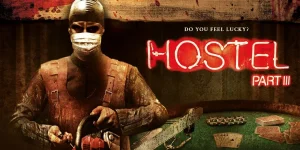
- Hostel: Part III (2011)
- Martyrs (2008)
- The Devil’s Rejects (2005)
- Wolf Creek (2005)
- Inside (2007)
- Eden Lake (2008)