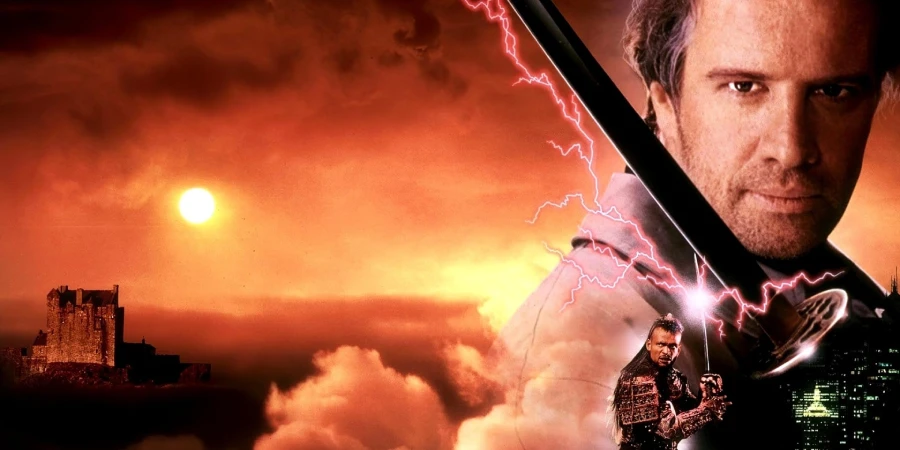

Highlander: The Final Dimension boldly erases its disastrous predecessor from continuity. It serves as a direct sequel to the original film, stripping the lore back to its essentials. The result is a straightforward tale of good versus evil. Ultimately, it gives Connor MacLeod one last, proper duel for the fate of the world.
Detailed Summary
Kane’s Awakening
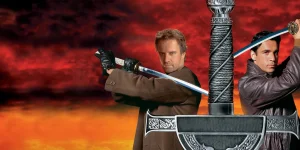
The story begins in feudal Japan, in the 16th century. The immortal sorcerer Nakano (played by Mako) mentors Connor MacLeod in the arts of illusion and enlightenment. However, their peace is shattered by the arrival of the evil immortal Kane (Mario Van Peebles) and his two cohorts.
Kane seeks Nakano’s power. During their battle, a cave-in traps Kane and his men for over 400 years. Nakano perishes, but not before promising Connor that Kane would one day return to hunt him.
A Return to the Game
Centuries later, in modern day, Connor MacLeod lives a quiet life in Marrakesh with his adopted son, John. He believes the Game is over and that he is the last immortal. This peace is shattered when an archaeological team, led by Dr. Alex Johnson (Deborah Kara Unger), excavates Nakano’s long-lost cave in Japan.
Freed from his rock prison, Kane immediately beheads one of his own men to absorb his power. He sets his sights on New York City, sensing MacLeod’s presence and seeking the final prize.
Murders in New York
Connor senses Kane’s release through a powerful Quickening. He understands the Game is not over and travels to New York to face his old foe. Meanwhile, Kane wastes no time in hunting down the few remaining immortals, taking their heads and growing stronger with each kill.
Alex Johnson, intrigued by a shard of steel from the cave, uses carbon dating to discover it is a piece of a centuries-old katana. Her research consequently leads her to historical records of the mysterious Connor MacLeod, connecting him to the ancient site.
The Sorcerer’s Illusions
Kane demonstrates a unique power among immortals: the ability to cast powerful illusions. This skill, learned from observing Nakano, becomes his primary weapon against Connor. He torments the Highlander by morphing into his past loves and enemies.
One of the film’s most notable sequences involves Kane chasing Connor through an industrial district. He continually shifts his appearance, forcing Connor to fight phantoms and question his own senses. This establishes Kane as a psychological threat, not just a physical one.
A Fateful Connection
Alex tracks Connor down in New York. Initially, she confronts him as a historical anomaly, a man who should not exist. Connor tries to keep her away for her own safety, but their paths are destined to cross.
After witnessing a rooftop duel between Connor and one of Kane’s henchmen, she is forced to accept the unbelievable truth. As a result, Alex becomes an invaluable ally, helping Connor understand the history of his new enemy and providing him with emotional support.
The Final Confrontation
Seeking to gain a final, cruel advantage, Kane kidnaps John. He uses him as bait to lure Connor to a final battle at an abandoned power plant in New Jersey. Kane offers a chilling ultimatum: Connor’s head or John’s life.
This forces Connor into a duel on Kane’s terms. Prepared for one last fight, Connor says his goodbyes and heads to the confrontation. He knows only one of them will walk away.
Movie Ending
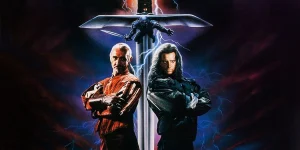
The final showdown takes place within the cavernous, derelict power plant. Kane uses his mastery of illusion to gain the upper hand, creating disorienting visions to confuse Connor MacLeod. However, having been trained by Nakano, Connor learns to see through the sorcery, focusing his mind to distinguish reality from illusion.
After a brutal sword fight across catwalks and rusting machinery, Connor gains the advantage. He overpowers Kane and, with a final swing of his katana, beheads the ancient sorcerer. A massive Quickening erupts, the most powerful one yet, containing the life force of Kane and all the immortals he defeated.
This final Quickening bestows upon Connor the Prize. Specifically, it grants him two things: mortality and the ability to have children. More importantly, it also contains Nakano’s magic, which allows Connor to finally fulfill his deepest desire: to go home. The film ends with Connor, Alex, and John standing together peacefully in the Scottish Highlands, his long exile finally over.
Are There Post-Credits Scenes?
There are no post-credits scenes in Highlander: The Final Dimension. Once the credits begin to roll, the story is officially complete.
Type of Movie
Highlander: The Final Dimension is an action-fantasy film. It attempts to recapture the somber, romantic tone of the original 1986 film, but infuses it with the slicker visual style of a 1990s action movie. The plot is a straightforward hero’s journey, focused entirely on swordplay and the eternal battle between good and evil.
Cast
- Christopher Lambert – Connor MacLeod / Russell Nash
- Mario Van Peebles – Kane
- Deborah Kara Unger – Dr. Alex Johnson / Sarah Barrington
- Mako – Nakano
- Martin Neufeld – John MacLeod
Film Music and Composer
The score for the film was composed by J. Peter Robinson. In contrast to the iconic rock anthems by Queen that defined the first film, Robinson’s score is a more traditional orchestral work. It effectively combines epic, sweeping themes for the fantasy elements with tense, percussive tracks for the action sequences.
While the soundtrack does not feature any major commercial hits, the music provides a suitably dramatic backdrop. It successfully sets a more serious and mythic tone compared to its predecessor, Highlander II: The Quickening.

Filming Locations
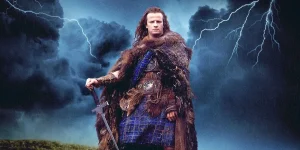
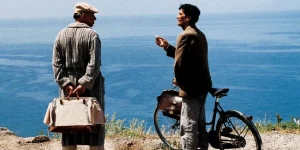
The film used a variety of locations to create its globe-spanning story. Initial scenes with Connor and his son were filmed in Marrakesh, Morocco, providing an exotic and peaceful setting that contrasted with his warrior past. Most of the movie, including scenes set in New York City, 16th-century Japan, and the Scottish Highlands, was actually filmed in and around Montreal, Quebec.
Some second-unit scenic shots were indeed filmed in Scotland to capture authentic landscapes for the movie’s beginning and end. This use of diverse locations contributes to the immortal saga’s sense of timelessness and travel.
Awards and Nominations
Highlander: The Final Dimension did not receive any major awards or nominations from prominent film critic circles or guilds. The film was largely a commercial venture aimed at fans of the franchise.
Behind the Scenes Insights
- The film’s original title was Highlander III: The Sorcerer. Producers later changed it to The Final Dimension for a more “epic” feel, though the “Sorcerer” title is still used in some territories.
- Director Andy Morahan was a prolific music video director, having worked with artists like Guns N’ Roses, George Michael, and Aerosmith. This background is evident in the film’s stylized visuals and fast-paced editing.
- Christopher Lambert was much more enthusiastic about this sequel. He had publicly expressed his disappointment with Highlander II and saw this film as a chance to do right by the character and the fans.
- The film intentionally and completely ignores the events of Highlander II: The Quickening, acting as a direct sequel to the original movie.
Inspirations and References
The primary inspiration for the film is the mythology established in the original Highlander (1986). It returns to the core concepts of The Game, The Quickening, and “There can be only one.”
Kane’s character as a barbarian antagonist who uses magic is a classic fantasy archetype. His illusion powers, while new to the Highlander universe, draw from classic wizard and sorcerer tropes found in sword-and-sorcery fiction.
Alternate Endings and Deleted Scenes
The Director’s Cut of the film features several restored scenes. These include extended dialogue, a scene showing Alex discovering evidence of Connor’s past lives, and a slightly different ending.
In the theatrical ending, Connor, Alex, and John are all shown together in Scotland. However, the Director’s Cut ending omits John from the final shot, focusing solely on Connor and Alex beginning their new mortal life together. This subtly shifts the focus from family to romance.
Book Adaptations and Differences
Highlander: The Final Dimension is not based on a book. It is an original screenplay written by Paul Ohl, based on a story by William N. Panzer and Brad Mirman, using characters created by Gregory Widen for the original film.
Memorable Scenes and Quotes
Key Scenes
- The Awakening: Kane and his henchmen are freed from their centuries-long imprisonment when an excavation team blasts open Nakano’s cave.
- Rooftop Duel: Connor fights Kane’s right-hand man on a New York City rooftop, which is the first time Alex witnesses his immortality and the reality of The Game.
- The Illusion Battle: Kane hunts Connor through an alley, repeatedly using his illusion powers to morph into different people, including Connor’s former mentor, Ramirez.
- Final Duel: The climactic battle in the power plant where Connor must overcome both Kane’s sword and his disorienting magic to win The Prize.
Iconic Quotes
- Kane: “Dr. Johnson, is it? From the sands of ancient Egypt to the streets of New York, I am the new god. I am the world. I am the universe.”
- Connor MacLeod: “I am Connor MacLeod of the Clan MacLeod. I was born in 1518 in Glenfinnan, Scotland. And I can-not die.”
- Kane: “Your pathetic mortal ways are no match for my magic!”
- Nakano: “To defeat a sorcerer, you must have a little magic in you.”
Easter Eggs and Hidden Details
- Russell Nash: In one scene, a document is briefly visible that uses the name “Russell Nash,” which was Connor MacLeod’s primary alias in the first Highlander film.
- Familiar Face: The police lieutenant investigating the beheadings is played by Michael Jayston, who had a role in the Highlander TV series as a different character.
Trivia
- Mario Van Peebles has stated that he based Kane’s flamboyant look and swagger partly on rock icon Jimi Hendrix.
- The film’s budget was around $34 million, significantly lower than the troubled production of Highlander II, but still a respectable figure for a mid-90s action film.
- Despite the title suggesting a “final” chapter, the series continued with Highlander: Endgame (2000), which united the film and television timelines.
Why Watch?
If you’re a fan of the original, this film is a worthy and respectful follow-up. It ignores the franchise’s biggest misstep, delivers a compelling villain in Kane, and provides a satisfying, emotionally resonant conclusion for Connor MacLeod’s long journey.
Director’s Other Movies
- Murder in Mind (1997)
- Goal III: Taking on the World (2009)