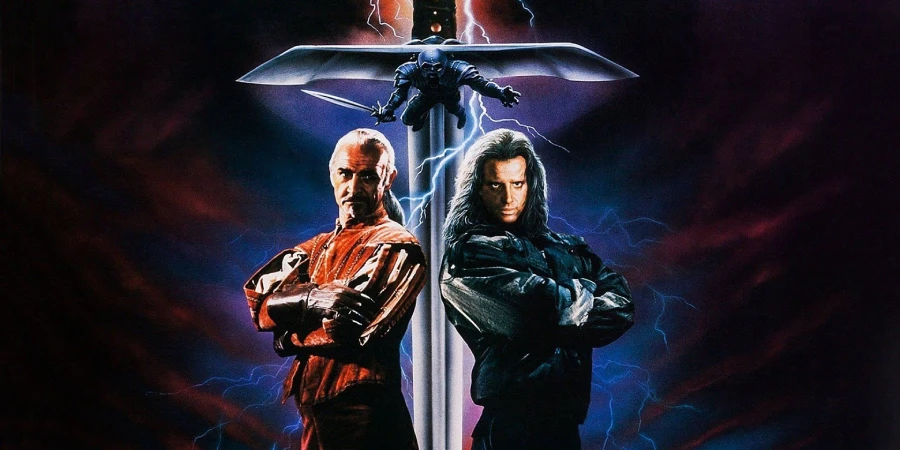

Few sequels dismantle a beloved mythology quite as spectacularly as Highlander II: The Quickening. The film famously rewrites its own history with a baffling new origin story for its Immortals. Consequently, it transformed a fantasy epic into a bizarre sci-fi mess. This analysis will spoil every single inexplicable choice.
Detailed Summary
The Shield
The year is 2024. Earth’s ozone layer is gone. As a result, a massive energy shield now covers the planet, plunging it into darkness. An elderly Connor MacLeod helped design this Shield, now run by the corrupt Shield Corporation (TSC).
MacLeod is mortal after winning The Prize in the first film. He lives a lonely life, haunted by memories of his past and his late wife, Brenda Wyatt. However, his quiet existence is about to be shattered.
Assassins from Zeist
On the distant planet Zeist, the tyrannical General Katana is furious. He learns that Connor MacLeod is still alive on Earth. This is a problem because MacLeod and Ramirez were exiled from Zeist centuries ago for leading a rebellion against him.
Katana dispatches two flamboyant, punk-rock assassins, Corda and Reno, to Earth. Their mission is simple: kill MacLeod. They arrive in a futuristic city and promptly cause chaos.
The Quickening and the Return of Ramirez
The assassins track down the frail MacLeod. During the fight, MacLeod manages to kill one of them. He instinctively absorbs the alien’s energy in a Quickening, a process he no longer believed possible.
This Quickening miraculously de-ages him, restoring his youth and immortality. In addition, it mysteriously summons his old friend Ramirez back from the dead. Ramirez materializes in Scotland and, after a brief adjustment period, heads to the city to find his friend.
An Unlikely Alliance
Meanwhile, a group of eco-terrorists led by Louise Marcus discovers a secret. The ozone layer has actually healed itself. TSC is hiding this fact to maintain its power and profit from the Shield.
Louise seeks out MacLeod for help, knowing he was one of the Shield’s original architects. After MacLeod kills the second Zeist assassin, he and Louise team up. They are now determined to expose TSC and bring down the Shield.
Katana’s Arrival
Furious at his assassins’ failure, General Katana decides to handle MacLeod himself. He travels to Earth and immediately aligns with TSC’s sinister executive, David Blake. Katana brings his brand of violent chaos to the city, culminating in a destructive joyride on a subway train.
During the chaos, Katana confronts MacLeod and Ramirez. In the ensuing fight, Katana tragically kills Ramirez again. MacLeod escapes with Louise, now more determined than ever to avenge his fallen friend.
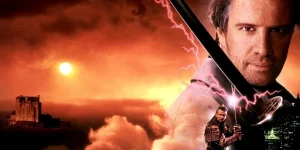
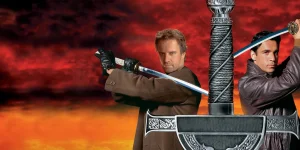
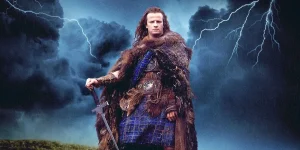
Movie Ending
The final act takes place at the main Shield control facility. MacLeod storms the heavily guarded complex to confront Katana and destroy the energy beam generator. Louise, meanwhile, works to dismantle the system from another control point.
MacLeod and Katana engage in a climactic sword duel high above the city within the Shield’s machinery. Ultimately, MacLeod decapitates Katana, triggering the most powerful Quickening of all. This final surge of energy overloads the Shield systems.
MacLeod channels the immense power, shattering the crimson energy field that has suffocated the planet for decades. For the first time in years, the sun and the stars become visible again. As the Shield crumbles, MacLeod embraces Louise, his mortality seemingly restored, having finally freed the world.
Are There Post-Credits Scenes?
There are no post-credits scenes in any version of Highlander II: The Quickening.
Type of Movie
Highlander II: The Quickening is a science fiction action film. It abandons the historical fantasy and urban mystery elements of the original. Instead, it leans into a dystopian, cyberpunk aesthetic mixed with over-the-top action sequences.
Its tone is notoriously inconsistent, shifting from grim dystopian drama to campy, almost cartoonish action. The film’s self-serious delivery of its absurd plot has made it an infamous example of a franchise-killing sequel.
Cast
- Christopher Lambert – Connor MacLeod
- Sean Connery – Juan Sánchez-Villalobos Ramírez
- Virginia Madsen – Louise Marcus
- Michael Ironside – General Katana
- Allan Rich – Allan Neyman
- John C. McGinley – David Blake
Film Music and Composer
Stewart Copeland, the drummer for the band The Police, composed the score for the film. Copeland had previously contributed a track to the first film’s soundtrack. His score for the sequel is pulsing and electronic, fitting the new futuristic and industrial setting.
Notably, the film does not feature any music from the band Queen, whose songs were integral to the identity of the original Highlander. This omission was a major point of criticism from fans and further disconnected the sequel from its predecessor.

Filming Locations
The majority of Highlander II: The Quickening was filmed in and around Buenos Aires, Argentina. The production chose Argentina largely for budgetary reasons. This decision, however, became a massive problem.
During filming, the country experienced a severe economic crisis and hyperinflation. This caused enormous financial and logistical issues for the production, contributing significantly to the film’s troubled development and rushed final product.
Awards and Nominations
The film received no major positive awards. It was, however, widely panned by critics and audiences upon its release. It is frequently cited on lists of the worst films ever made.
Behind the Scenes Insights
- Director Russell Mulcahy was so unhappy with the final theatrical cut that he walked out of the film’s premiere after just 15 minutes.
- The film’s financial backers, an insurance company, took creative control away from the director and producers partway through production due to the budget spiraling out of control in Argentina.
- Michael Ironside reportedly enjoyed playing the villainous General Katana so much that he often ad-libbed his lines and relished the chaotic nature of the character.
- Christopher Lambert and Sean Connery agreed to return based on the initial script. They were reportedly dismayed by the extensive on-set rewrites and production chaos.
Inspirations and References
The film’s dystopian futuristic city aesthetic draws heavily from Ridley Scott’s Blade Runner (1982). Similarly, its depiction of a corrupt corporation controlling a vital global resource is a common trope in classic science fiction from the 1970s and 80s.
The narrative shift to aliens from another planet, however, seems to be a wholly original and widely criticized invention for the franchise, without a clear external inspiration.
Alternate Endings and Deleted Scenes
There are multiple versions of Highlander II, most of them attempts to fix the theatrical cut’s glaring flaws. The most well-known is the Renegade Version, a director’s cut released in 1995.
In this version, all references to the planet Zeist are removed. The Immortals are instead revealed to be from a technologically advanced society in Earth’s distant past. They were criminals exiled through time to the future as punishment, with The Prize being the chance to return home or live out a mortal life.
This retcon was later refined in the 2004 Special Edition DVD, which featured improved special effects. These alternate versions are generally considered superior to the theatrical release, though they still contain many of the original’s narrative problems.
Book Adaptations and Differences
The film is not based on a book. It is an original story that serves as a sequel to the 1986 film Highlander, which itself was based on an original screenplay by Gregory Widen.
Memorable Scenes and Quotes
Key Scenes
- The Quickening Rebirth: A frail, elderly Connor MacLeod fights off one of Katana’s assassins. Killing the alien triggers a Quickening that blasts him across the room, de-aging him back to his prime in a shower of sparks and energy.
- Ramirez’s Return: During a stage performance of Hamlet, Ramirez suddenly materializes from nothing next to a very confused actor. He dusts off his centuries-old clothes and declares, “Most things in this life, good and bad, happen by accident.”
- The Subway of Chaos: General Katana hijacks a futuristic subway car. He pushes it to impossible speeds, delighting in the terror of the passengers before crashing it spectacularly, all for his own amusement.
Iconic Quotes
- “There can be only one.” – Connor MacLeod (reprising the iconic line)
- “Remember, Highlander, you are a mortal. You can die. A pathetic, meaningless death.” – General Katana
- “I’ve been grounded for five hundred years, and I’m not going to let a sleazeball like you ruin my first day back!” – Ramirez
- “Nice planet. We’ll take it.” – Reno
Easter Eggs and Hidden Details
- The two assassins from Zeist, Corda and Reno, are named after the production company’s financiers, Corda and D’Acosta, whom the director and producer blamed for interfering with the film.
- Several visual elements, like the airborne vehicles and perpetually dark, rainy city, are direct visual homages to Blade Runner.
- John C. McGinley’s character, David Blake, is shown to be a fan of the original Highlander, as a Kurgan figurine can be briefly seen on his desk.
Trivia
- Sean Connery was reportedly paid $3.5 million for just nine days of work on the film.
- Virginia Madsen’s character, Louise, was originally written as a love interest for MacLeod to replace his first film love, Brenda. In the final cut, their romance is significantly downplayed.
- The tagline used on many posters was “It’s time…” This was intended as a double-entendre, referring to both the continuation of the story and the element of time travel introduced in some versions.
Why Watch?
This film is a masterclass in how not to make a sequel. For students of film and franchise fans, it is a fascinating case study in production hell. Its glorious absurdity and campy performances make for an unintentionally hilarious viewing experience.
Director’s Other Movies
- Razorback (1984)
- Highlander (1986)
- The Shadow (1994)
- Resident Evil: Extinction (2007)