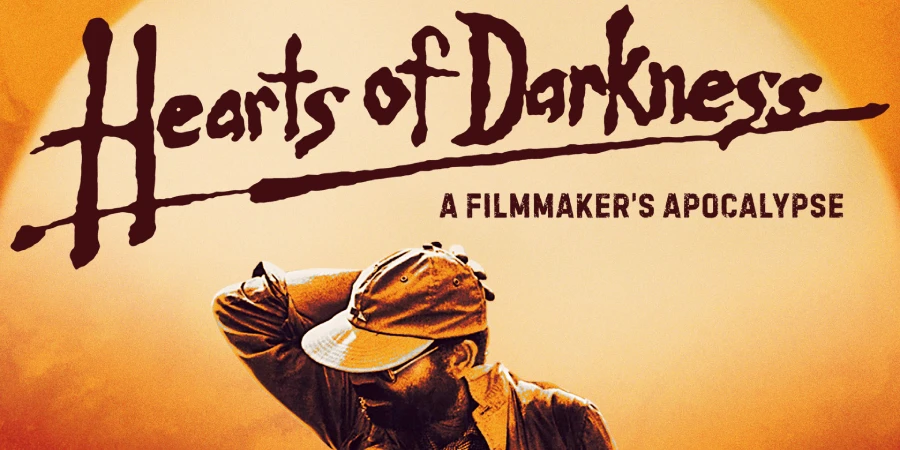

Hearts of Darkness: A Filmmaker’s Apocalypse is not just a documentary about making a movie. It is a raw, unsettling, and often shocking descent into obsession, ego, chaos, and the thin line between artistic ambition and self-destruction. Often described as one of the greatest documentaries ever made, it chronicles the nightmarish production of Apocalypse Now (1979) and reveals how cinema history was almost derailed by madness.
Detailed Summary
The Original Dream: Adapting Apocalypse Now
Francis Ford Coppola sets out to make what he believes will be the greatest war film ever created. Inspired by Joseph Conrad’s Heart of Darkness, the plan is ambitious:
- Real helicopters
- Real jungle
- Real chaos
- No studio interference
From the beginning, Coppola insists the film will be shot in the Philippines to replicate Vietnam’s environment. This decision becomes the documentary’s first warning sign.
What begins as artistic courage slowly turns into logistical disaster.
Pre-Production Problems and Casting Turmoil
The production immediately runs into serious issues:
- The original actor cast as Captain Willard, Harvey Keitel, is fired after only a few weeks.
- Martin Sheen replaces him, forcing Coppola to reshoot large portions of the film.
- The script is unfinished. Coppola admits openly that he does not know how the movie will end.
At this stage, the film already feels out of control, but the worst is yet to come.
Nature Turns Against the Production
The Philippines locations prove devastating:
- A massive typhoon destroys entire sets, including Kurtz’s compound.
- Equipment is ruined.
- Shooting is delayed for months.
- The budget explodes beyond its original limits.
Coppola mortgages his own house to continue filming, placing his personal fortune and career at risk.
The documentary makes clear that this is no longer just a movie production. It has become a psychological war.
Martin Sheen’s Breakdown
One of the most disturbing segments of the documentary involves Martin Sheen’s physical and mental collapse:
- He suffers a real heart attack during filming.
- Coppola initially hides this from the studio.
- Shooting continues by filming Sheen from behind and using his brother as a stand-in.
The opening scene of Apocalypse Now, where Willard punches the mirror in a hotel room, is not staged. Sheen is drunk, bleeding, and emotionally broken. The documentary reveals this moment as painfully real.
This is where the film stops being behind-the-scenes trivia and becomes something far more uncomfortable.
Marlon Brando Arrives
The arrival of Marlon Brando marks another turning point:
- He shows up overweight.
- He has not read the script.
- He refuses to learn lines.
- He questions the entire concept of the movie.
Coppola is forced to rewrite scenes daily while trying to negotiate with one of the most powerful actors in Hollywood.
Much of Kurtz’s final portrayal is improvised simply because there was no workable script.
Coppola’s Psychological Collapse
As the shoot drags on, Coppola himself begins unraveling:
- He records audio diaries expressing fear, paranoia, and despair.
- He speaks openly about suicide.
- He believes the film mirrors the Vietnam War itself: too expensive, too long, and impossible to control.
One of the documentary’s most famous lines comes from Coppola:
“My film is not about Vietnam. It is Vietnam.”
This realization becomes the emotional thesis of the entire documentary.
Completion Against All Odds
After more than a year of filming, endless reshoots, and emotional trauma, Apocalypse Now is finally completed.
But even in victory, there is no triumph. Coppola is exhausted, financially ruined, and unsure whether the film will even make sense.
The documentary closes with the understanding that this film should not exist — and yet, somehow, it does.

Movie Ending
We see Coppola at the Cannes Film Festival premiere of Apocalypse Now in 1979. The audience response is mixed, confused, and uncertain. Some viewers applaud. Others walk out. Critics are divided.
Coppola watches the reaction with visible anxiety. After years of chaos, breakdowns, and near-total collapse, he is finally facing the public judgment of his work.
The film does not end with celebration.
Instead, it ends with realization.
Coppola acknowledges that the experience changed him permanently. He admits that the production nearly destroyed his marriage, his finances, his mental health, and his identity as a filmmaker.
The final feeling is not victory, but survival.
The audience is left contemplating an uncomfortable truth:
Great art sometimes comes at an unbearable human cost.
The documentary closes not with applause, but with silence — fitting for a story about obsession taken too far.
Are There Post-Credits Scenes?
No. Hearts of Darkness: A Filmmaker’s Apocalypse does not include any post-credits or mid-credits scenes.
The film ends definitively with its final reflections on Coppola and the legacy of Apocalypse Now.
Type of Movie
This is a documentary film focused on filmmaking, psychology, and artistic obsession. It functions simultaneously as a behind-the-scenes record and a cautionary tale about unchecked ambition.
Cast
- Francis Ford Coppola – Himself
- Eleanor Coppola – Narrator and filmmaker
- Martin Sheen – Himself
- Marlon Brando – Himself
- Dennis Hopper – Himself
- George Lucas – Himself
- John Milius – Himself
- Vittorio Storaro – Himself
Film Music and Composer
The documentary primarily uses:
- Music from Apocalypse Now
- Period tracks from the late 1960s and 1970s
- Ambient and minimal score elements
There is no traditional original soundtrack, reinforcing the raw, observational tone of the film.
Filming Locations
- Philippines – Primary shooting location for Apocalypse Now, heavily featured in the documentary.
- San Francisco, USA – Editing and post-production segments.
- Cannes Film Festival, France – Final premiere footage.
These locations are crucial because they emphasize the contrast between jungle chaos and cinematic prestige.


Awards and Nominations
- Best Documentary – National Society of Film Critics Awards
- Independent Spirit Award Nomination – Best Documentary
- Widely ranked among the greatest documentaries of all time by critics and film institutions
Behind the Scenes Insights
- Eleanor Coppola secretly recorded audio diaries throughout the shoot.
- Much of the footage was never intended for public release.
- Coppola initially refused to watch the documentary after it was completed.
- George Lucas advised Coppola to shoot the film cheaply and quickly — advice that was ignored.
- The production lasted over 238 shooting days, far exceeding expectations.
- Some crew members genuinely believed the film would never be finished.
Inspirations and References
- Heart of Darkness by Joseph Conrad (1899)
- The Vietnam War
- Coppola’s own fear of artistic failure
- The collapse of New Hollywood idealism in the 1970s
Alternate Endings and Deleted Scenes
The documentary includes material that was nearly lost:
- Several emotional breakdown recordings were almost excluded.
- Early cuts were considered too personal and invasive.
- Coppola requested removals that were later restored.
There are no alternate endings, but multiple edits exist with varying degrees of intimacy.
Book Adaptations and Differences
The documentary itself is not based on a book, but it documents the adaptation of Heart of Darkness into Apocalypse Now.
Major differences include:
- The novel’s Congo setting becomes Vietnam.
- Colonial exploitation is reframed as American militarism.
- Kurtz shifts from ivory trader to rogue military officer.
Memorable Scenes and Quotes
Key Scenes
- Coppola admitting he may be making “the biggest failure in cinema history”
- Martin Sheen’s hospital evacuation after his heart attack
- Marlon Brando refusing to read the script
- The destroyed sets after the typhoon
- The Cannes Film Festival premiere
Iconic Quotes
- “My film is not about Vietnam. It is Vietnam.”
- “We were in the jungle. There were too many of us. We had access to too much money.”
- “I wanted to make a movie about Vietnam, and we were actually in Vietnam.”

Easter Eggs and Hidden Details
- Audio diary tapes later inspired similar filmmaker confessionals.
- Several background shots show unused Kurtz dialogue notes.
- Helicopter pilots were active military members fighting rebels on off days.
- Coppola’s voiceovers mirror Willard’s narration in Apocalypse Now.
Trivia
- The documentary footage was filmed by Coppola’s wife without studio permission.
- It took over a decade for the documentary to be fully released.
- Coppola described watching it as “more painful than the production itself.”
- Many filmmakers cite this documentary as mandatory viewing.
Why Watch?
You should watch Hearts of Darkness if you want to understand:
- How movies can psychologically destroy their creators
- Why Apocalypse Now feels so authentic
- The dangers of unlimited budgets and ego
- The thin boundary between genius and madness
It is not glamorous. It is not comforting.
But it is essential cinema.
Director’s Other Works (Francis Ford Coppola)
- The Godfather (1972)
- The Godfather Part II (1974)
- Apocalypse Now (1979)
- The Conversation (1974)
- Bram Stoker’s Dracula (1992)
- The Outsiders (1983)
Recommended Films for Fans
- Apocalypse Now (1979)
- Burden of Dreams (1982)
- Lost in La Mancha (2002)
- Jodorowsky’s Dune (2013)
- Side by Side (2012)
- American Movie (1999)
- The Sweatbox (2002)