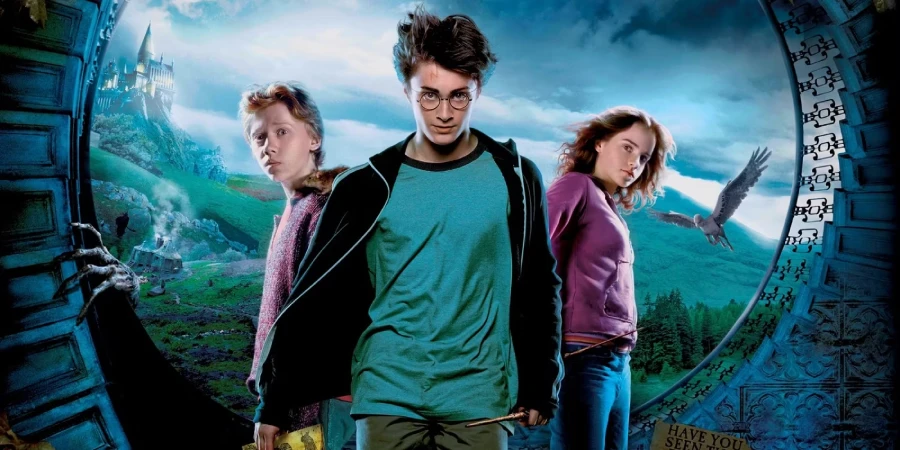

Harry Potter and the Prisoner of Azkaban is the third installment in the Harry Potter film series and the point where the franchise noticeably grows darker, deeper, and more emotionally complex. Directed by Alfonso Cuarón, the film marks a tonal shift from magical wonder toward psychological tension, moral ambiguity, and personal trauma.
Detailed Summary
A Darker Beginning: Harry on the Run
The film opens with Harry Potter spending another miserable summer at the Dursleys. After accidentally inflating his cruel Aunt Marge during an argument about his parents, Harry runs away, believing he may be expelled from Hogwarts. He is soon picked up by the mysterious Knight Bus, which delivers him to the Leaky Cauldron.
There, Harry learns alarming news: Sirius Black, a dangerous prisoner, has escaped from Azkaban and is believed to be hunting him. The wizarding world is on edge, and Harry is placed under constant watch.
Hogwarts Changes: New Teachers and New Threats
At Hogwarts, Harry encounters two significant new figures. The first is Professor Remus Lupin, the new Defense Against the Dark Arts teacher, whose calm demeanor and practical lessons immediately set him apart. The second is the chilling presence of the Dementors, guards of Azkaban stationed around the school to protect students from Sirius Black.
Dementors affect Harry more strongly than anyone else, forcing him to relive the night his parents were murdered. Lupin helps Harry learn the Patronus Charm, a powerful defensive spell fueled by happy memories.
Secrets of the Marauders
As the school year progresses, Harry learns more about his father’s past through the Marauder’s Map, a magical artifact once owned by James Potter and his friends. This map reveals hidden passages and moving figures within Hogwarts.
We also learn that Sirius Black was once a close friend of Harry’s parents, a revelation that conflicts sharply with his reputation as a traitor who betrayed them to Voldemort.
The Shrieking Shack Revelation
The story reaches its turning point when Harry, Ron, and Hermione confront Sirius Black in the Shrieking Shack. What appears to be a final showdown transforms into a shocking truth: Sirius is innocent. The real traitor is revealed to be Peter Pettigrew, a former friend who betrayed the Potters and framed Sirius.
Lupin is revealed to be a werewolf, explaining his absences and secrecy. The group plans to turn Pettigrew over to the authorities, but events spiral out of control when Lupin transforms during the full moon.
Movie Ending
The film’s final act is emotionally intense and resolves several mysteries while leaving lasting consequences. After Lupin transforms into a werewolf, chaos erupts. Sirius transforms into a dog to protect Harry, Ron is injured, and Peter Pettigrew escapes, allowing Voldemort’s eventual return in later films.
Harry and Sirius are attacked by Dementors near the lake. In a haunting scene, Harry believes he sees his deceased father cast a powerful Patronus to save him. He later realizes the truth: it was always himself.
With Hermione’s secret Time-Turner, she and Harry travel back in time to correct critical events. They save Buckbeak the hippogriff from execution and rescue Sirius from wrongful imprisonment. However, Sirius cannot clear his name publicly and must flee into hiding.
The film ends with Sirius gifting Harry the Firebolt broomstick, a symbol of freedom and hope. Harry smiles genuinely for perhaps the first time in the series, but the ending is bittersweet. Justice has not fully been served, and the truth remains hidden from the wizarding world.
Are There Post-Credits Scenes?
No. Harry Potter and the Prisoner of Azkaban does not include any post-credits or mid-credits scenes. The story concludes before the credits roll.
Type of Movie
This film is a fantasy adventure with strong elements of mystery and psychological drama. Compared to its predecessors, it leans more heavily into suspense, emotional depth, and moral complexity.
Cast
- Daniel Radcliffe as Harry Potter
- Emma Watson as Hermione Granger
- Rupert Grint as Ron Weasley
- Gary Oldman as Sirius Black
- David Thewlis as Remus Lupin
- Alan Rickman as Severus Snape
- Michael Gambon as Albus Dumbledore
- Timothy Spall as Peter Pettigrew
Film Music and Composer
The score was composed by John Williams, who introduced darker, more haunting themes. Tracks like “Double Trouble” and “A Window to the Past” reinforce the film’s eerie atmosphere and emotional introspection.
Filming Locations
The movie was filmed across the United Kingdom, including:
- Leavesden Studios for interior Hogwarts sets
- Glencoe, Scotland, used for sweeping outdoor shots that emphasize isolation and danger
- Durham Cathedral, standing in for Hogwarts courtyards
These locations contributed heavily to the film’s more grounded, moody visual style, making Hogwarts feel older and more mysterious.
Awards and Nominations
- Nominated for Academy Award – Best Original Score
- BAFTA nominations for Best Production Design and Best Visual Effects
Although it did not win major awards, it is often cited as one of the strongest films in the franchise.
Behind the Scenes Insights
- Alfonso Cuarón encouraged the young actors to wear casual clothing to make Hogwarts feel more lived-in.
- This was the first Harry Potter film where the school uniforms were relaxed and personalized.
- Cuarón asked the cast to write essays about their characters; Emma Watson wrote 16 pages, Rupert Grint didn’t write one.
- The Time-Turner concept required meticulous editing to ensure continuity.
Inspirations and References
The film is based on J.K. Rowling’s 1999 novel of the same name. Visually and tonally, Cuarón drew inspiration from Gothic cinema, classic horror films, and European art-house storytelling.
Alternate Endings and Deleted Scenes
Several scenes were cut, including extended explanations of the Marauders’ identities. While no alternate ending exists, many fans note that this omission made the film more mysterious but slightly confusing for newcomers.
Book Adaptation and Differences
- The film omits detailed backstory about James Potter, Sirius, Lupin, and Pettigrew being the Marauders.
- The relationship dynamics are more subtle in the movie.
- The tone is significantly darker than the book at this stage in the series.

Memorable Scenes and Quotes
Key Scenes
- Harry casting the full Patronus by the lake
- The Time-Turner sequence replaying events
- Lupin’s first Defense Against the Dark Arts lesson
Iconic Quotes
- “Happiness can be found even in the darkest of times, if one only remembers to turn on the light.” – Dumbledore
- “I solemnly swear that I am up to no good.”
Easter Eggs and Hidden Details
- The Marauder’s Map insults Snape in the same style as the book.
- The Whomping Willow’s violent movement mirrors Harry’s emotional state.
- Clock mechanisms appear frequently, foreshadowing the Time-Turner.
Trivia
- This is the shortest Harry Potter film by runtime.
- It is the first film not to end with a House Cup ceremony.
- Many fans consider it the most “director-driven” entry in the series.
Why Watch?
If you want to see where Harry Potter grows up, this is the turning point. The film balances magic with mature themes like fear, injustice, and identity, making it one of the most critically respected entries in the saga.