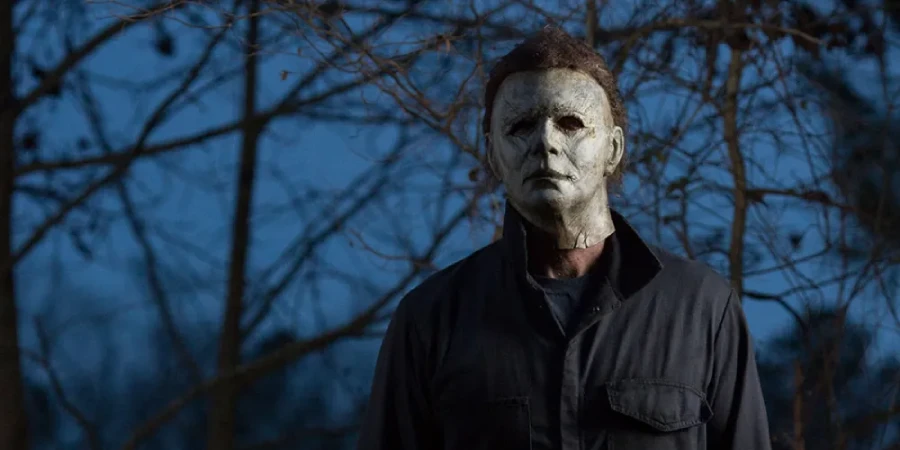

Halloween (2018) is a direct sequel to John Carpenter’s 1978 classic, boldly ignoring every other sequel, remake, and reboot in the franchise. Directed by David Gordon Green, this film aims to strip the series back to its rawest elements: trauma, fear, and one very persistent man in a mask.
This is not just another slasher sequel. It is a movie about survival, generational trauma, and obsession, wrapped in brutal suspense.
Detailed Summary
Opening: The Return of Michael Myers
The film opens 40 years after the original murders in Haddonfield. Michael Myers has been incarcerated in Smith’s Grove Sanitarium since 1978, silent and unresponsive. Two investigative podcasters visit him, hoping to provoke a reaction by showing him his old mask. When the mask appears, Michael reacts for the first time in decades, confirming one thing clearly: the evil is still there.
Soon after, Michael is transferred to another facility. During transport, the prison bus crashes, allowing Michael to escape. Haddonfield is about to relive its worst nightmare.
Laurie Strode: A Life Shaped by Fear
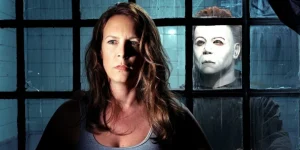
Laurie Strode (Jamie Lee Curtis) is no longer a helpless teenager. She has spent four decades preparing for Michael’s return. Her life is defined by paranoia, weapons training, and isolation. This obsession has cost her relationships with her daughter Karen and granddaughter Allyson, who see her as unstable and broken.
Laurie lives in a heavily fortified house designed as a trap, waiting for Michael to come home.
Michael Returns to Haddonfield
Michael retrieves his iconic mask and begins killing again. Unlike many sequels, his violence here is grounded and unsettling, with no supernatural explanation. He moves silently through homes, killing indiscriminately. His presence spreads fear through the town, reminding everyone that evil does not need a reason.
Meanwhile, Allyson and her friends go about their Halloween night, unknowingly walking into Michael’s path.
The Doctor’s Obsession
Dr. Sartain, Michael’s new psychiatrist, becomes a disturbing wildcard. Obsessed with understanding Michael’s nature, he believes Michael must confront Laurie to reach his “true potential.” This leads to one of the film’s most shocking twists, proving that human obsession can be just as dangerous as pure evil.

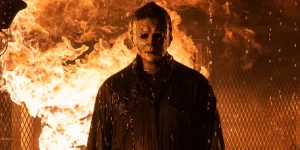
Movie Ending
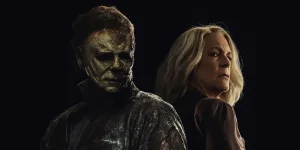
Michael finally reaches Laurie’s fortified home. What follows is a carefully staged confrontation that feels like a culmination of 40 years of fear.
Laurie, Karen, and Allyson work together to survive. Laurie is injured but refuses to give up. Karen, previously portrayed as fragile and fearful, reveals her strength and survival instincts, showing that Laurie’s training was not wasted.
Michael is lured into the basement, which is revealed to be a hidden cage. Laurie activates the trap, locking him inside. The house is then set ablaze, transforming Laurie’s lifelong fear into a weapon. As flames engulf the structure, Laurie watches, finally believing Michael is dead.
The film ends with Laurie being taken to the hospital, badly wounded but alive, holding Allyson’s hand. The trauma is not erased, but the cycle appears broken.
However, the final shot lingers just long enough to plant doubt. Is Michael truly gone?
Are There Post-Credits Scenes?
There is no visual post-credits scene, but during the black screen at the very end, Michael Myers’ breathing can be heard, strongly implying that he survived the fire. This subtle audio cue sets up the sequels without cheap shock tactics.
Type of Movie
Halloween (2018) is a slasher horror film with strong psychological and thriller elements. Unlike many slashers, it focuses heavily on emotional consequences and realism rather than body count alone.
Cast
- Jamie Lee Curtis as Laurie Strode
- Judy Greer as Karen Nelson
- Andi Matichak as Allyson Nelson
- James Jude Courtney as Michael Myers
- Nick Castle as Michael Myers (select scenes)
- Will Patton as Officer Hawkins
- Haluk Bilginer as Dr. Sartain
Film Music and Composer
The score was composed by John Carpenter, alongside Cody Carpenter and Daniel Davies. The iconic Halloween theme is reworked with heavier synths and modern sound design, reinforcing tension while honoring the original.
Filming Locations
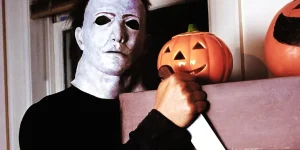
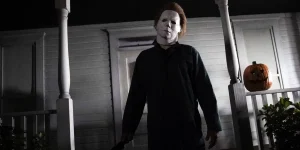
The film was primarily shot in Charleston, South Carolina, which doubled for Haddonfield, Illinois. Suburban streets, schools, and residential homes were chosen to maintain a grounded, everyday atmosphere, reinforcing the idea that horror can strike anywhere.
Awards and Nominations
While not a major awards contender, the film received:
- Saturn Award nominations for Best Horror Film
- Critical praise for Jamie Lee Curtis’ performance
- Strong recognition for its box office success as one of the highest-grossing horror films of all time
Behind the Scenes Insights
- Jamie Lee Curtis insisted Laurie should be flawed, traumatized, and imperfect rather than heroic
- John Carpenter was deeply involved, approving story decisions and music direction
- Michael Myers was portrayed by two actors to balance physical presence and legacy
- The filmmakers intentionally removed supernatural elements to make Michael “just a man”
Inspirations and References
- John Carpenter’s Halloween (1978)
- Themes inspired by post-traumatic stress disorder
- Minimalist horror storytelling similar to The Texas Chain Saw Massacre (1974)
Alternate Endings and Deleted Scenes
- An earlier ending more strongly implied Michael’s death
- Extended scenes with Dr. Sartain were cut to preserve pacing
- Additional moments exploring Laurie’s isolation were trimmed for theatrical release
Book Adaptations and Differences
The film is not based on a book, but novelizations expand on:
- Laurie’s internal monologue
- Michael’s movements throughout Haddonfield
- Secondary character backstories
Memorable Scenes and Quotes
Key Scenes
- The prison courtyard mask reveal
- Michael silently following a child on Halloween night
- Laurie stalking Michael through her own house
- Karen’s fake breakdown turning into a survival trap
Iconic Quotes
- “I prayed every night that he would escape.” – Laurie Strode
- “He’s waited for this night.”
- “Happy Halloween, Michael.”
Easter Eggs and Hidden Details
- Officer Hawkins references the 1978 shooting incident
- The original Myers house number appears briefly
- Piano motifs mirror Carpenter’s 1978 score structure
- Michael’s breathing pattern is identical to the original
Trivia
- Jamie Lee Curtis wore similar wardrobe colors to her 1978 character
- The film ignores every sequel except the original
- Michael kills fewer people than in many sequels, but with greater impact
- John Carpenter called this his favorite sequel
Why Watch?
If you want a smart, intense, and emotionally grounded horror film, this is essential viewing. It respects its legacy while daring to ask: what happens after you survive a monster?
Director’s Other Works
- Pineapple Express (2008)
- Your Highness (2011)
- Joe (2013)
- Stronger (2017)
- Halloween Kills (2021)
- Halloween Ends (2022)