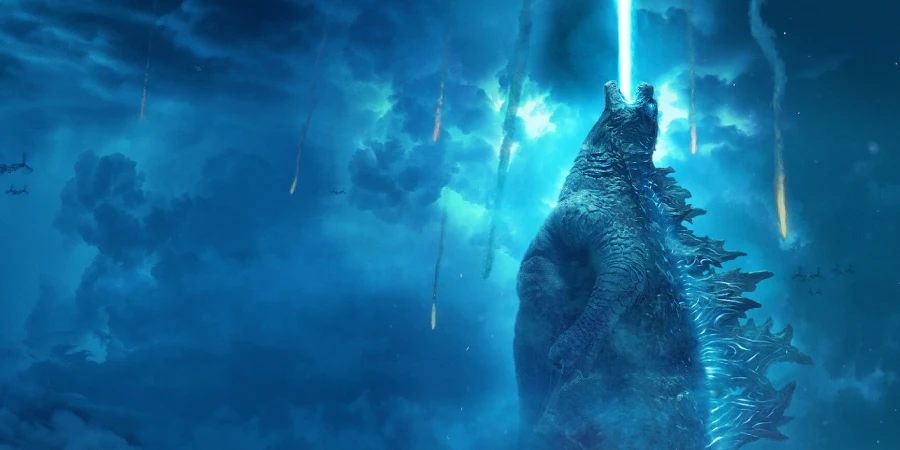

Godzilla: King of the Monsters is the third installment in Legendary’s MonsterVerse and a direct sequel to Godzilla (2014). Directed by Michael Dougherty, the film fully embraces classic kaiju mythology, delivering colossal monster battles, apocalyptic themes, and heavy ties to the franchise’s Japanese roots.
This time, the movie isn’t shy about what it wants to be: a full-scale monster epic where humanity is no longer at the top of the food chain.
Detailed Summary
Awakening of the Titans
Following the events of Godzilla (2014), the world has become aware of ancient super-species known as Titans. Monarch, a secret scientific organization, monitors these creatures around the globe.
Dr. Emma Russell and her daughter Madison have developed a device called the ORCA, capable of communicating with Titans using bioacoustic signals. Their intention is to control the monsters and potentially restore Earth’s failing ecosystems.
However, their research attracts the attention of eco-terrorists led by Alan Jonah, who believes humanity must be reduced for the planet to survive.
The Rise of King Ghidorah
The terrorists awaken King Ghidorah, a massive three-headed extraterrestrial Titan buried beneath Antarctic ice.
Unlike Godzilla, Ghidorah is not part of Earth’s natural balance. His awakening triggers violent climate disasters across the globe, including hurricanes, tsunamis, and mass extinction-level storms.
As Ghidorah begins asserting dominance, dormant Titans around the world respond to his alpha call, bending to his will.
Godzilla vs Ghidorah Begins
Godzilla emerges to challenge Ghidorah, marking the first of several massive confrontations.
Human characters race between Monarch facilities while the monsters clash in:
- Antarctica
- The Mexican ocean depths
- Washington D.C.
- Boston
The film emphasizes ancient rivalries, revealing that Godzilla and Ghidorah have battled before in prehistoric times.
Mothra and Rodan Enter the Battle
Two iconic kaiju make their MonsterVerse debut:
Rodan, awakened from a volcano in Mexico, becomes a living firestorm capable of destroying entire cities just by flying overhead.
Mothra, discovered in China, is portrayed as a benevolent Titan connected symbiotically to Godzilla.
Mothra’s presence introduces spiritual mythology, ancient cave paintings, and the idea that Titans were once worshipped as gods.
Humanity’s Moral Divide
Emma Russell reveals her shocking true motive: she intentionally released Ghidorah.
Believing humanity has irreparably damaged Earth, she sees Titans as nature’s solution to climate collapse, even if billions die in the process.
Her ideological conflict with her ex-husband Mark Russell represents the film’s emotional core:
should humanity fight nature or accept its judgment?

Movie Ending
The final act unfolds in a devastated Boston, transformed into a frozen wasteland by Ghidorah’s storm system.
Godzilla is severely wounded after a military oxygen-destroying weapon nearly kills him. Monarch revives him using a nuclear detonation, restoring him to an empowered, burning state.
Key ending moments include:
- Mothra sacrifices herself to save Godzilla, transferring her life force to him
- Godzilla enters a nuclear meltdown mode, radiating destructive energy
- Ghidorah absorbs massive electrical power and nearly kills Godzilla
- Emma Russell sacrifices herself to distract Ghidorah using the ORCA
With Mothra’s energy amplifying him, Godzilla unleashes multiple nuclear pulses, vaporizing Ghidorah entirely, leaving only one severed head behind.
After the battle:
- All surviving Titans submit to Godzilla as the new alpha
- Godzilla returns peacefully to the ocean
- Monarch reports that Titans are restoring ecosystems worldwide
- Ancient ruins rise from the sea, becoming Godzilla’s new throne
The ending confirms that Earth now belongs to the monsters, and humanity must coexist rather than dominate.
Are There Post-Credits Scenes?
Yes. There is one post-credits scene.
In it, Jonah’s mercenaries purchase one of Ghidorah’s severed heads from black-market fishermen.
This directly sets up the events of Godzilla vs. Kong (2021) and hints at advanced Titan-based weapon experimentation.
Type of Movie
The film is a large-scale science fiction monster epic that blends action, disaster cinema, and mythological fantasy. It leans heavily into kaiju lore while maintaining blockbuster spectacle.
Cast
- Kyle Chandler – Mark Russell
- Vera Farmiga – Dr. Emma Russell
- Millie Bobby Brown – Madison Russell
- Ken Watanabe – Dr. Ishirō Serizawa
- Zhang Ziyi – Dr. Ilene Chen / Dr. Ling Chen
- Charles Dance – Alan Jonah
- Bradley Whitford – Dr. Rick Stanton
- Sally Hawkins – Dr. Vivienne Graham
Film Music and Composer
The score was composed by Bear McCreary.
Notably, McCreary incorporated:
- Akira Ifukube’s original Godzilla theme
- Classic Mothra and Ghidorah motifs
- Heavy choral and percussion elements
The soundtrack is widely considered one of the strongest aspects of the film and a love letter to classic Toho cinema.
Filming Locations
Principal filming took place in:
- Atlanta, Georgia
- Mexico City, Mexico
- Vancouver, Canada
These locations were crucial for representing global Titan outbreaks and allowed the film to visually emphasize worldwide catastrophe rather than localized destruction.
Awards and Nominations
- Nominated for Best Visual Effects at multiple critics associations
- Won Best Sci-Fi Film at several fan-voted awards
- Recognized by the Visual Effects Society for creature animation
While not an awards darling, the film received strong technical recognition.
Behind the Scenes Insights
- Michael Dougherty is a lifelong Godzilla fan and included over 100 franchise references
- The monsters’ personalities were mapped like characters, not animals
- Ghidorah’s three heads were given individual behavior traits
- Over 1,200 VFX artists worked on the film
- Ken Watanabe improvised part of his emotional farewell scene
Inspirations and References
The film draws heavily from:
- Toho’s Showa and Heisei-era Godzilla films
- Ghidorah, the Three-Headed Monster (1964)
- Godzilla vs. King Ghidorah (1991)
- Shinto mythology and ancient god symbolism
It intentionally positions Godzilla as a natural deity rather than a monster.
Alternate Endings and Deleted Scenes
- A longer epilogue showing Titan-controlled regions was removed
- Additional Mothra scenes emphasizing her spiritual role were cut
- Early drafts included multiple Ghidorahs rather than one
No alternate final battle was filmed.
Memorable Scenes and Quotes
Key Scenes
- Godzilla’s underwater temple reveal
- Mothra’s bioluminescent emergence
- Rodan chasing fighter jets through a hurricane
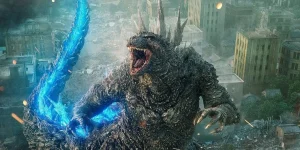
- Nuclear revival of Godzilla
- Final burning Godzilla transformation
Iconic Quotes
- “Long live the king.”
- “We are the infection.”
- “Goodbye, old friend.”
Easter Eggs and Hidden Details
- Monarch outposts reference Skull Island, Loch Ness, and Area 51
- Oxygen Destroyer weapon references the 1954 original film
- Ancient cave art mirrors real Toho monster designs
- Twin fairies symbolism subtly tied to Mothra’s mythology
Trivia
- Godzilla’s roar uses original 1954 sound elements
- Ghidorah’s wingspan exceeds 1,700 feet
- The film features more monsters on screen than any previous Godzilla movie
- Dougherty insisted storms always appear when Ghidorah is present
- The monsters’ eye movement was animated first to convey emotion
Why Watch?
If you want:
- Pure kaiju spectacle
- Respect for classic Godzilla mythology
- Massive monster-on-monster combat
- Apocalyptic scale visuals
This film delivers exactly what the title promises.
It may not focus heavily on human drama, but when the Titans appear, the screen belongs entirely to them.
Director’s Other Works
- Trick ’r Treat (2007)
- Krampus (2015)
- Godzilla: King of the Monsters (2019)