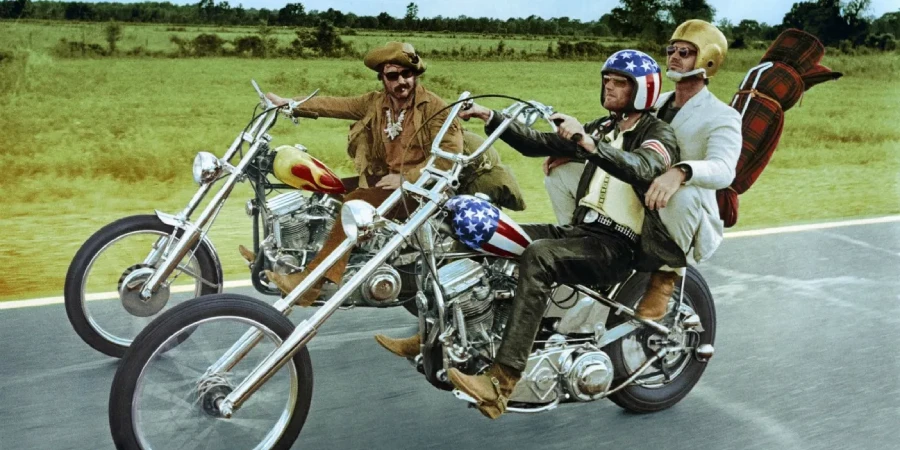

Easy Rider is more than just a road trip movie; it is a cinematic Molotov cocktail thrown at the American Dream. The film captures the raw, chaotic spirit of the 1960s counterculture with an authenticity that still feels dangerous today. It follows two men who, having achieved their version of success, find only emptiness at the end of the road.
Detailed Summary
The Big Score
The film opens with two free-spirited bikers, Wyatt (Peter Fonda) and Billy (Dennis Hopper). Wyatt, known as “Captain America,” dons a patriotic leather jacket, while Billy sports a thick mustache and cowboy hat. They complete a lucrative cocaine deal in Mexico, selling their score to a man in a Rolls-Royce, played by music producer Phil Spector.
With their gas tank stuffed with cash, their goal is simple. They plan to ride their custom choppers from Los Angeles to New Orleans to celebrate Mardi Gras and then retire in Florida. Consequently, their journey becomes a cross-country odyssey through the heart of America.
The Open Road and Early Encounters
On their eastward journey, Wyatt and Billy experience both the kindness and hostility of the American landscape. For instance, they find hospitality at a remote Arizona ranch. A humble farmer invites them to share a meal with his large family, a moment of simple, genuine connection.
However, their freedom is short-lived. In a small town, they get arrested for the trivial offense of “parading without a permit” after joining a local parade. This incident lands them in a small-town jail cell.
Meeting George Hanson
In jail, they meet George Hanson (Jack Nicholson), a charismatic, alcoholic lawyer from a prominent local family. He is sleeping off a night of heavy drinking. George helps them get out of jail and, on a whim, decides to join them on their trip to New Orleans.
George represents a bridge between the establishment and the counterculture. Moreover, his presence brings a new dynamic to the group, blending his intellectual musings with Wyatt and Billy’s silent wanderlust. He famously rides on the back of Wyatt’s bike wearing his old football helmet.
The Southern Divide
As the trio travels deeper into the conservative South, the tension escalates dramatically. They stop at a rural diner, where local patrons and lawmen openly mock and threaten them for their long hair and unconventional appearance. The scene starkly contrasts the freedom of the open road with the fear and prejudice of settled society.
Later that night, a group of locals attacks them while they sleep. They brutally beat the trio, and in the ensuing violence, they murder George Hanson. Wyatt and Billy are left traumatized and disillusioned, wrapping George’s bloody body in his own jacket.
The Acid Trip in New Orleans
Shattered by George’s death, Wyatt and Billy finally reach New Orleans. They find the brothel George had recommended, bringing along two prostitutes, Karen and Mary. Together, the four head to a cemetery to take LSD during the Mardi Gras celebration.
The resulting acid trip is a chaotic, disorienting montage of distorted images and sounds. Wyatt has visions of his mother and expresses deep feelings of guilt and loss. Ultimately, the experience offers no enlightenment, only more confusion and despair.
Movie Ending
Leaving New Orleans, the dream is dead. As they ride through rural Louisiana, Wyatt turns to Billy and delivers the film’s most haunting line: “We blew it.” He realizes their pursuit of freedom through money and escapism was a hollow failure. They sought to buy their way out of society but found no real alternative.
Moments later, two men in a pickup truck pull alongside them, taunting them. One of the men brandishes a shotgun, intending only to scare Billy. However, Billy flips him off, and the man fires, shooting Billy off his bike. Wyatt turns back to help his friend, only for the truck to circle back. The man fires again, and Wyatt’s bike explodes in a fiery crash, killing him instantly. A final aerial shot pulls away from the burning wreckage on the side of the road, leaving the audience with an image of absolute, senseless destruction.
Are There Post-Credits Scenes?
No, Easy Rider does not have any post-credits scenes. The film ends abruptly with the credits rolling over the final shot of the burning motorcycle.
Type of Movie
Easy Rider is a quintessential counterculture road movie and a landmark of the New Hollywood era. It subverts the classic Western genre, trading horses for motorcycles and cowboys for hippies. Its tone is initially rebellious and free-spirited but progressively darkens, becoming cynical, tragic, and intensely critical of American society.
Cast
- Peter Fonda – Wyatt (“Captain America”)
- Dennis Hopper – Billy
- Jack Nicholson – George Hanson
- Karen Black – Karen
- Toni Basil – Mary
- Luke Askew – Stranger on Highway
- Phil Spector – The Connection
Film Music and Composer
Easy Rider famously rejected a traditional orchestral score. Instead, its soundtrack is a groundbreaking compilation of popular rock songs from the late 1960s. This was one of the first films to use pre-existing popular music so extensively, setting a new standard for film soundtracks.
Notable tracks include Steppenwolf’s “Born to Be Wild” and “The Pusher,” The Byrds’ “I Wasn’t Born to Follow,” and The Jimi Hendrix Experience’s “If 6 Was 9.” The selection of music, curated by director Dennis Hopper, perfectly captures the rebellious energy and mood of the era. The film has no credited composer; the soundtrack is the score.

Filming Locations
The film was shot on location, creating a powerful sense of authenticity. The journey begins in Southern California and moves eastward through Arizona, New Mexico, Texas, and Louisiana. Key locations include the artistic community of Taos, New Mexico, and the distinctive streets and cemeteries of New Orleans.
These sprawling, natural landscapes symbolize the freedom and possibility that Wyatt and Billy are chasing. In contrast, the small towns and claustrophobic diners represent the restrictive, intolerant forces of mainstream America they are trying to escape.
Awards and Nominations
Easy Rider was a critical success that earned several prestigious awards and nominations. Jack Nicholson’s breakout performance earned him an Academy Award nomination for Best Supporting Actor. In addition, Peter Fonda, Dennis Hopper, and Terry Southern received an Oscar nomination for Best Original Screenplay.
At the 1969 Cannes Film Festival, Dennis Hopper won the Best First Work award (Prix de la première œuvre), cementing the film’s international acclaim.
Behind the Scenes Insights
- The script was largely improvised. The screenplay was more of a detailed outline, and much of the dialogue, especially George Hanson’s campfire speeches, came from spontaneous on-set creativity.
- Real drugs were reportedly used on set, particularly for the campfire and New Orleans cemetery scenes, to achieve a greater sense of realism.
- The production was notoriously chaotic, marked by intense creative clashes between director Dennis Hopper and producer/star Peter Fonda. Hopper’s erratic behavior nearly derailed the project several times.
- The film was made on a shoestring budget of around $400,000. It went on to gross over $60 million worldwide, making it one of the most profitable films of all time and proving the commercial viability of independent, director-driven cinema.
Inspirations and References
Easy Rider was directly inspired by the social and political turmoil of the 1960s, serving as a cinematic voice for the counterculture movement. Its structure, featuring two protagonists on a journey confronting societal ills, draws parallels to modernist European films and American literary traditions like Jack Kerouac’s On the Road.
Some critics also suggest it functions as a modern Western. Fonda and Hopper are essentially outlaws on iron horses, exploring a new frontier of social change and finding that the “promised land” is just as hostile as the old one.
Alternate Endings and Deleted Scenes
Dennis Hopper’s original cut of Easy Rider was reportedly over four hours long. He was forced by the studio to trim it down to its current 95-minute runtime. Consequently, numerous subplots and character moments were lost.
One notable deleted scene involved the duo picking up a group of hippie hitchhikers and attending a chaotic outdoor music festival. Additionally, the original assembly showed Wyatt and Billy successfully riding past the pickup truck before it turned around, but this was re-edited to create the more abrupt and shocking ending seen in the final film.
Book Adaptations and Differences
Easy Rider is an original work for the screen. It is not based on a pre-existing novel or book.
Memorable Scenes and Quotes
Key Scenes
- The Opening Score: Wyatt and Billy smuggle cocaine from Mexico and sell it in Los Angeles, stuffing the cash into the custom stars-and-stripes gas tank of Wyatt’s chopper.
- George’s UFO Speech: Around a campfire, George Hanson delivers a memorable monologue about how extraterrestrials (“Venusians”) are already living among us in secret, which he believes because “they’ve been coming here ever since 1946.”
- New Orleans Cemetery Trip: The disorienting and disturbing acid trip in a New Orleans cemetery, a collage of religious iconography, distorted audio, and emotional breakdowns that signifies the spiritual dead end of their journey.
Iconic Quotes
- “This used to be a hell of a good country. I can’t understand what’s gone wrong with it.” – George Hanson
- “You know, this could be the right place. The time is now, and the place is here.” – Stranger on Highway
- “They’re not scared of you. They’re scared of what you represent to ’em… What you represent to them is freedom.” – George Hanson
- “We blew it.” – Wyatt
Easter Eggs and Hidden Details
- Captain America and Billy the Kid: Wyatt’s “Captain America” persona and Billy’s cowboy getup are intentional symbols. They represent two sides of the American mythos: the patriotic ideal and the rebellious outlaw spirit.
- The Real Mardi Gras: The Mardi Gras footage was shot documentary-style by Hopper and his crew during the actual 1968 festival, adding a layer of raw authenticity to the New Orleans section.
- Fonda’s Personal Touch: Peter Fonda attached a small American flag from his father Henry Fonda’s film The Grapes of Wrath to his own jacket as a personal tribute.
Trivia
- The four custom-built motorcycles—two for filming and two as backups—were stolen from the set before production even wrapped. The final fiery explosion had to be filmed with a replica bike.
- Actor Rip Torn was originally cast as George Hanson. He dropped out after a heated argument with Dennis Hopper, paving the way for Jack Nicholson to take the career-defining role.
- The film’s title, Easy Rider, is an old slang term for a man who lives off the earnings of a prostitute. Here, it is re-appropriated to describe a man who lives a free and easy life on the road.
Why Watch?
Watch Easy Rider to understand the cultural earthquake of the 1960s. It is a raw, beautiful, and ultimately heartbreaking snapshot of a generation’s search for freedom in a country that both promised and rejected it. Its influence on cinema is immeasurable.
Director’s Other Movies
- The Last Movie (1971)
- Out of the Blue (1980)
- Colors (1988)
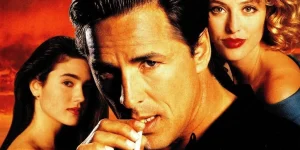
- The Hot Spot (1990)
Recommended Films for Fans
- The Graduate (1967)
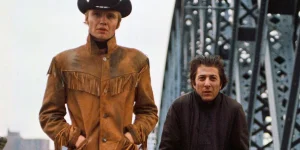
- Midnight Cowboy (1969)
- Five Easy Pieces (1970)
- Vanishing Point (1971)
- Two-Lane Blacktop (1971)