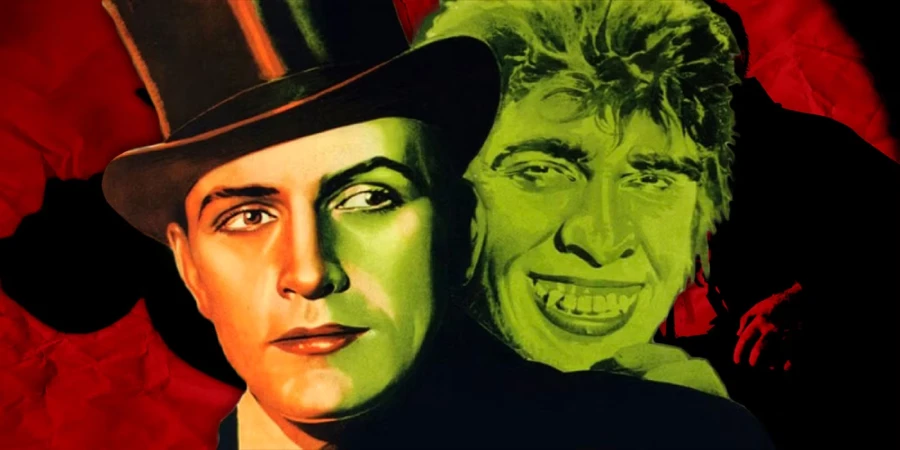

Long before the Hays Code scrubbed Hollywood clean, one film dared to fuse scientific horror with raw, unapologetic sexuality. Rouben Mamoulian’s Dr. Jekyll and Mr. Hyde is not just a monster movie. It is a startlingly bold and tragic exploration of human duality, anchored by a legendary, transformative performance.
Detailed Summary
Dr. Jekyll’s Controversial Theories
Dr. Henry Jekyll, a brilliant and compassionate London physician, gives a lecture to his skeptical colleagues. He posits that every man has two selves: one good, one evil. Jekyll believes he can create a potion to separate these two natures, freeing humanity from its darker impulses. His fiancée’s father, Brigadier General Carew, loudly dismisses his ideas as blasphemy.
Frustration mounts for Jekyll. The General insists Jekyll and his daughter Muriel wait months to marry, fueling Jekyll’s impatience and curiosity about the darker side of life he is forbidden to explore.
The First Transformation
Alone in his laboratory, Jekyll mixes his chemical formula. He drinks the bubbling concoction, subsequently writhing in agony on the floor. His features contort, his body stoops, and his teeth become tusks. He has become Edward Hyde, a grotesque, ape-like caricature of a man driven by pure id.
Hyde, cackling with glee, immediately slips out into the night. He seeks out the seediest parts of London, reveling in his newfound freedom from social and moral constraints.
The Torment of Ivy Pierson
On his way home, Jekyll tends to a bar singer, Ivy Pierson, after she is assaulted. He is kind to her, but the encounter awakens something within him. Later, as Hyde, he seeks Ivy out. He installs her in an apartment, becoming her tormentor.
Hyde abuses Ivy both psychologically and physically. He takes sadistic pleasure in her fear, telling her, “I’ll be your friend, your lover. You must learn to love me!” Ivy lives in constant terror, trapped by Hyde’s cruelty.
Jekyll Loses Control
Jekyll is horrified by Hyde’s actions. He tries to atone by giving Ivy money and swearing off the formula forever. For a time, it seems to work. Jekyll announces his wedding to Muriel, believing he has conquered his inner demon.
However, while walking through a park with Muriel’s father, Jekyll transforms into Hyde spontaneously, without the potion. This terrifying event confirms his worst fears. He has lost control, and Hyde can now emerge at will.
Movie Ending
Enraged and desperate, Hyde rushes to Ivy’s apartment. She is celebrating with a friend, believing she is finally free of him. A terrified Ivy screams when she sees Hyde, who brutally murders her before fleeing the scene.
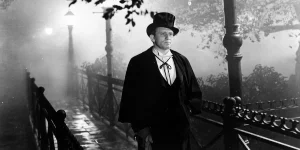
Hyde leads the police on a chase through the foggy London streets back to Jekyll’s home. He uses a back entrance to get into the laboratory, where he quickly mixes the antidote and transforms back into Dr. Jekyll. When police, led by Jekyll’s friend Dr. Lanyon, arrive, they find Jekyll calmly in his chair. Lanyon, however, correctly suspects the truth and confronts him.
Cornered, Jekyll transforms one last time into Hyde in front of a horrified Lanyon. Hyde climbs atop the lab equipment, taunting the police as they try to break down the door. He is ultimately shot by police marksmen. As he dies on the floor, his monstrous features soften, and he transforms back into the peaceful, tragic face of Henry Jekyll.
Are There Post-Credits Scenes?
No, there are no post-credits or mid-credits scenes. The film concludes as soon as the final shot fades to black. This was standard practice for films of this era.
Type of Movie
Dr. Jekyll and Mr. Hyde is primarily a science fiction horror film. Its tone is overwhelmingly dark and tragic, exploring themes of repression, addiction, and the duality of man. Furthermore, its frank depiction of sexuality and violence makes it a key example of pre-Code Hollywood filmmaking.
Cast
- Fredric March – Dr. Henry Jekyll / Mr. Edward Hyde
- Miriam Hopkins – Ivy Pierson
- Rose Hobart – Muriel Carew
- Holmes Herbert – Dr. John Lanyon
- Halliwell Hobbes – Brigadier General Danvers Carew
Film Music and Composer
The film does not have a continuous musical score, a common trait for early sound films. Instead, it uses music diegetically, meaning music that exists within the world of the film, like Ivy singing in the music hall. The opening and closing credits feature a piece composed by Johann Sebastian Bach, the Toccata and Fugue in D minor, which sets a grand, gothic tone.

Filming Locations
The film was shot almost entirely on studio backlots and soundstages at Paramount Studios in Hollywood, California. Production designers created a stylized, gothic version of Victorian London. This controlled environment allowed for the atmospheric fog, shadowy alleyways, and grand interiors necessary for the film’s expressionistic visual style.
Awards and Nominations
Fredric March won the Academy Award for Best Actor for his dual performance. Notably, he tied with Wallace Beery for The Champ, the only time a tie for Best Actor has occurred in Oscar history. The film also received nominations for Best Cinematography and Best Adapted Screenplay.
Behind the Scenes Insights
- Director Rouben Mamoulian and cinematographer Karl Struss kept the makeup and transformation effect a closely guarded secret. They used a series of colored filters on the camera lens that would reveal or hide specifically colored makeup on Fredric March’s face, creating a seamless transformation in a single take.
- Fredric March’s ape-like makeup for Mr. Hyde was physically grueling. The extensive prosthetics took several hours to apply and reportedly caused him significant discomfort throughout the production.
- Mamoulian pioneered the use of a first-person point-of-view shot in the film’s opening sequence. The audience sees the world through Dr. Jekyll’s eyes as he plays the organ and prepares to leave for his lecture.
Inspirations and References
The film is directly inspired by Robert Louis Stevenson’s 1886 novella Strange Case of Dr Jekyll and Mr Hyde. It also draws heavily from the 1887 stage adaptation by Thomas Russell Sullivan, which first introduced the characters of a fiancée for Jekyll and a female victim for Hyde, elements not present in the original novella.
Alternate Endings and Deleted Scenes
When the strict Hays Production Code was enforced in 1934, several minutes were cut from the film for its 1936 re-release. Most of the censored footage involved Miriam Hopkins’ character, Ivy Pierson, including scenes that made her flirtations more suggestive and her victimization by Hyde more explicit. These scenes were fortunately restored decades later.
Book Adaptations and Differences
Mamoulian’s film departs significantly from Stevenson’s novella. The book is structured as a mystery, with the reader discovering along with Jekyll’s friends that he and Hyde are the same person. In contrast, the film shows the transformation from the beginning.
Moreover, the film introduces the romantic subplot with Muriel Carew and the tragic character of Ivy Pierson. These additions externalize Jekyll’s internal conflict, linking his transformation directly to his sexual frustration and repressed desires, a theme only sub-textual in the book.

Memorable Scenes and Quotes
Key Scenes
- The First Transformation: Jekyll drinks the potion and the camera spins wildly as he undergoes a painful, convulsive change into Hyde. The innovative in-camera effect makes it a landmark moment in cinema history.
- Ivy’s Room: Hyde visits Ivy in her apartment for the first time. He torments her with a chilling mix of threats and perverse affection, establishing the sadistic nature of their relationship.
- The Final Transformation: Cornered by Dr. Lanyon, Jekyll’s face contorts without the aid of his potion, revealing the monster beneath one last time before his demise.
Iconic Quotes
- Dr. Jekyll: “I have a strange feeling, a feeling that I’m two people.”
- Mr. Hyde (to Ivy): “I hurt you because I love you.”
- Mr. Hyde (to Dr. Lanyon): “What you have seen, Lanyon, you will not talk about!”
Easter Eggs and Hidden Details
- In the opening sequence, the camera (acting as Jekyll’s eyes) looks into a mirror. For a brief moment, the audience sees actor Fredric March, slyly breaking the fourth wall before the film’s narrative truly begins.
- Some critics have noted the symbolism in Hyde’s first appearance. He emerges from Jekyll’s laboratory, which is located below the main house, literally coming up from a subconscious “underworld.”
- The nameIvy Pierson is phonetically similar to “ivy” and “poison,” hinting at her role as both a tempting figure who attracts Jekyll and a victim who suffers from his poison.
Trivia
- This is the first sound version of the Dr. Jekyll and Mr. Hyde story. There were numerous silent film adaptations before it.
- After MGM produced its own version in 1941 starring Spencer Tracy, the studio bought the rights to the 1931 film and attempted to remove all prints from circulation to prevent comparisons. For decades, the 1931 film was considered lost.
- Fredric March based Hyde’s physicality and movements on those of a simian, believing the character represented man’s more primitive, animalistic nature.
Why Watch?
Witness a performance that won an Oscar and defined a monster. This pre-Code masterpiece is a raw, daring, and legitimately terrifying look at the beast within us all. Its groundbreaking effects and adult themes remain shockingly effective today.
Director’s Other Movies
- Applause (1929)
- City Streets (1931)
- Queen Christina (1933)
- The Mark of Zorro (1940)
- Blood and Sand (1941)
Recommended Films for Fans
- Frankenstein (1931)
- The Wolf Man (1941)
- The Picture of Dorian Gray (1945)
- The Fly (1986)
- The Shape of Water (2017)