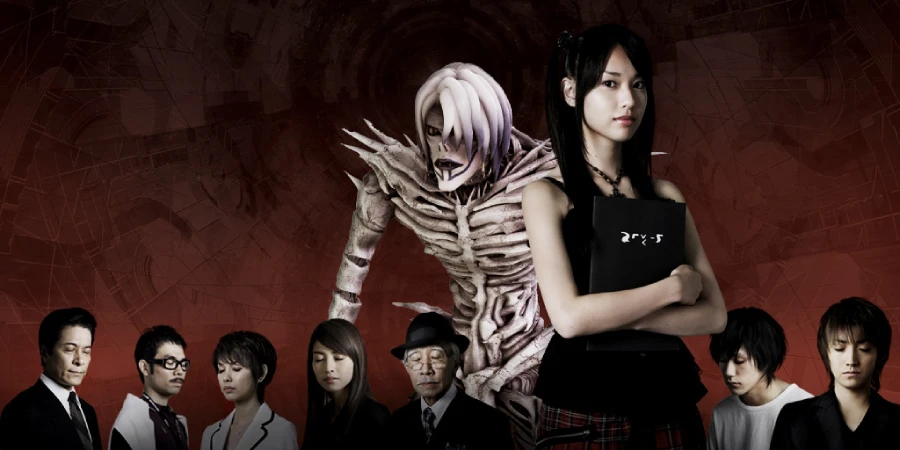

Death Note: The Last Name (2006) is the direct sequel to Death Note (2006) and serves as the conclusion of the original Japanese live-action Death Note duology. Directed by Shusuke Kaneko, the film adapts the final arc of the manga while introducing significant original changes, especially in its ending. Darker, more psychological, and more tragic than the first film, it fully embraces the battle of intellects between Light Yagami and L.
Detailed Summary
The World Under Kira’s Judgment
The film begins in a world already transformed by Kira’s presence. Crime rates have dropped, fear has spread globally, and society is deeply divided between those who worship Kira as a god and those who see him as a mass murderer. Light Yagami, still secretly Kira, continues his crusade while maintaining his public image as an ideal student and investigator.
Meanwhile, L grows increasingly suspicious of Light, convinced more than ever that Light is Kira. Their rivalry is no longer subtle; it is a silent war of minds.
Misa Amane and the Second Kira
Pop idol Misa Amane fully enters the conflict as the Second Kira. With the help of her Shinigami Rem, Misa possesses the Death Note and the Shinigami Eyes, allowing her to identify people by seeing their names and lifespans. Her blind devotion to Light becomes a crucial asset for Kira.
However, L uses psychological manipulation and surveillance to trap Misa, leading to her arrest. This moment shifts the balance of power, forcing Light to make extreme decisions to protect himself.
Light’s Imprisonment and the Memory Loss Gambit
In a calculated move, Light voluntarily allows himself to be imprisoned. By relinquishing ownership of the Death Note, he loses all memories of being Kira, appearing genuinely innocent. This is one of the film’s most important psychological twists, as even L begins to doubt his own conclusions.
During this period, the killings stop temporarily, further strengthening Light’s apparent innocence.
The Rise of a New Kira
A new Kira emerges, proving that Light and Misa were not solely responsible for the killings. This development pushes L to continue the investigation. The new Kira is eventually revealed to be someone who obtained the Death Note through indirect means, reinforcing the idea that absolute power corrupts anyone, not just Light.
L’s Final Strategy
Knowing his own life is limited, L makes a secret, desperate plan. He predicts Light’s next move and manipulates events so that Light regains ownership of the Death Note at a critical moment. L sacrifices himself strategically, ensuring that Light’s victory will not be clean or lasting.
This act cements L not just as a genius detective, but as someone willing to die to stop Kira.


Movie Ending
The ending of Death Note: The Last Name is one of the most controversial and impactful moments in Death Note history, especially because it differs significantly from the manga and anime.
After regaining ownership of the Death Note, Light resumes his role as Kira and successfully outmaneuvers his opponents. However, L has already foreseen this outcome. Before his death, L secretly writes Light Yagami’s name in the Death Note, setting a delayed death condition.
Light believes he has won. He stands victorious, convinced that L is gone and the world will soon belong to him as its god.
But then the twist is revealed.
Light collapses.
It is disclosed that L wrote Light’s name in the Death Note before dying, ensuring Light’s death exactly 23 days later. Light dies quietly, not exposed publicly, not arrested, not judged by society, but defeated by the one person who truly understood him.
The world never learns the truth about Kira’s identity. Light’s death is recorded as natural causes.
The film ends with a haunting sense of irony: Kira changes the world, but history never knows who he was.
Are There Post-Credits Scenes?
There are no post-credits scenes in Death Note: The Last Name. The story concludes definitively, with no teaser or continuation hinted after the credits roll.
Type of Movie
Death Note: The Last Name is a psychological thriller and supernatural crime drama that blends detective storytelling with philosophical questions about justice, morality, and power.
Cast
- Tatsuya Fujiwara as Light Yagami
- Kenichi Matsuyama as L
- Erika Toda as Misa Amane
- Shunji Fujimura as Soichiro Yagami
- Takeshi Kaga as Shidoh (Shinigami)
- Kimiko Yo as Rem (voice)
Film Music and Composer
The film’s score was composed by Kenji Kawai, known for his work on Ghost in the Shell. The music leans heavily into dark orchestral themes, reinforcing the tension and tragic tone of the story. The soundtrack emphasizes intellect over action, often allowing silence to heighten suspense.



Filming Locations and Their Importance
The movie was filmed primarily in Tokyo and surrounding regions in Japan.
- Urban Tokyo locations reinforce the feeling of surveillance and paranoia.
- Police headquarters interiors emphasize institutional pressure and moral conflict.
- Confined spaces, such as interrogation rooms and prison cells, visually mirror the psychological imprisonment of the characters.
The grounded, realistic locations contrast intentionally with the supernatural elements, making the story feel disturbingly plausible.
Awards and Nominations
- Nominated for Best Supporting Actor (Kenichi Matsuyama) at multiple Japanese film awards
- Praised by critics for its screenplay adaptation and performances
- Commercially successful, significantly outperforming expectations at the Japanese box office
Behind the Scenes Insights
- Kenichi Matsuyama intentionally lost weight to portray L’s physical decline.
- The ending was written specifically for the film and approved by the manga creators.
- Director Shusuke Kaneko wanted a more tragic and intimate ending than the manga.
- Tatsuya Fujiwara described Light’s death as “the loneliest possible ending.”
Inspirations and References
- Based on the manga Death Note by Tsugumi Ohba and Takeshi Obata
- Influenced by classic detective fiction
- Philosophical themes echo works by Nietzsche and Dostoevsky, especially regarding moral absolutism
Alternate Endings and Deleted Scenes
- Early drafts included a public exposure of Kira, which was later removed
- The final ending was chosen to emphasize personal defeat over public justice
- Several scenes involving Near were intentionally excluded to keep the focus on L vs Light
Book Adaptation and Differences
- The manga continues beyond L’s death, introducing Near and Mello
- The film ends the story with L and Light
- Light’s death is completely original to the movie
- L’s proactive use of the Death Note does not occur in the manga



Memorable Scenes and Quotes
Key Scenes
- Light voluntarily entering confinement
- L washing Light’s feet, symbolizing suspicion and sacrifice
- The final reveal of Light’s written name
Iconic Quotes
- “I am justice.” – Light Yagami
- “The only one who can judge Kira is me.” – L
- “If Kira wins, he is justice. If he loses, he is justice.” – L
Easter Eggs and Hidden Details
- L’s cake consumption decreases as his lifespan shortens
- The number 23 subtly appears multiple times, foreshadowing Light’s death
- L’s final smile mirrors a panel from the manga, despite the altered ending
Trivia
- The film was shot back-to-back with the first movie
- Kenichi Matsuyama’s portrayal of L became iconic in Japan
- The ending remains exclusive to the live-action continuity
- The Death Note props were handwritten to maintain realism
Why Watch?
If you want a complete, closed Death Note story with a darker, more poetic ending, this film delivers. It offers intellectual tension, moral ambiguity, and one of the most daring conclusions in anime adaptation history.
Director’s Other Works (Movies)
- Death Note (2006)
- Azumi 2: Death or Love (2005)
- Casshern (2004)