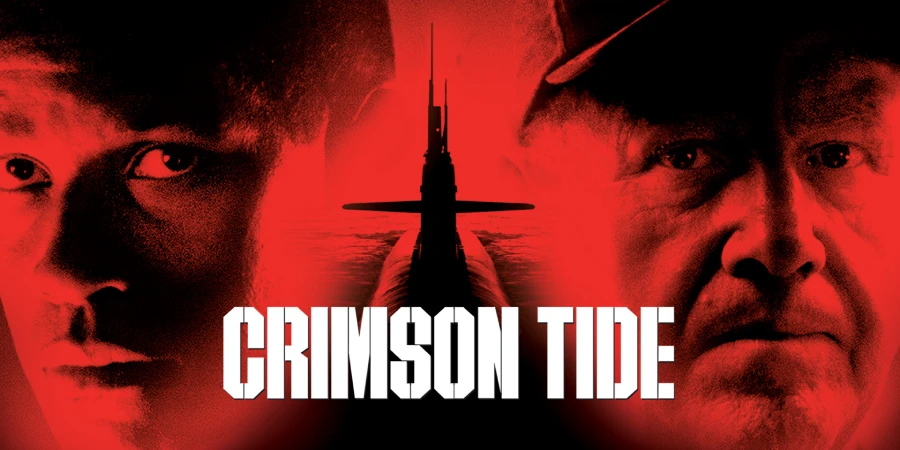

Crimson Tide (1995), directed by Tony Scott, is one of the most gripping submarine thrillers ever made. With powerhouse performances from Denzel Washington and Gene Hackman, the film dives deep into themes of duty, command, nuclear war, and moral responsibility.
Detailed Summary
Opening: A World on the Edge
The film sets its stage during a period of escalating global tension. A Russian ultranationalist group seizes nuclear missiles, prompting the U.S. Navy to deploy the nuclear submarine USS Alabama. From the very first scenes, the film positions the viewer inside a claustrophobic, pressure-filled environment.
The Meeting of Captain Ramsey and Lt. Commander Hunter
Captain Frank Ramsey (Hackman), an old-school, battle-tested commander, is paired with his new Executive Officer, Ron Hunter (Washington), a highly educated, calm, analytic officer. Their early conversations highlight their philosophical differences—Ramsey favors decisiveness and instinct, while Hunter values caution and protocol. This friction becomes the foundation of the film’s central conflict.
The Mission Begins
Once onboard the Alabama, Ramsey runs aggressive drills to test Hunter’s readiness and loyalty. While the drills seem routine, they reveal Ramsey’s willingness to push the crew beyond comfort and Hunter’s unwillingness to compromise safety for speed.
The Missile Order and the Interrupted Transmission
The pivotal moment arrives when the Alabama receives a launch order for nuclear missiles. While preparing to fire, the ship is attacked by a Russian submarine, damaging their communications antenna. An incomplete second transmission arrives, and its content is unknown. It might cancel the launch… or it might be irrelevant.
Hunter insists they must verify the transmission before launching. Ramsey argues that acting on the last confirmed order is their duty. The disagreement escalates into a mutiny vs. counter-mutiny struggle for control of the submarine.
Mutiny and Counter-Mutiny
Hunter relieves Ramsey of command for refusing to wait for message confirmation. Some officers support Hunter; others remain loyal to Ramsey. Tensions boil over when Ramsey organizes a counter-mutiny with remaining loyal crew members. What follows is a white-knuckled power struggle, all while enemy submarines close in and the nuclear launch clock ticks.

Movie Ending
In the climax, the Alabama is moments away from launching nuclear missiles. Hunter has control of the conn, but Ramsey’s loyalists are fighting to restore his authority. Both sides battle as the submarine takes damage and risks sinking.
Just when the situation seems irreversible, the communications system is repaired, and the full emergency message is finally retrieved. The message confirms that the launch order has been rescinded—the U.S. no longer intends to fire nuclear missiles.
Hunter was right. The missiles should not have been launched.
Ramsey acknowledges this fact and restores control to Hunter. The two officers are brought before a Navy tribunal after the mission. Instead of catastrophic punishment, they receive a nuanced judgment: both acted correctly within their interpretations of naval protocol, but neither fully followed the spirit of cooperation that might have prevented the crisis.
Ramsey chooses to retire, passing on future command opportunities. Hunter’s career appears bright, and the final moment between the two men is one of mutual respect rather than hostility.
The ending reinforces the film’s central idea: the greatest danger in nuclear warfare is not the enemy, but human judgment under pressure.
Are There Post-Credits Scenes?
No. Crimson Tide does not include any mid-credits or post-credits scenes.
Type of Movie
This is a military thriller and submarine suspense film that blends political tension with moral and psychological conflict. It delivers high-stakes action while exploring deeply philosophical questions about command and responsibility.
Cast
- Denzel Washington as Lt. Commander Ron Hunter
- Gene Hackman as Captain Frank Ramsey
- Matt Craven as Lt. Roy Zimmer
- Viggo Mortensen as Lt. Peter Ince
- James Gandolfini as Lt. Bobby Dougherty
- George Dzundza as Chief of the Boat Cob
- Steve Zahn as Lippmann
Film Music and Composer
The score is composed by Hans Zimmer, known for his powerful, percussive style. His music adds intensity to the submarine’s tight atmosphere, and the main theme features his early experimentation with digital orchestration blended with traditional melodies.

Filming Locations
- Culver Studios (California) – Interior submarine sets were constructed here.
- Long Beach Naval Shipyard – Shots of naval bases and exterior submarine elements.
- Actual U.S. Navy submarines were referenced but not used directly for sensitive interior filming.
The sets were designed to create an authentic sense of claustrophobia and realism. The narrow corridors, dim lighting, and cramped control rooms amplify the film’s psychological tension.
Awards and Nominations
- Academy Award nominations for Best Sound and Best Film Editing.
- ASCAP Award for Hans Zimmer’s music.
- Multiple nominations from sound, editing, and directing guilds.
Behind the Scenes Insights
- Tony Scott conducted extensive research with real submariners to achieve accuracy.
- The U.S. Navy refused full cooperation due to the mutiny storyline, prompting the filmmakers to recreate detailed sets manually.
- Denzel Washington and Gene Hackman improvised several confrontational moments to heighten the tension.
- The Alabama’s control room was designed with functional panels to allow actors to interact naturally during chaotic scenes.
- Hans Zimmer incorporated steel and metallic sounds to mimic the acoustic environment of a submarine.
Inspirations and References
Crimson Tide is loosely inspired by real Cold War nuclear protocol dilemmas and is often compared to events like:
- The 1962 Cuban Missile Crisis
- The 1983 Soviet nuclear false alarm incident
- Military writings on nuclear chain-of-command breakdowns
Though fictional, the movie borrows heavily from real-world debates on nuclear launch authority.
Alternate Endings and Deleted Scenes
- Some early scripts featured a more severe punishment for Ramsey.
- A deleted dialogue sequence showed Hunter confiding his fears to another officer, softening his character—but it was cut to maintain pacing and tension.
- Another removed scene involved a longer standoff between the two factions, which was trimmed to avoid overextending the mutiny subplot.
Memorable Scenes and Quotes
Key Scenes
- The first nuclear missile drill revealing Ramsey and Hunter’s ideological differences.
- The damaged radio antenna scene, a turning point for the film’s moral conflict.
- The mutiny sequence where Hunter officially relieves Ramsey of command.
- The counter-mutiny that flips the power dynamic once again.
- The dramatic moment when the full emergency message finally arrives.
Iconic Quotes
- “We’re here to preserve democracy, not practice it.” – Captain Ramsey
- “In the nuclear world, the true enemy is war itself.” – Hunter
- “You don’t have to take the job. You do have to do your job.” – Ramsey
Easter Eggs and Hidden Details
- Ramsey’s Jack Russell terrier was inspired by Tony Scott’s real dog.
- The Alabama’s hull number references a real submarine class, but no exact match exists to avoid Navy legal issues.
- Zimmer’s score subtly mimics sonar pulses in several tracks.
- Some crew names reference real naval officers Scott interviewed.
Trivia
- Tarantino polished several dialogue exchanges uncredited, adding philosophical debates.
- The set was kept at lower temperatures to simulate submarine climate and actor discomfort.
- One of the control panels was accidentally functional enough to activate authentic alarms.
Why Watch?
Because Crimson Tide offers a rare combination: high-pressure action, razor-sharp dialogue, and deep moral stakes. If you enjoy films where intelligent characters clash under life-or-death pressure, this is one of the best ever made. It’s both thrilling and intellectually engaging.
Director’s Other Movies
- Top Gun (1986)
- Beverly Hills Cop II (1987)
- True Romance (1993)
- Enemy of the State (1998)
- Man on Fire (2004)
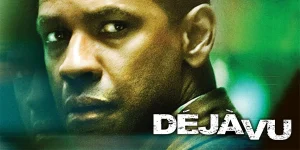
- Déjà Vu (2006)
- Unstoppable (2010)
Recommended Films for Fans
- The Hunt for Red October (1990)
- Das Boot (1981)
- K-19: The Widowmaker (2002)
- Fail Safe (1964)
- Thirteen Days (2000)