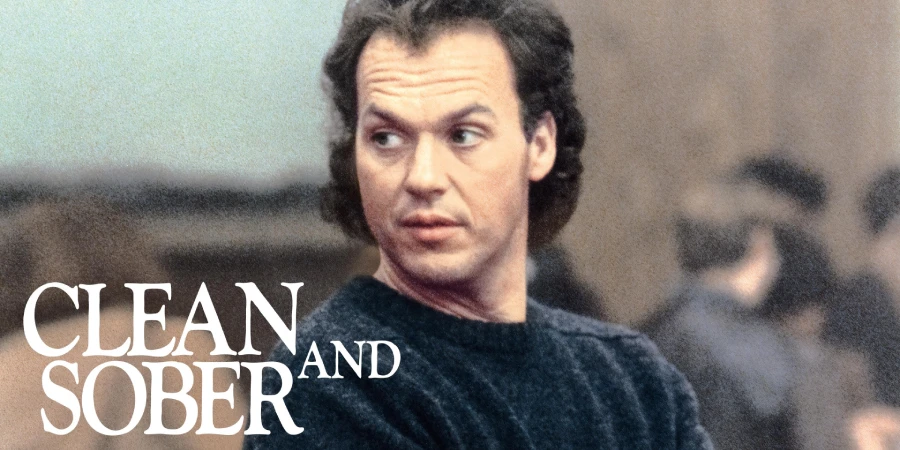

Michael Keaton’s dramatic pivot in Clean and Sober is more than just a performance; it’s a harrowing immersion into the mechanics of addiction. The film strips away Hollywood glamour to present a brutally honest look at hitting rock bottom. It argues that recovery isn’t a single moment of clarity but a grueling, day-by-day battle. Consequently, the story remains one of cinema’s most authentic portrayals of the 12-step process.
Detailed Summary
Daryl’s Downward Spiral
Daryl Poynter is a successful but deeply troubled real estate salesman. His life is a chaotic mess fueled by a severe cocaine addiction and alcoholism. The film opens with him waking up next to a woman who has overdosed on cocaine he provided.
Panicked, he calls the police but flees the scene. To make matters worse, Daryl has also embezzled over $92,000 from his company’s escrow account to fund his habit and a bad stock market investment. His life is collapsing around him with terrifying speed.
A Refuge of Last Resort
Hunted by the police for the woman’s death and a violent bookie for his gambling debts, Daryl needs a place to hide. He discovers a 28-day anonymous drug rehabilitation program. Initially, he views the clinic as a convenient hideout, not a place for genuine recovery.
He lies his way in, completely dismissive of the program and its rules. Daryl believes he can simply wait out the trouble, but his denial is immediately challenged by the facility’s structured environment. He is, for the first time, in a place he cannot con his way through.
Confronting the Truth
Daryl is assigned a sponsor and counselor named Craig, a former addict who sees right through his manipulative behavior. Morgan Freeman’s Craig is a tough, no-nonsense figure. He refuses to indulge Daryl’s self-pity or lies, forcing him to confront the reality of his addiction.
During intense group therapy sessions, Craig chips away at Daryl’s defenses. He famously tells him, “The only thing wrong with you is that you’re an alcoholic and a drug addict.” This blunt assessment is the first step toward Daryl’s potential recovery.
An Ill-Fated Romance
Inside the facility, Daryl meets Charlie Standers, a fellow patient addicted to cocaine and alcohol. They form a relationship built on a shared sense of brokenness. Charlie is trapped in an abusive relationship with her partner, Lenny, which complicates her recovery.
Daryl becomes her protector, but their bond is ultimately a form of codependency. They enable each other’s avoidance of their core issues. Nonetheless, their connection provides Daryl with a flicker of genuine human feeling amidst his selfishness.
Hitting Rock Bottom
Forced to make a call as part of his therapy, Daryl phones his estranged parents. He desperately asks for money, but they refuse, having been burned by his lies countless times before. This raw, painful rejection marks Daryl’s true rock bottom.
Stripped of all his usual escape routes, he finally breaks down. Daryl begins the agonizing process of accepting he is an addict who has lost control. In addition, he starts to follow the program’s rules with a newfound sincerity.
A Tragic Catalyst
Charlie decides to leave the rehab facility early to return to Lenny. Despite Daryl’s desperate pleas, she believes she can handle her old environment. Tragically, she relapses and Lenny gives her a fatal cocaine overdose.
Her death is a devastating blow for Daryl. It serves as a brutal, final lesson about the life-or-death stakes of addiction. Charlie’s fate becomes the catalyst for Daryl’s complete commitment to sobriety.



Movie Ending
The ending of Clean and Sober is pragmatic and hopeful, not triumphant. After completing the 28-day program, Daryl Poynter steps back into the world. He makes amends by confessing his embezzlement to his boss, Martin, who agrees to a repayment plan instead of pressing charges.
Daryl is a changed man, but the temptations of his old life remain. He walks through his former neighborhood, seeing bars and reminders of his past. The final scene shows him speaking at an Alcoholics Anonymous meeting, sharing his story with humility and honesty.
He spots Martin in the audience, who has come to listen, suggesting a possible mending of that relationship. Ultimately, Daryl is not “cured.” He is, however, sober for today, and the film ends on his commitment to take his recovery one day at a time, just as the program teaches.
Are There Post-Credits Scenes?
No, Clean and Sober has no scenes after the credits begin to roll. Once the film ends, it’s over.
Type of Movie
Clean and Sober is a powerful and unflinching Drama. Its tone is gritty, realistic, and deeply humanistic. The film avoids melodrama, instead focusing on the methodical, often unglamorous process of addiction and recovery.
It functions as an intense character study. The narrative meticulously documents one man’s difficult journey from complete denial to fragile acceptance. As a result, it is often cited as one of the most accurate cinematic depictions of 12-step programs.
Cast
- Michael Keaton – Daryl Poynter
- Kathy Baker – Charlie Standers
- Morgan Freeman – Craig
- M. Emmet Walsh – Richard Dirks
- Tate Donovan – Donald Towle
- Claudia Christian – Iris
- Brian Benben – Martin
Film Music and Composer
The score for Clean and Sober was composed by the acclaimed Gabriel Yared. Yared is known for his work on films like The English Patient and The Talented Mr. Ripley. His music for this film is intentionally understated and melancholic.
Rather than driving the action, the score supports the emotional turmoil of the characters. It subtly underscores Daryl’s journey from chaotic desperation to quiet contemplation without ever becoming intrusive. Several scenes, notably the most intense therapy sessions, use no music at all, letting the raw dialogue carry the weight.

Filming Locations
Clean and Sober was filmed primarily on location in Philadelphia, Pennsylvania. This choice was crucial to establishing the film’s realistic and gritty atmosphere. The city’s working-class neighborhoods and urban landscapes provide a stark, non-glamorous backdrop for Daryl’s story.
Shooting in a real city, rather than on a studio backlot, grounds the narrative in a tangible reality. The authentic setting reinforces the idea that addiction is not a far-off problem but something that exists in everyday life.
Awards and Nominations
Michael Keaton’s performance received widespread critical acclaim. For his role as Daryl Poynter, he won the 1988 National Society of Film Critics Award for Best Actor. This win was significant as it cemented his status as a serious dramatic actor after a career built largely on comedies.
Behind the Scenes Insights
- Michael Keaton viewed this role as a major turning point in his career. He wanted to prove his range beyond comedy characters like Beetlejuice, and he dove deep into researching addiction and recovery programs.
- Director Glenn Gordon Caron was primarily known for creating the stylish TV series Moonlighting. Clean and Sober was a deliberate departure, showcasing a more subdued and naturalistic directorial style.
- The script, written by Tod Carroll, was lauded for its authenticity. Many people in recovery communities have praised the film for its accurate portrayal of 12-step program language, dynamics, and core principles.
- Morgan Freeman’s role as Craig was relatively small but incredibly impactful. His character embodies the tough-love philosophy central to many recovery programs.
Inspirations and References
The film was not based on a specific memoir or true story. Instead, screenwriter Tod Carroll drew inspiration from extensive research into the realities of addiction and the structure of 12-step programs like Alcoholics Anonymous and Cocaine Anonymous.
The film’s power comes from its truthful depiction of the culture of recovery. It accurately incorporates key concepts like sponsorship, anonymity, hitting rock bottom, and the principle of taking recovery “one day at a time.”
Alternate Endings and Deleted Scenes
There are no widely known alternate endings or significant deleted scenes for Clean and Sober. The final cut of the film, with its realistic and open-ended conclusion, is believed to be the director’s singular vision for the story.
Book Adaptations and Differences
Clean and Sober is an original screenplay. It is not based on a book, and no novelization of the film was ever published.


Memorable Scenes and Quotes
Key Scenes
- The Phone Call: Daryl’s desperate, tearful phone call to his parents, in which he begs for money and is finally cut off, is the emotional centerpiece of the film. It represents his absolute lowest point.
- Craig’s Diagnosis: In an early group session, Craig calmly and directly dismantles Daryl’s excuses, telling him that addiction is his only real problem. This moment shatters Daryl’s denial.
- The 30-Day Speech: Daryl stands before the group to receive his 30-day sobriety chip. He confesses everything—his lies, his fears, and his gratitude—in a raw and honest speech that shows how far he has come.
Iconic Quotes
- “The best way to break old habits is to make new ones.” – Richard Dirks
- “My name is Daryl, and I’m a grateful alcoholic and cocaine addict.” – Daryl Poynter
- “You know what they say. Secrets keep you sick.” – Craig
- “It’s not a temporary condition, Daryl.” – Craig
Easter Eggs and Hidden Details
- Visual Sobriety: As Daryl progresses through the program, his appearance becomes less slick and more natural. His hair is less styled, and his flashy suits are replaced by simpler clothing, visually representing his journey away from a superficial life.
- The Serenity Prayer: The Serenity Prayer, a cornerstone of 12-step programs, is seen on posters in the background of the rehab facility and is recited in meetings, grounding the film in the real-world practices of recovery.
Trivia
- Actress Patti D’Arbanville, who was a prominent figure in Andy Warhol’s circle during a period of heavy drug use in the 1970s, has a small role in the film.
- The film was part of a wave of late-1980s movies that examined addiction with a new level of seriousness, including Bright Lights, Big City (1988) and Less Than Zero (1987).
- Tate Donovan, who plays a young patient in the rehab center, would later become a well-known television actor in shows like The O.C. and Damages.
Why Watch?
This film is essential viewing for Michael Keaton’s career-defining performance. Clean and Sober offers a raw, honest, and ultimately hopeful look at the difficult path to recovery without resorting to clichés. Its power lies in its unflinching realism.
Director’s Other Movies
- Wilder Napalm (1993)
- Love Affair (1994)
- Picture Perfect (1997)