
Blue Ruin is a stripped-down, brutally realistic revenge film written and directed by Jeremy Saulnier. Unlike glossy Hollywood revenge fantasies, this movie is uncomfortable, messy, and painfully human. It asks a simple question: what happens when an ordinary, unprepared man tries to take revenge? The answer is… nothing glamorous.
Detailed Summary
A Life in Ruins
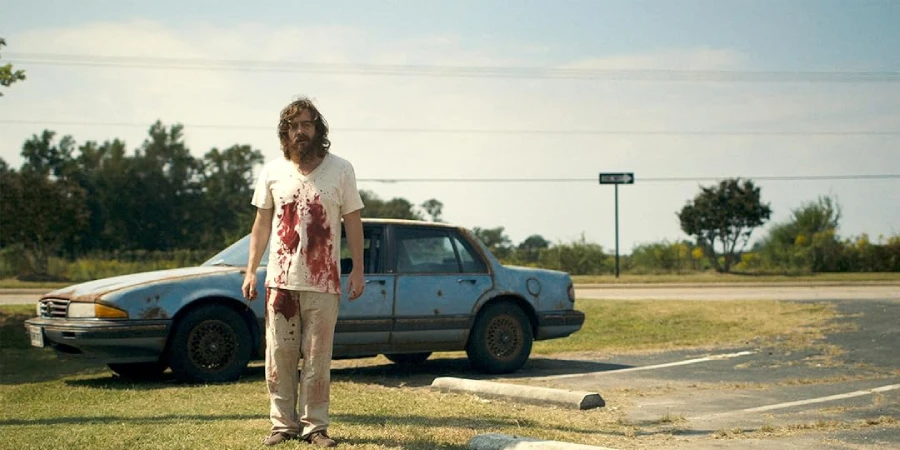
Dwight Evans lives out of his blue Pontiac, surviving on scraps and silence. He is homeless, withdrawn, and emotionally hollow. His life changes when he learns that the man who murdered his parents years ago is being released from prison. This revelation reignites trauma Dwight has never processed.
The First Act of Revenge
Driven by grief rather than skill or courage, Dwight follows the man and impulsively kills him in a public restroom. The act is clumsy, panicked, and immediately traumatizing. This moment establishes the film’s core theme: revenge does not bring relief, only escalation.
Consequences and Escalation
Dwight realizes too late that killing one man has placed a target on his back. The victim’s family seeks retaliation, and Dwight is dragged into a violent feud he is completely unprepared for. His attempts to protect himself and his estranged sister spiral into chaos.
The Cost of Violence
As the body count grows, Dwight becomes increasingly wounded, exhausted, and emotionally broken. Every violent act carries consequences, and no one escapes unscathed. The film emphasizes how violence is inefficient, terrifying, and deeply personal.
Movie Ending
After a series of fatal misunderstandings, Dwight discovers the most painful truth: his parents were not innocent victims. They were responsible for killing a member of the opposing family years earlier, triggering the cycle of violence in the first place.
Dwight confronts the last surviving member of the enemy family. Both men are exhausted, injured, and emotionally hollow. There is no triumph, no satisfaction. Dwight kills him, effectively ending the feud, but at the cost of his own life. He dies alone, bleeding out in the grass.
The final moments focus on Dwight’s sister, now safe but forever changed. The revenge achieved nothing meaningful. The feud ends not because justice was served, but because everyone involved is dead. The film closes on the idea that revenge consumes everything, including the person who seeks it.
Are There Post-Credits Scenes?
No. Blue Ruin has no post-credits or mid-credits scenes. The film ends definitively and intentionally, reinforcing its theme of finality and irreversible consequences.
Type of Movie
Blue Ruin is a neo-noir revenge thriller grounded in realism. It avoids stylized action in favor of raw tension, minimal dialogue, and moral ambiguity.
Cast
- Macon Blair as Dwight Evans
- Devin Ratray as Ben Gaffney
- Amy Hargreaves as Sam Evans
- Eve Plumb as Kris Cleland
- Kevin Kolack as Teddy Cleland
Film Music and Composer
The score was composed by Brooke Blair and Will Blair, whose minimalist, droning music amplifies tension without manipulating emotion. Silence is often used just as effectively as sound, making the violence feel even more uncomfortable.


Filming Locations
The film was shot primarily in Virginia, USA, using real locations such as rural roads, abandoned houses, and quiet suburbs. These grounded settings reinforce the film’s realism and emphasize that this kind of violence can happen anywhere, not just in stylized crime worlds.
Awards and Nominations
- Won FIPRESCI Prize at Cannes Directors’ Fortnight
- Nominated for Independent Spirit Award – Best First Feature
- Widely praised by critics for realism and originality
Behind the Scenes Insights
- The movie was largely crowdfunded through Kickstarter, making it a major indie success story.
- Macon Blair performed many of his own stunts, contributing to the character’s physical vulnerability.
- Jeremy Saulnier intentionally avoided traditional action choreography to make violence feel chaotic.
- The director has stated the film was designed to deconstruct the revenge genre.
Inspirations and References
- Influenced by classic revenge films, but made as a critique of them.
- Draws tonal inspiration from Coen Brothers films and 70s crime cinema.
- The story reflects real-world cycles of violence rather than mythic hero journeys.
Alternate Endings and Deleted Scenes
No official alternate ending has been released. Some scenes were trimmed to tighten pacing, but Saulnier has confirmed that the bleak ending was always the intended conclusion. The story was never meant to offer hope or redemption.
Book Adaptations and Differences
Blue Ruin is not based on a book. It is an original screenplay written by Jeremy Saulnier.

Memorable Scenes and Quotes
Key Scenes
- Dwight’s bathroom revenge killing, shocking in its awkward realism.
- The discovery of the truth about Dwight’s parents.
- Dwight silently preparing for a final confrontation he knows he will not survive.
Iconic Quotes
- “I’m not a killer.”
- “You’re in over your head.”
The lack of dialogue itself is what makes many moments unforgettable.
Easter Eggs and Hidden Details
- Dwight’s blue car symbolizes emotional stagnation and decay throughout the film.
- Guns are often shown malfunctioning or being mishandled to emphasize inexperience.
- Mirrors and reflections subtly reinforce Dwight’s identity crisis.
Trivia
- The entire movie was made on a very modest budget.
- Jeremy Saulnier also served as cinematographer.
- The film launched Saulnier’s reputation as a master of grounded violence.
- Macon Blair later became a frequent collaborator of the director.
Why Watch?
Watch Blue Ruin if you want a revenge film that feels honest. It dismantles power fantasies and replaces them with fear, pain, and irreversible consequences. It is unsettling not because it exaggerates violence, but because it refuses to.
Director’s Other Works (Movies)
- Murder Party (2007)
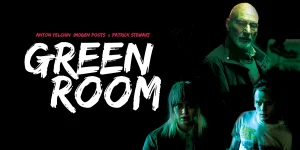
- Green Room (2015)
- Hold the Dark (2018)