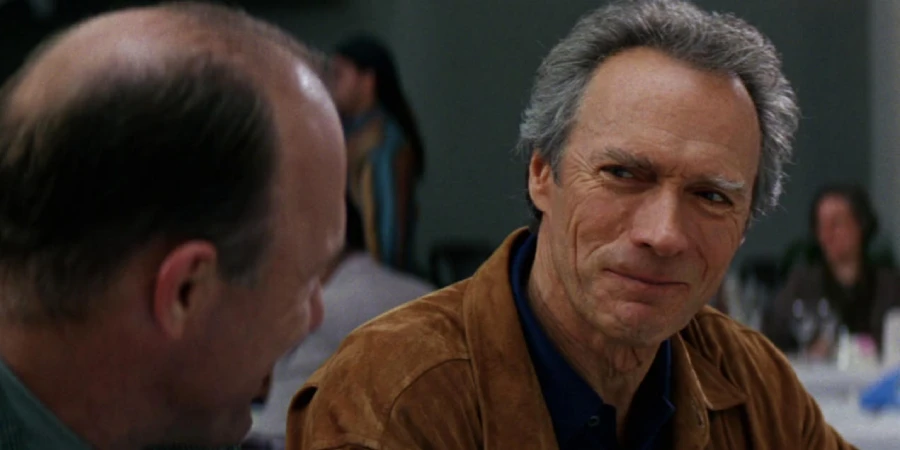

Absolute Power (1997) is a political crime thriller directed by Clint Eastwood, blending classic suspense with sharp commentary on power, corruption, and morality. The film stands out not for explosive action, but for its slow-burning tension and the uncomfortable question it repeatedly asks: What happens when the most powerful man in the world commits a crime?
Detailed Summary
A Master Thief at the End of His Career
Luther Whitney is a legendary jewel thief who has survived decades in the criminal world through patience, discipline, and intelligence. Recently released from prison, he plans one final burglary before retiring for good. His target is the lavish mansion of billionaire Walter Sullivan.
Unknown to Luther, the night will spiral into something far bigger than theft.
The Crime No One Was Supposed to See
While hidden inside a secret wall compartment in Sullivan’s bedroom, Luther witnesses something horrifying. The President of the United States, Alan Richmond, is engaged in a violent sexual encounter with Sullivan’s wife, Christy.
The situation escalates when Christy resists and is accidentally stabbed with a letter opener during the struggle. In panic, the President’s Secret Service agents enter the room and deliberately kill her to protect him.
Luther watches everything.
This moment transforms the film from a crime thriller into a political nightmare.
The Cover-Up Begins
The Secret Service stages the murder to look like a burglary gone wrong. However, Luther accidentally leaves behind one piece of evidence: his cufflink.
Now, three forces begin moving simultaneously:
- The Secret Service trying to eliminate all loose ends
- The police investigating what they believe is a robbery-homicide
- Luther attempting to stay alive while protecting the truth
The film builds tension through quiet surveillance, whispered threats, and the terrifying realization that the law itself is compromised.
The Daughter Factor
Luther’s daughter Kate is a prosecutor assigned to the case. She believes her father may be involved, unaware that he is also the only innocent witness.
This emotional conflict becomes one of the film’s strongest elements. Luther must avoid capture without destroying his daughter’s career or revealing his criminal past.
The father–daughter dynamic adds humanity to an otherwise cold political thriller.
Power Versus Truth
As Luther manipulates events from the shadows, the Secret Service becomes increasingly ruthless. The President, though rarely seen, exerts influence simply through fear.
The central theme emerges clearly:
Power does not need to speak loudly when everyone is already afraid.
The closer the investigation comes to the truth, the more people start dying.
Movie Ending
The final act reveals the full moral cost of absolute power.
Luther secretly records a conversation in which the President admits his role in Christy Sullivan’s death. However, exposing the truth publicly would destabilize the government and possibly destroy the country’s faith in its institutions.
Rather than release the tape, Luther confronts the President privately.
He offers him a deal: resign quietly and disappear from politics, or face total exposure.
The President chooses resignation.
Officially, Richmond steps down due to “health reasons.” The truth is never revealed to the public.
Luther then destroys the tape, ensuring the crime dies with him.
In the final scenes, Luther returns the stolen jewels anonymously, clears his daughter’s name, and vanishes from the criminal world forever.
The ending is deliberately bittersweet. Justice is served, but not legally. Truth survives, but not publicly.
The audience is left unsettled, forced to confront the film’s darkest idea:
sometimes the truth is too dangerous to be told.
Are There Post-Credits Scenes?
No. Absolute Power does not include any post-credits or mid-credits scenes. The film ends definitively with no sequel setup.
Type of Movie
Absolute Power is a political crime thriller that blends suspense, investigative drama, and moral commentary. It focuses less on action and more on psychological tension, secrecy, and ethical conflict.
Cast
- Clint Eastwood – Luther Whitney
- Gene Hackman – President Alan Richmond
- Ed Harris – Detective Seth Frank
- Laura Linney – Kate Whitney
- Scott Glenn – Bill Burton (Secret Service Director)
- Dennis Haysbert – Tim Collin (Secret Service Agent)
- Judy Davis – Gloria Russell
Film Music and Composer
The score was composed by Lennie Niehaus, a longtime collaborator of Clint Eastwood.
The music is restrained and atmospheric, emphasizing paranoia rather than drama. Long stretches of silence are intentionally used to increase tension.

Filming Locations
The movie was filmed primarily in:
- California (Los Angeles and surrounding areas)
- Washington D.C. exteriors (limited on-location shooting)
Most White House interiors were recreated on sound stages. This allowed the filmmakers to control lighting and camera movement while enhancing the feeling of secrecy and confinement.
The settings reinforce the theme that power operates behind closed doors.
Awards and Nominations
The film received modest awards attention:
- Nominated for Best Supporting Actor (Gene Hackman) at several critics’ circles
- Praised for screenplay adaptation and performance ensemble
While not a major awards contender, it gained long-term recognition as one of Eastwood’s strongest thrillers.
Behind the Scenes Insights
- The film is based on the novel by David Baldacci.
- Clint Eastwood intentionally avoided flashy action scenes to maintain realism.
- Gene Hackman reportedly based the President’s mannerisms on real political figures.
- Eastwood insisted the film avoid patriotic symbolism to prevent moral bias.
- Many scenes were shot in near silence to enhance tension.
Inspirations and References
- David Baldacci’s novel Absolute Power
- Political scandals of the 1970s and 1980s
- Films like All the President’s Men and The Parallax View
The story reflects public distrust in political institutions following Watergate-era revelations.
Alternate Endings and Deleted Scenes
An alternate ending was discussed in which the President is publicly exposed. This version was rejected because it contradicted the film’s core message.
Several deleted scenes expanded Luther’s criminal past and Kate’s internal conflict, but were removed for pacing.
Book Adaptation and Differences
Key differences from the novel:
- The book contains more Secret Service viewpoints.
- The novel’s ending is more procedural and less philosophical.
- The film places heavier emotional weight on the father–daughter relationship.
- The President’s resignation is handled more ambiguously in the book.
The movie version is more morally complex and restrained.


Memorable Scenes and Quotes
Key Scenes
- The silent murder witnessed from behind the hidden wall
- Luther evading Secret Service surveillance
- The confrontation between Luther and the President
- Kate realizing her father’s true role
- The final destruction of the tape
Iconic Quotes
- “They’ll protect the Presidency at any cost.”
- “Power is when you have every choice… and someone else has none.”
- “I’m not asking for justice. I’m offering mercy.”
Easter Eggs and Hidden Details
- Luther’s cufflink design subtly resembles the presidential seal.
- The number on the evidence tag matches the novel’s publication date.
- Several background television broadcasts mirror real political scandals.
- The Secret Service code phrases are authentic and researched.
Trivia
- Gene Hackman considered this one of his most disturbing roles.
- Clint Eastwood also served as uncredited producer.
- The film was shot in just over 60 days.
- Eastwood deliberately limited camera movement to create unease.
- Many scenes were filmed with natural lighting only.
Why Watch?
You should watch Absolute Power if you enjoy:
- Intelligent political thrillers
- Morally complex storytelling
- Strong performances over spectacle
- Films that trust the audience to think
It remains disturbingly relevant, proving that power ages far slower than truth.
Director’s Other Works (Clint Eastwood)
- Play Misty for Me (1971)
- Unforgiven (1992)
- A Perfect World (1993)
- Mystic River (2003)
- Million Dollar Baby (2004)
- Gran Torino (2008)
- American Sniper (2014)