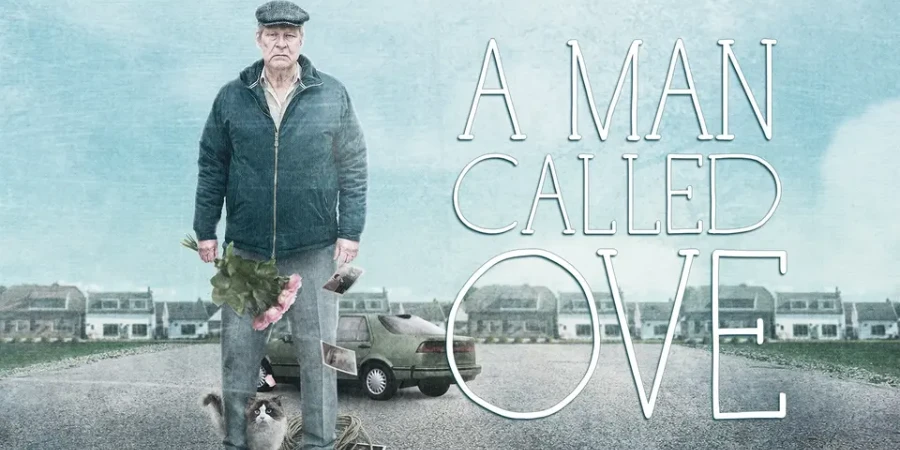

A Man Called Ove is one of those rare films that can make you laugh awkwardly one minute and quietly wipe away tears the next. Directed by Hannes Holm and based on the bestselling novel by Fredrik Backman, the film tells the story of a grumpy old man whose rigid world slowly reopens to life, connection, and unexpected friendship.
It’s deeply Swedish in tone—dry, restrained, emotionally honest—but its themes are universal: grief, love, loneliness, and the stubborn refusal to give up on people.
Detailed Summary
Ove: The Angry Man Next Door
We meet Ove (played by Rolf Lassgård), a 59-year-old widower who has recently been forced into retirement. He is methodical, rule-obsessed, and permanently irritated by modern society. Improper recycling? He notices. Unauthorized parking? He handles it. People who don’t follow regulations? Unacceptable.
But beneath the rigid exterior is a man crushed by grief. His beloved wife Sonja has died, and without her, Ove sees no reason to continue living.
The Repeated Suicide Attempts
Ove meticulously plans several suicide attempts. Each attempt is interrupted—sometimes by pure coincidence, sometimes by new neighbors moving in, sometimes by practical complications. These scenes are handled with a delicate balance of dark humor and devastating sadness.
The interruptions aren’t random. They come in the form of human connection.
The Arrival of Parvaneh and Her Family
A turning point arrives when Parvaneh (played by Bahar Pars), a lively, pregnant Iranian immigrant, moves in next door with her clumsy but good-natured husband. Their disastrous parking job becomes the first interaction with Ove.
Parvaneh refuses to be intimidated by him. She asks for help, challenges him and feeds him. Slowly, persistently, she pulls him back into the world.
Through flashbacks, we learn about Ove’s childhood, his principled father, how he met Sonja, and the tragic accident that left her paralyzed. We see how love softened him once—and how losing it hardened him again.
The Corporate Threat
Parallel to Ove’s personal struggle is a conflict with a housing association and corporate representatives trying to force an elderly friend into assisted living. Ove’s strong moral compass resurfaces. He may want to die, but injustice still infuriates him.
His protective instincts return. He begins helping neighbors—fixing radiators, teaching driving, defending the vulnerable.
Without realizing it, he is living again.

Movie Ending
In the final act, Ove’s connection to the neighborhood deepens. He becomes especially close to Parvaneh and her children, forming a surrogate grandfather-like bond. He finally visits Sonja’s grave not to join her, but to speak with her differently—less as someone escaping life, more as someone continuing it.
Ove’s health quietly deteriorates throughout the film. He has an enlarged heart condition, something he never makes dramatic. Eventually, after helping those around him and finding a renewed sense of belonging, Ove dies peacefully in his sleep.
The film closes at his funeral. The once-annoyed neighbors speak warmly of him. The “angry old man” is revealed to have been the backbone of the community. Parvaneh delivers a moving farewell, emphasizing how he saved them just as much as they saved him.
What makes the ending powerful is that Ove doesn’t die in despair. He dies after rediscovering purpose, connection, and dignity. The arc completes beautifully: a man who wanted to leave the world leaves it only after fully rejoining it.
Are There Post-Credits Scenes?
No. There are no post-credits scenes. Once the story concludes, it ends definitively and emotionally complete.
Type of Movie
A Man Called Ove is a character-driven dramedy—balancing melancholic realism with warm, understated humor. It blends social commentary, romance, and existential reflection into an intimate, human story.
Cast
- Rolf Lassgård – Ove
- Bahar Pars – Parvaneh
- Filip Berg – Young Ove
- Ida Engvoll – Sonja
Film Music and Composer
The score was composed by Gaute Storaas. The music is subtle and emotionally restrained, supporting the film’s tone rather than manipulating it. Soft piano and strings mirror Ove’s inner vulnerability, especially during flashbacks with Sonja.



Filming Locations and Their Importance
The film was shot primarily in Sweden, particularly in suburban residential areas designed to reflect quiet Scandinavian neighborhood life. The controlled, orderly housing community visually mirrors Ove’s personality: structured, rigid, and rule-bound.
The muted color palette and cold Nordic lighting reinforce the themes of isolation and grief. As Ove reconnects with people, the spaces feel warmer—not because they change physically, but because he changes.
Awards and Nominations
A Man Called Ove received significant international recognition:
- Nominated for Best Foreign Language Film at the 89th Academy Awards
- Nominated for Best Makeup and Hairstyling at the Academy Awards
- Won multiple Swedish Guldbagge Awards (Sweden’s national film awards)
Its Oscar nomination brought global attention to Swedish cinema and to Backman’s story.
Behind the Scenes Insights
- The film was made on a relatively modest budget compared to Hollywood dramas, yet became one of Sweden’s highest-grossing films.
- Rolf Lassgård was actually younger than Ove’s character and underwent extensive makeup transformation.
- Director Hannes Holm focused heavily on tonal balance, ensuring suicide themes were treated respectfully but without stripping the story of its dark humor.
- The international success of the film led to a Hollywood adaptation years later.
Inspirations and References
The film is based on Fredrik Backman’s 2012 novel A Man Called Ove. The novel itself was inspired by observations of elderly men in Swedish neighborhoods who seemed gruff on the surface but carried deep personal histories.
Themes echo classic Scandinavian storytelling traditions: minimalism, emotional restraint, and moral clarity.
Alternate Endings and Deleted Scenes
There are no widely known alternate endings. However, some deleted scenes reportedly expanded Ove’s workplace backstory and offered longer flashbacks of his father. These were cut to maintain pacing and narrative focus on his present-day transformation.
Book Adaptation and Differences
While largely faithful to the novel, the film condenses certain subplots. The book includes more detailed backstories of side characters and more internal monologue from Ove.
The novel spends more time exploring Ove’s political stubbornness and generational identity, whereas the film prioritizes emotional accessibility and visual storytelling.
The core message remains intact: people are rarely what they appear to be on the surface.

Memorable Scenes and Quotes
Key Scenes
- Ove teaching Parvaneh to drive, growing increasingly flustered yet secretly proud
- The first failed suicide attempt interrupted by neighborly chaos
- The hospital confrontation defending his elderly friend
- The final funeral scene revealing the depth of his impact
Iconic Quotes
- “People said Ove saw the world in black and white. But she was color. All the color he had.”
- “Death is a strange thing. People live their whole lives as if it does not exist, and yet it is one of the great motivations for living.”
Easter Eggs and Hidden Details
- The Saab vs. Volvo rivalry reflects Swedish cultural identity and Ove’s loyalty to tradition.
- Ove’s meticulous routines subtly change as the film progresses, signaling his emotional thaw.
- The recurring cat symbolizes responsibility re-entering Ove’s life against his will.
Trivia
- The film became one of Sweden’s biggest box office successes.
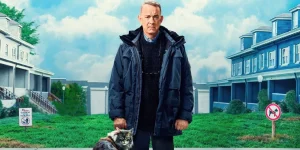
- It was remade in Hollywood as A Man Called Otto starring Tom Hanks.
- Fredrik Backman initially doubted the book would succeed because of its grumpy protagonist.
- The role of Ove significantly boosted Rolf Lassgård’s international recognition.
Why Watch?
Watch it if you appreciate character-driven storytelling and emotional authenticity. It reminds viewers that kindness often hides behind difficult personalities, and that community can quietly save a life. It’s not loud or flashy—but it lingers long after the credits roll.
Director’s Other Works
Other films directed by Hannes Holm include:
- Adam & Eva (1997)
- The Anderssons in Greece (2012)
- Behind Blue Skies (2010)
Recommended Films for Fans
If you loved A Man Called Ove (2015), you might also enjoy: