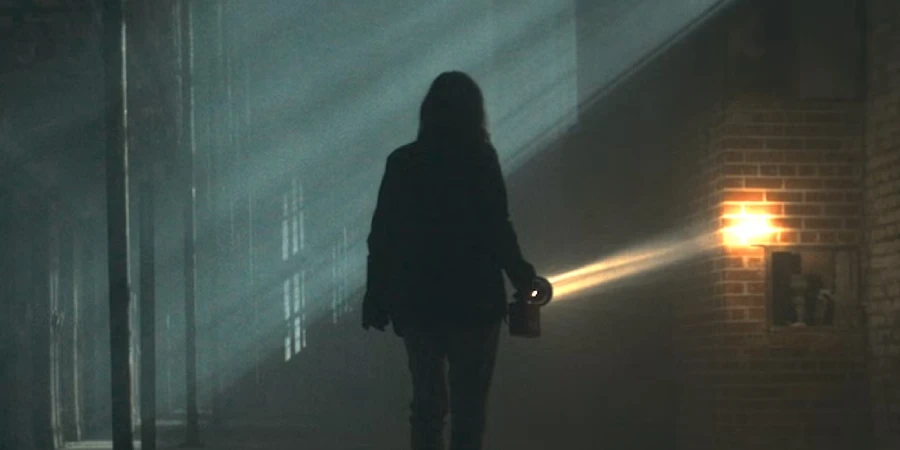

Shelby Oaks (2024) is a found-footage–inspired psychological horror film directed by Chris Stuckmann, best known for his long career as a film critic before stepping behind the camera. Funded largely through fan support, the movie became one of the most talked-about indie horror releases of the year, praised for its atmosphere, slow-burn tension, and emotionally grounded storytelling.
Detailed Summary
The Urban Legend of Shelby Oaks
The film opens with references to a long-standing urban legend surrounding the small town of Shelby Oaks. According to online forums and old police records, multiple children disappeared in the early 2000s after reporting encounters with a mysterious woman known as “The Pale Lady.”
Authorities dismissed the stories as hysteria, but rumors persisted online for years.
The movie presents itself as a reconstruction of real events using recovered footage, interviews, and digital archives.
The Disappearance That Started Everything
The central case involves Riley Brennan, a young girl who vanished after claiming that “a woman with no eyes” had been watching her bedroom at night.
Her sister Mia Brennan, now an adult, becomes obsessed with uncovering the truth behind Riley’s disappearance after discovering disturbing videos left behind on an old hard drive.
These tapes show Riley talking to someone off-screen, whispering warnings about “the woman who wants to wear my face.”
The Investigation Begins
Mia teams up with two documentary filmmakers who believe the Shelby Oaks case could be their breakout project. As they dig deeper, they uncover:
- Police interviews that contradict each other
- Missing evidence logs
- Several officers who resigned shortly after the case
- Similar disappearances across different states
What initially appears to be a tragic cold case begins to resemble a pattern of something predatory and intelligent.
The Found Footage Escalation
As the team visits abandoned homes, schools, and wooded areas near Shelby Oaks, the tone slowly shifts from investigation to survival horror.
Strange phenomena begin occurring:
- Audio distortions whenever certain names are spoken
- Figures briefly appearing in reflections
- Children’s laughter heard where no children exist
- Footage that rewinds itself
The camera increasingly becomes unreliable, reinforcing the film’s theme that truth itself may be unstable.
The Pale Lady Revealed
Through fragmented footage and recovered tapes, the group discovers the truth behind the entity.
The Pale Lady is not a ghost in the traditional sense.
She is a parasitic mimic entity that:
- Feeds on grief and trauma
- Can only appear to children or emotionally vulnerable adults
- Slowly replaces its victims by copying their appearance
Once fully mimicked, the original person disappears completely.
This explains why many “survivors” of Shelby Oaks later behaved strangely or cut off contact with loved ones.
Descent Into the Final Night
The final act takes place almost entirely through night-vision footage as Mia returns alone to the original Brennan house.
Inside, she finds:
- Childlike drawings predicting future disappearances
- A hidden crawlspace filled with shoes and personal items
- A final recording made by Riley
In the recording, Riley reveals that the Pale Lady cannot take you unless you invite her, and that fear acts as consent.
Movie Ending
Mia finally confronts the Pale Lady in the basement of her childhood home. The entity appears first as Riley, then as Mia herself, rapidly shifting between faces. It attempts to emotionally manipulate her by replaying memories and guilt.
Mia realizes the creature has been feeding on her grief for years.
In a final act of defiance, she refuses to acknowledge it, repeating Riley’s words:
“You only exist if I believe you do.”
For a moment, the entity begins to fade.
However, the final footage shows something chilling.
Mia exits the house at dawn, seemingly unharmed. Police bodycam footage later confirms she was found alive and coherent.
But in the very last scene, a security camera captures Mia standing perfectly still in her apartment hours later, staring directly into the camera without blinking.
Her reflection smiles before she does.
The implication is clear:
The Pale Lady didn’t lose. It learned.
The cycle continues, suggesting that complete resistance may be impossible.
Are There Post-Credits Scenes?
Yes. There is one post-credits scene.
It shows a short clip labeled “Recovered School Webcam Footage – 2025.”
A classroom sits empty after hours. A child’s voice whispers off-camera:
“She says she likes my face.”
The screen cuts to black.
Type of Movie
Shelby Oaks is a psychological horror film blending found-footage realism with cosmic and emotional horror. Rather than relying on jump scares, it focuses on atmosphere, dread, trauma, and the fear of being replaced.
Cast
- Camille Sullivan as Mia Brennan
- Brendan Sexton III
- Michael Beach
- Robin Bartlett
- Keith David (voice performance)
Film Music and Composer
The score was composed by James Burkholder, known for minimalistic, unsettling sound design.
The music relies heavily on:
- Low-frequency drones
- Reversed piano notes
- Distorted children’s lullabies
Much of the film’s tension comes from what you barely hear, not what you see.

Filming Locations
The movie was primarily shot in:
- Ohio (small rural towns and abandoned properties)
- Kentucky wooded areas
- Practical interior sets
These locations were essential for authenticity. The decaying houses, empty streets, and dense forests reinforce the idea that Shelby Oaks could exist anywhere, making the horror feel uncomfortably real.
Awards and Nominations
Although not a major awards-season contender, the film received recognition at genre festivals:
- Best Indie Horror Feature – Panic Fest
- Audience Choice Award – Nightmares Film Festival
- Nominee: Best First-Time Director
Behind the Scenes Insights
- The film was financed largely through fan crowdfunding.
- Chris Stuckmann avoided studio interference to maintain creative control.
- Many scenes were shot with real handheld cameras instead of cinema rigs.
- Actors were often unaware of scare timing to preserve genuine reactions.
- Several background figures were not digitally added but physically placed on set without warning the cast.
Inspirations and References
The film draws inspiration from:
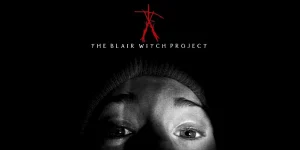
- The Blair Witch Project (1999)
- Lake Mungo (2008)
- Hereditary (2018)
- Internet creepypasta culture
- Slender Man–era urban legends
- True missing-person documentaries
Alternate Endings and Deleted Scenes
An alternate ending was reportedly filmed where Mia sacrifices herself to trap the entity permanently.
Test audiences found it too hopeful.
The director chose the final version to reinforce the idea that trauma does not end cleanly.
Deleted scenes include:
- A longer interview with a former police officer
- A hospital scene showing a previous survivor
- Extended childhood footage of Riley
Book Adaptations and Differences
The film is not based on a book, but a companion novelization is currently in development. The screenplay was written entirely for the film.
Memorable Scenes and Quotes
Key Scenes
- The first appearance of the Pale Lady in a reflection
- The corrupted school security footage
- The crawlspace discovery
- The basement confrontation
- The final security-camera reveal
Iconic Quotes
- “She doesn’t knock. She waits.”
- “If you’re scared, she’s already inside.”
- “You only exist if I believe you do.”
Easter Eggs and Hidden Details
- The Pale Lady appears faintly in at least 12 scenes before being acknowledged.
- Background radio chatter references real missing-person cases.
- The house number matches the year of the first disappearance.
- Children’s drawings subtly change between scenes.
- A blink-and-you-miss-it frame shows the entity watching from a phone screen reflection.
Trivia
- The entire film contains fewer than ten traditional jump scares.
- The entity never physically attacks anyone on screen.
- The title “Shelby Oaks” never appears within the movie itself.
- The final shot was filmed in a single uninterrupted take.
- Chris Stuckmann has stated the story was inspired by childhood anxiety and fear of loss.
Why Watch?
You should watch Shelby Oaks if you enjoy:
- Slow-burn horror over cheap scares
- Emotionally grounded storytelling
- Found-footage done with restraint
- Lore-driven mystery
- Endings that stay with you long after the credits
It’s a film that doesn’t scream at you.
It whispers until you can’t stop listening.
Director’s Other Works (Movies)
- Shelby Oaks (2024) – Directorial debut
This is currently Chris Stuckmann’s first feature film, with future projects already in development.
Recommended Films for Fans
- The Blair Witch Project (1999)
- Lake Mungo (2008)
- Hereditary (2018)
- The Dark and the Wicked (2020)
- Skinamarink (2022)
- Hell House LLC (2015)
- Sinister (2012)