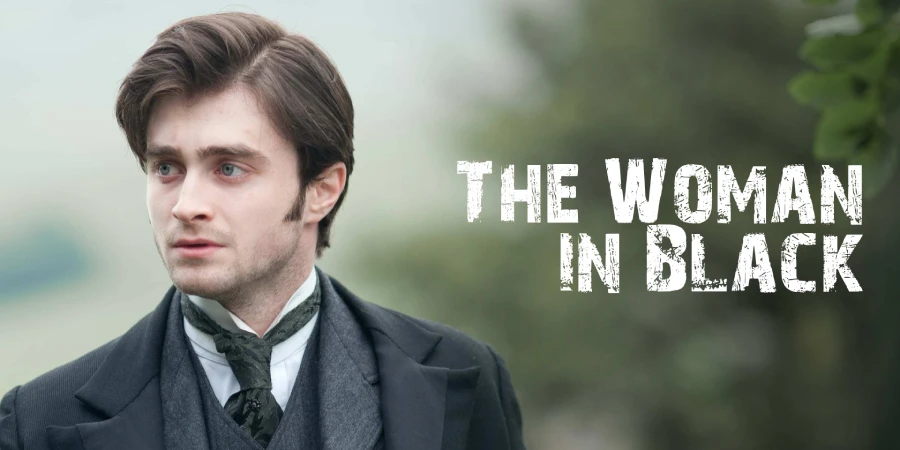

The Woman in Black is a gothic supernatural horror film directed by James Watkins and adapted from Susan Hill’s classic novel. Quiet, bleak, and intensely atmospheric, the movie trades cheap jumps for sustained dread and tragic mystery.
Detailed Summary
A Grieving Lawyer and a Remote Village
Arthur Kipps (Daniel Radcliffe), a young lawyer still mourning his wife’s death during childbirth, is sent from London to a small, fog-shrouded coastal town to settle the estate of Eel Marsh House. He is on the brink of losing his job, so the mission is not optional. From the moment he arrives, the locals treat him coldly, clearly terrified of something they refuse to mention.
Eel Marsh House and the First Apparitions
Eel Marsh House is isolated on a causeway that disappears during high tide. Inside, Kipps begins sorting through papers, only to encounter strange noises, rocking chairs moving by themselves, and glimpses of a pale, dark-dressed woman in the distance. The house is filled with toys and dusty reminders of a child’s bedroom, amplifying the unease.
After his encounter with the specter, a village girl suddenly dies—violently—indicating that something supernatural is connected to his presence.
The Curse of The Woman in Black
Kipps meets Mr. Daily (Ciarán Hinds), a wealthy villager not superstitious like the others. Through documents and testimonies, Kipps discovers the heartbreaking backstory of Jennet Humfrye, the woman in black. Her child Nathaniel drowned in the marshes due to negligence from others. After being declared mentally unfit, she hanged herself, swearing vengeance.
The villagers believe that whenever someone sees her ghost, a child in the village will die. The deaths of children are revealed to be her curse, directly tied to her being seen.
Attempt to Reunite Mother and Child
Determined to end the curse, Kipps retrieves the boy’s body from the mud-filled carriage trapped in the marsh. He and Mr. Daily place Nathaniel’s corpse in the house, hoping Jennet’s spirit will be satisfied. Her black figure appears, but instead of peace, her scream remains, and she disappears.
Kipps believes he has succeeded—but the calm feels disturbingly fragile.

Movie Ending
The film ends with Kipps preparing to leave the town with his young son Joseph. At the train station, he sees the Woman in Black once more. She stares at Joseph. The boy, entranced, steps onto the train tracks.
Kipps jumps in to save him, but the train hits both of them.
Immediately afterward, Kipps finds himself standing, holding Joseph’s hand in an empty railway station. His deceased wife appears, dressed in white, and smiles as the three reunite. The Woman in Black is seen standing nearby, watching silently. She did not forgive the villagers; she simply claimed Kipps and his child.
The ending implies:
- The curse cannot be lifted.
- Any act of kindness still leads to tragedy.
- Jennet’s vengeance continues indefinitely, giving the story its bleak, unforgettable impact.
Are There Post-Credits Scenes?
There are no post-credits scenes in The Woman in Black. The story ends definitively with the tragic reunion and haunting final stare.
Type of Movie
This film is a gothic horror drama that emphasizes slow-building tension, bleak atmosphere, and emotional tragedy rather than action-heavy scares.
Cast
- Daniel Radcliffe as Arthur Kipps
- Ciarán Hinds as Mr. Daily
- Janet McTeer as Mrs. Daily
- Liz White as Jennet Humfrye (The Woman in Black)
Film Music and Composer
The haunting orchestral score was composed by Marco Beltrami, known for blending eerie string arrangements with subtle, atmospheric dread. His music enhances the oppressive silence and lingering sadness that define the film.


Filming Locations
- Halton Hall & Peterborough, England: Served as the eerie Eel Marsh House.
- Osea Island & the marshes at Kent: Provided the coastal causeway landscape that traps visitors until low tide.
- Harewood House (West Yorkshire): Used for internal manor shots.
These real English locations were chosen to give the film an authentic Victorian bleakness. The marsh sequences, filmed with practical fog and cold climates, amplified the isolation central to the story.
Awards and Nominations
Though not a major awards-season favorite, the film received recognition for:
- Visual style and gothic design
- Daniel Radcliffe’s post–Harry Potter dramatic performance
Notable recognition includes nominations from the Empire Awards and Saturn Awards.
Behind the Scenes Insights
- Radcliffe studied Victorian mourning customs to convincingly portray prolonged grief.
- Real fog machines were used extensively, making filming uncomfortable and cold.
- Many props in the children’s rooms were original antique toys from the 18th–19th centuries.
- Radcliffe’s own newborn godson played baby Joseph in flashbacks.
Inspirations and References
The movie is based on Susan Hill’s 1983 gothic horror novel, which inspired:
- A long-running British stage play
- A famous BBC adaptation in 1989
The 2012 version adds more jump scares and a different ending, focusing heavily on visual haunting over psychological ambiguity.
Alternate Endings and Deleted Scenes
- A gentler ending was considered, where the ghost “forgives” Kipps. However, the studio kept the tragic ending to maintain the novel’s spirit of inevitable doom.
- Some deleted scenes expanded village paranoia but slowed pacing.
Book Adaptations and Differences
The film adds:
- More intense child deaths
- A more heroic Arthur Kipps attempting to break the curse
- A tragic, unambiguously supernatural ending
In the book, the Woman in Black haunts Kipps long after he returns home, implying that horror never leaves him psychologically.


Memorable Scenes and Quotes
Key Scenes
- The chilling rocking chair scene with invisible movement
- Arthur digging a child’s corpse out of the mud in total darkness
- The children suddenly dying after sightings of the ghost
Iconic Quotes
- “She never forgives. She never forgives.”
- “You must leave. Now.”
Easter Eggs and Hidden Details
- Jennet often appears briefly in the background long before jumps are triggered.
- Her ghost can be spotted in windows during scenes where Arthur isn’t aware of her.
- Many toys are symbolic: wind-up dolls move only when she is near, not by mechanics.
Trivia
- Daniel Radcliffe was only 22, playing a widowed father of a 4-year-old.
- The marsh scenes were physically dangerous due to real sinking mud.
- The 1989 version is considered scarier by many genre purists.
Why Watch?
Because it’s a rare modern horror film that relies on atmosphere, tragedy, and classic gothic storytelling, rather than cheap shock value. For fans of slow-burn horror with tragic emotional depth, this film stands out as one of the decade’s strongest ghost stories.
Director’s Other Works
- Eden Lake (2008)
- Bastille Day (2016) – also known as The Take