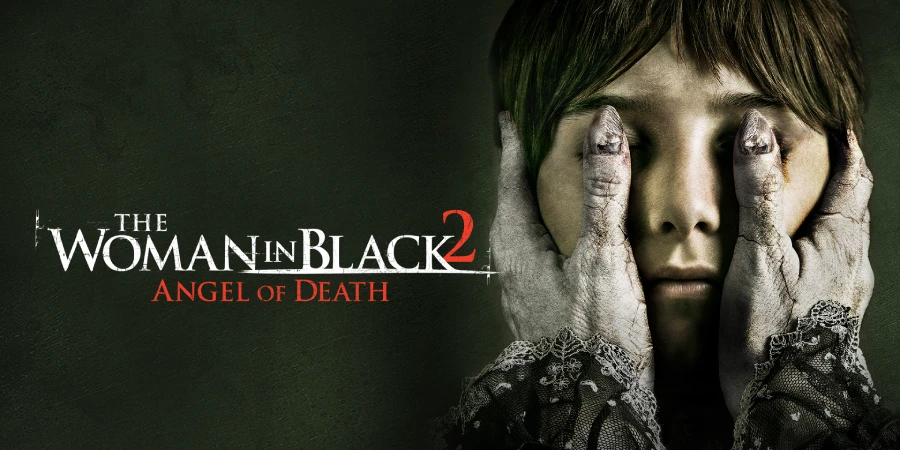

The Woman in Black 2: Angel of Death is a British supernatural horror film directed by Tom Harper, set decades after the events of the first movie. While the ghost remains the same malevolent force, the story shifts into a new historical context, making this film both a sequel and a standalone fright tale.
Detailed Summary
Evacuation to Eel Marsh House
The film takes place during World War II (1941). To escape German air raids in London, a group of schoolchildren is evacuated to the countryside with their teachers, Eve Parkins (Phoebe Fox) and Jean Hogg (Helen McCrory). Unfortunately for them, they are sent to Eel Marsh House, the abandoned estate haunted by the vengeful spirit known as the Woman in Black.
The Haunting Begins
Once they settle in, strange events start to occur. A quiet, troubled boy named Edward, who recently lost his parents, becomes the central target of the ghost. He sees visions, hears whispers, and begins to fall under her influence. Eve starts sensing an eerie presence in the house and sees frightening apparitions, but Jean brushes these off as nonsense or war-related stress.
Eve’s Personal Connection
Eve reveals to a pilot named Harry Burnstow, who is stationed nearby, that she once had a child taken from her because she was unmarried. Her guilt and trauma make her particularly vulnerable to the Woman in Black. It becomes clear that the ghost preys on motherhood, loss, and children, fueling her rage.
The Children in Danger
As the ghost becomes more aggressive, children begin acting strangely and one boy dies mysteriously. It becomes undeniable that someone, or something, in the house wants them dead. Jean eventually starts to believe Eve, but it may already be too late.
Movie Ending
The climax unfolds as Eve, Edward, and Harry attempt to escape Eel Marsh House. They discover that the Woman in Black seeks to possess Edward because of his pain and loneliness. At the train station, as they board a train, the ghost causes Harry to hallucinate — he believes he is saving Eve, but instead he falls onto the tracks and is killed by the oncoming train.
This horrifying death confirms that no one truly escapes the Woman in Black by running. As Eve tries to protect Edward, the ghost appears again, but this time her power seems reduced. Eve realizes that the spirit’s rage is tied to a lost child. She comforts Edward, repeating that he is not alone. Edward begins to detach emotionally from the ghost. The film ends ambiguously with them living together, suggesting that Edward and Eve have formed a new family, but the Woman in Black is still watching, hinting that the haunting will never end completely.
Are There Post-Credits Scenes?
There are no post-credits scenes in this film. The story’s chilling ambiguity remains exactly as the credits begin.
Type of Movie
This is a gothic supernatural horror film set against a dark wartime backdrop. Rather than relying solely on jump scares, it focuses on atmospheric fear and tragic emotional terror.
Cast
- Phoebe Fox as Eve Parkins
- Jeremy Irvine as Harry Burnstow
- Helen McCrory as Jean Hogg
- Oaklee Pendergast as Edward
- Leanne Best as The Woman in Black
Film Music and Composer
The score was composed by Marco Beltrami and Brandon Roberts. Their music leans heavily on eerie string arrangements and harsh high-pitched tones to evoke dread, enhancing the haunting silence of Eel Marsh House.

Filming Locations and Their Importance
The film was shot in Oxfordshire, Surrey, and Kent in England. The eerie Eel Marsh House visuals were achieved using a mix of real rural structures and digital enhancements. The muddy marshes and long causeway road play a symbolic role, emphasizing isolation — once the tide rises, escape becomes physically and emotionally impossible, mirroring the ghost’s hold on the living.
Awards and Nominations
While the film did not receive major mainstream awards, it gained recognition within horror communities for its atmospheric execution and period setting.
Behind the Scenes Insights
- The production team studied 1940s wartime child evacuation programs to build realism.
- To portray Edward’s silence, Oaklee Pendergast practiced non-verbal acting techniques for weeks.
- The ghost’s makeup was enhanced with digital effects only in close-up scares; most scenes use practical shadows and lighting tricks.
Inspirations and References
The film is loosely inspired by Susan Hill’s universe, extending beyond the original The Woman in Black novel. Unlike the book, this sequel explores broader thematic elements of trauma from war, abandoned children, and grief as a haunting force.
Alternate Endings and Deleted Scenes
Deleted scenes include:
- More interaction between Jean and the children, illustrating her strictness but hidden compassion.
- A longer version of Harry’s hallucination before his death, which showed him briefly seeing the ghost as Eve.
No official alternate ending was released, but early drafts reportedly offered a much darker ending, where Edward becomes permanently possessed.
Book Adaptations and Differences
While the first movie is a direct adaptation of Susan Hill’s novel, this sequel is not based on any existing book. It expands the lore by suggesting that the Woman in Black’s curse is not tied to a single family, but to any children or mothers who carry deep emotional wounds.


Memorable Scenes and Quotes
Key Scenes
- Edward communicates with chalk and slates, forming eerie messages.
- Eve sees the ghost at the bottom of a flooded basement, emerging slowly from the water.
- Harry’s tragic death caused by a ghostly hallucination.
- The final ambiguous moment as Eve and Edward leave together, but feel watched.
Iconic Quotes
- “She never forgives. She never forgets.”
- “Some ghosts never leave us.”
- “You’re not alone anymore.”
Easter Eggs and Hidden Details
- The wallpaper patterns in Eel Marsh House subtly resemble faces and crying children.
- Eve’s name alludes to the idea of new beginnings, yet she is trapped by the past.
- The ghost often appears reflected in glass or water, symbolizing distorted memory and grief.
Trivia
- The film was originally pitched as a TV mini-series before becoming a theatrical sequel.
- Several scenes used practical fog machines rather than CGI to achieve old-fashioned gothic atmosphere.
- Despite being a horror film, the youngest cast members were shown comedic edits on set to keep them from being scared.
Why Watch?
This is a great choice if you appreciate slow-burning gothic horror with a historical twist. It is especially appealing to viewers who prefer eerie atmosphere over constant jump scares, and those interested in stories about grief, trauma, and unresolved loss.
Director’s Other Works
- Wild Rose (2018)
- War Book (2014)
Recommended Films for Fans
- The Woman in Black (2012)
- The Others (2001)
- The Orphanage (2007)
- The Awakening (2011)