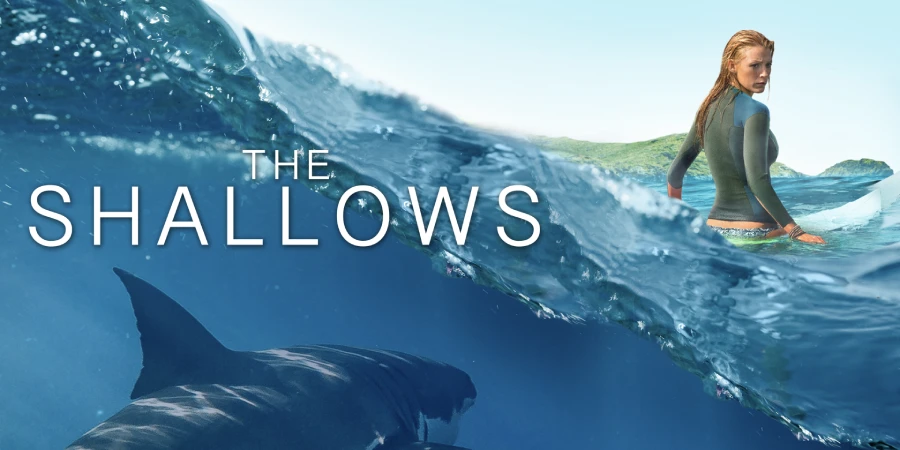

The Shallows is more than just another shark movie; it is a masterclass in minimalist terror. The film expertly transforms a secluded paradise into a claustrophobic cage, proving that true horror is not what lurks in the deep, but what traps you in the shallows. Consequently, its simple premise delivers a brutally efficient fight for survival, anchored by a powerful lead performance.
Detailed Summary
Arrival at Paradise
Nancy Adams, a medical student from Texas, travels to a remote beach in Mexico. She is emotionally reeling from the recent death of her mother from cancer. In fact, this specific beach was a special place her mother visited while pregnant with her. Seeking solace and a connection to her past, she gets a ride from a local named Carlos, who refuses to name the beach, simply calling it “paradise.” After arriving, she video chats with her sister and father, revealing her doubts about continuing medical school before she heads into the water to surf.
The First Attack
Nancy enjoys the waves, surfing with two other local men. After they leave for the day, she decides to catch one last wave. However, she stumbles upon the massive, floating carcass of a humpback whale, a clear sign of a nearby predator. Before she can react, a great white shark attacks, knocking her from her board and biting her leg severely. Consequently, she scrambles onto the whale carcass, narrowly escaping the circling shark. The predator, however, begins ramming the carcass, forcing her to make another desperate move.
Stranded
Seeing a small, isolated rock formation about 50 yards away, Nancy waits for the shark to be distracted. Then, she swims for her life, reaching the rock just as the shark lunges for her. Now stranded, she must use her medical knowledge to survive. For instance, she creates a tourniquet from her surf leash and uses her jewelry as makeshift sutures to close the deep wound on her thigh. She quickly realizes her rocky refuge is only temporary, as the high tide will eventually submerge it completely.
Failed Rescues
As the day progresses, Nancy’s hopes for rescue are tragically crushed. First, she sees the two surfers from earlier returning to the water. She screams and waves to warn them, but they paddle toward her, oblivious to the danger. The shark attacks them both in a brutal, swift assault. Later, a drunk man on the beach spots her and wades into the shallow water to steal her backpack and surfboard. Despite her desperate warnings, he ignores her until the shark attacks and kills him, too. Nonetheless, Nancy manages to retrieve the man’s backpack, which contains a GoPro camera. She uses it to record a final message for her father and sister.
The Final Confrontation
Nancy is joined on her rock by a wounded seagull, whom she names Steven Seagull. The bird becomes her sole companion in isolation. As the tide rises, she realizes the rock will soon be underwater. Therefore, she formulates a desperate plan. After calculating the shark’s patrol pattern, she swims through a field of jellyfish to deter the shark, reaching a nearby buoy. However, the shark follows and begins relentlessly attacking the buoy, tearing it from its mooring. This, ultimately, sets the stage for a final, deadly showdown.
Movie Ending
The ending of The Shallows is a thrilling battle of wits and endurance. Stranded on the rapidly deteriorating buoy, Nancy notices a flare gun in its emergency kit. She first tries to signal a distant cargo ship, but it does not see her. As a result, she uses the flare gun offensively, firing it at the water to ignite the oil leaking from the whale carcass. This creates a massive wall of fire, which injures the shark but also enrages it.
The enraged shark then doubles its attack on the buoy, ripping it apart. As the structure collapses, Nancy falls into the water. She realizes the shark is now trapped beneath the buoy’s tangled chains. In a moment of sheer desperation and brilliance, she grabs the anchor chain and pulls herself down, just as the shark charges her one last time. Her downward momentum means the shark misses her and instead impales itself on the rebar sticking out from the buoy’s concrete mooring on the seabed.
Nancy, nearly drowned and utterly exhausted, washes up on shore. A young boy on the beach finds her and runs for help. The last thing she sees before passing out is a vision of her mother smiling. The film then cuts to one year later. Nancy, now with a prosthetic segment in her leg but fully healed, has finished medical school. She and her younger sister Chloe prepare to go surfing together, with their father watching proudly from the beach, bringing her journey of healing full circle.
Are There Post-Credits Scenes?
No, there are no post-credits or mid-credits scenes in The Shallows. Once the credits begin to roll, the film is officially over.
Type of Movie
The Shallows is a survival thriller with strong elements of horror. Its tone is relentlessly tense and suspenseful. The film creates an atmosphere of isolation and dread, focusing almost entirely on one character’s desperate struggle against a force of nature. Despite the high-stakes action, it also incorporates moments of quiet emotional reflection, particularly concerning Nancy’s grief over her mother.
Cast
- Blake Lively – Nancy Adams
- Óscar Jaenada – Carlos
- Brett Cullen – Mr. Adams
- Sedona Legge – Chloe Adams
- Steven “Sully” Seagull – an injured seagull and Nancy’s companion
Film Music and Composer
The score for The Shallows was composed by the legendary Marco Beltrami, known for his work on horror and action films like Scream, A Quiet Place, and Logan. The music is a critical part of the film’s tension. For instance, Beltrami contrasts upbeat, surf-rock-inspired cues for the early scenes with dissonant, dread-inducing orchestral music during the shark attacks. The main theme for the shark is a menacing, low-end piece that effectively builds suspense without simply mimicking the iconic theme from Jaws.

Filming Locations
While the film is set in Mexico, principal photography took place in New South Wales, Australia. The primary location was Lord Howe Island, a remote volcanic island in the Tasman Sea known for its pristine, untouched beauty. This location was crucial for establishing the initial sense of a perfect, hidden paradise that quickly turns deadly.
However, many of the water-based scenes involving the rock and buoy were shot in a massive, specially constructed outdoor water tank at Village Roadshow Studios in Queensland. This controlled environment allowed for greater safety and technical precision. Digital effects were then used to seamlessly blend the tank footage with the on-location shots from Lord Howe Island, creating a believable and cohesive environment.
Awards and Nominations
The Shallows was a critical and commercial success that received several nominations, particularly for its suspense and Blake Lively’s performance. For example, it won the award for Best Horror/Thriller Film at the 43rd Saturn Awards. In addition, Blake Lively was nominated for favorite dramatic movie actress at the People’s Choice Awards and Choice Summer Movie Star: Female at the Teen Choice Awards, winning the latter.
Behind the Scenes Insights
- Director Jaume Collet-Serra insisted that the shark be a female, explaining he felt a female would be more defensive and protective of its feeding ground (the whale carcass).
- Blake Lively performed most of her own stunts, spending long hours in the water tank. She was also pregnant with her second child during some of the film’s reshoots.
- The film’s most beloved character, Steven Seagull, was played by a trio of highly trained seagulls. However, the cast and crew joked that the birds were diva-like on set and difficult to work with.
- The shark was created entirely with CGI. The effects team meticulously studied great white behavior to make its movements and attacks feel as realistic and terrifying as possible.
Inspirations and References
While not a direct adaptation of a true story, The Shallows draws heavy inspiration from the real-life survival genre and the primal fear of sharks popularized by the 1975 film Jaws. Screenwriter Anthony Jaswinski has said the idea came to him after a surfing experience where he found himself on a buoy far from shore, contemplating his vulnerability. The film’s single-location setup and focus on one character’s ingenuity also bear similarities to minimalist thrillers like Buried (2010) and 127 Hours (2010).
Alternate Endings and Deleted Scenes
There are no official alternate endings released for The Shallows. The theatrical cut ends with Nancy’s rescue and the one-year time jump. While a few minor scenes were trimmed for pacing, they did not significantly alter the plot. For instance, some extended dialogue and additional shots of Nancy on the rock were cut. The filmmakers felt the streamlined, propulsive narrative in the final version was the most effective.
Book Adaptations and Differences
The Shallows is not based on a book. It is an original screenplay written by Anthony Jaswinski. His script appeared on the 2014 Black List, an annual survey of the most-liked unproduced screenplays, before being acquired and fast-tracked for production.

Memorable Scenes and Quotes
Key Scenes
- The Whale Carcass: Nancy’s discovery of the massive, half-eaten whale carcass is a moment of pure dread, beautifully shot to emphasize her sudden realization of the immense danger she is in.
- DIY Surgery: Stranded on the rock, Nancy uses her medical training, a rash guard, and her earrings to painfully suture the gaping wound on her leg. It is a graphic and visceral scene that establishes her resilience.
- The Jellyfish Maze: Her desperate swim from the rock to the buoy through a swarm of stinging jellyfish is a visually stunning and incredibly tense sequence, perfectly highlighting her pain and determination.
- The Final Impalement: The climactic moment where Nancy tricks the shark into impaling itself on the mooring’s rebar is a shocking and clever payoff that cements her as a formidable survivor.
Iconic Quotes
- “It’s okay. It’s okay. I’m okay.” – Nancy repeating the mantra to herself after the initial attack, trying to stave off shock and panic.
- “Get out of the water! Shark! SHARK!” – Nancy’s helpless screams as she tries to warn the other surfers and the man on the beach.
- “What’s your name? I’m Nancy.” – Nancy speaking to the seagull, a moment of humanity that underscores her profound isolation.
- “I’m not gonna die here.” – A declaration of resolve that marks the turning point in her fight for survival.
Easter Eggs and Hidden Details
- The Watch: Nancy’s digital watch, a Casio Baby-G, serves as a constant countdown timer, tracking not only the time but also the tides, adding a relentless source of tension for the audience.
- Nancy’s Necklace: Nancy wears a necklace with a small pendant of a shark tooth and another of Saint Christopher, the patron saint of travelers. This subtly foreshadows her entire ordeal.
- The Secret Beach: The local who drives her to the beach, Carlos, refuses to name it, simply calling it paradise. Notably, names carry power, and keeping the beach anonymous adds to its mystique and Nancy’s isolation.
- The GoPro: The specific model of camera Nancy finds is a GoPro HERO4, a detail that grounds the film technologically in its time.
Trivia
- The film’s original title was In the Deep. However, it was changed to The Shallows to avoid confusion with the Mandy Moore shark film released a year later, 47 Meters Down, which was originally titled In the Deep in some regions.
- The shark has a noticeable hook in its mouth from a previous encounter, giving it a distinctive feature long before Nancy faces it. This detail suggests it has a history with humans.
- Director Jaume Collet-Serra used a larger-than-average great white model for the shark, estimating its size at 23 feet to enhance its presence as a monstrous, movie-worthy antagonist.
Why Watch?
This film is a lean, mean, 86-minute thrill ride. It wastes no time setting up its brilliantly simple premise. Therefore, if you enjoy nail-biting suspense, incredible single-actor performances, and a creature feature that is both smart and terrifying, this is a must-see.
Director’s Other Movies
- House of Wax (2005)
- Orphan (2009)
- Unknown (2011)
- Non-Stop (2014)
- Run All Night (2015)
- The Commuter (2018)
- Jungle Cruise (2021)
- Black Adam (2022)
Recommended Films for Fans
- Open Water (2003)
- The Descent (2005)
- 127 Hours (2010)
- Buried (2010)
- Crawl (2019)
- 47 Meters Down (2017)
- Fall (2022)