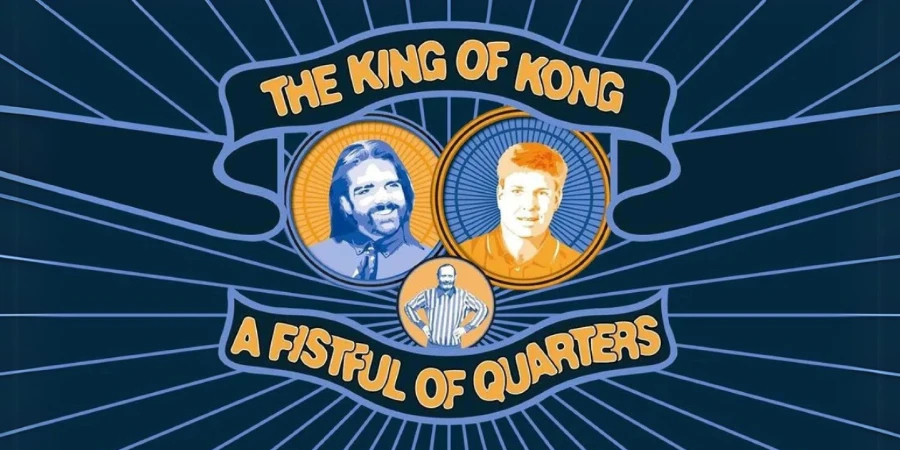

The King of Kong: A Fistful of Quarters is one of the most unexpectedly gripping documentaries ever made. What sounds like a niche story about arcade high scores turns into a Shakespearean rivalry about ego, legacy, obsession, and the fragile concept of “being the best.” And yes — it’s about Donkey Kong.
Directed by Seth Gordon, the film follows a seemingly simple goal: one man trying to break a world record. What unfolds is a deeply human drama about competition and control.
Detailed Summary
The American Arcade Dream
The documentary introduces the golden age of arcades in the 1980s, when players like Billy Mitchell became legends for achieving record-breaking scores on classic games like Donkey Kong.
Billy Mitchell, portrayed as the reigning king, holds the long-standing world record. He’s confident, brand-conscious, and hyper-aware of his reputation. He also maintains close ties with Twin Galaxies, the organization that tracks video game world records.
Enter Steve Wiebe — a laid-off Boeing engineer, family man, and former competitive drummer. After losing his job, Wiebe turns to Donkey Kong as a way to channel frustration and prove himself. It becomes more than a hobby; it becomes redemption.
The Rise of an Underdog
Wiebe dedicates himself obsessively to mastering Donkey Kong. The film carefully shows the physical and mental toll — hours of repetitive attempts, near-misses, and heartbreak. Eventually, he achieves what appears to be a record-breaking score at home.
However, controversy erupts when Twin Galaxies refuses to recognize his tape submission due to technicalities about how it was recorded. The implication is subtle but powerful: rules seem to bend depending on who you are.
Billy Mitchell, rather than competing publicly, submits his own high score via videotape — maintaining distance while preserving mystique.
Politics, Pressure, and Public Competition
The rivalry intensifies at live arcade events. The documentary builds tension like a sports thriller. There are moments where Wiebe appears on the verge of officially dethroning Mitchell in a public setting, only for new score submissions to emerge.
A recurring figure in the tension is Twin Galaxies founder Walter Day, whose impartiality is often questioned by viewers due to his long friendship with Mitchell.
As the story unfolds, it becomes less about points and more about power, gatekeeping, and the fear of losing status.


Movie Ending
In the film’s climactic section, Steve Wiebe competes live in front of an audience to officially break Billy Mitchell’s record under Twin Galaxies rules.
The tension is real and exhausting. Viewers see every missed jump, every barrel dodge. Eventually, Wiebe successfully achieves a record-breaking score in public. The room erupts. It’s a triumphant moment — the underdog seemingly wins.
But the celebration is short-lived.
Shortly after Wiebe’s achievement, Billy Mitchell submits another videotaped score that surpasses Wiebe’s. Twin Galaxies accepts it. Mitchell reclaims the title without ever facing Wiebe head-to-head.
The film ends on a bittersweet note. Wiebe later does break the record again in a public setting and is recognized as champion — but the emotional climax emphasizes how difficult it was for him to be taken seriously.
The ending raises lingering questions:
- Was the system fair?
- Did influence outweigh merit?
- Why wouldn’t Mitchell compete live?
The documentary does not state conclusions outright — but it very clearly guides the audience to reflect on integrity in competition.
Are There Post-Credits Scenes?
There are no traditional post-credits scenes. However, the film includes end-title updates about the ongoing back-and-forth of record attempts between Mitchell and Wiebe. These updates function as a final narrative note rather than a teaser.
Type of Movie
This is a documentary, but it plays like a sports drama thriller. It blends investigative storytelling with character study, turning competitive gaming into something surprisingly intense and emotional.
Cast (Real-Life Participants)
- Steve Wiebe
- Billy Mitchell
- Walter Day
- Brian Kuh
- Roy Shildt
Film Music and Composer
The score was composed by Craig Richey. The music cleverly mimics 1980s arcade aesthetics, reinforcing nostalgia while heightening dramatic tension.



Filming Locations and Their Importance
- Washington State – Steve Wiebe’s home and local arcades. These settings emphasize his grounded, middle-class reality.
- Florida – Billy Mitchell’s base of operations and business ventures, reinforcing his confident, almost mythic persona.
- Funspot Family Fun Center in New Hampshire – One of the largest arcades in the world and the site of major competitions. It acts as the film’s arena — the battlefield for legitimacy.
The contrast between suburban living rooms and legendary arcades visually reinforces the underdog-versus-elite narrative.
Awards and Nominations
The film was widely acclaimed and won several awards, including:
- Best Documentary at various film festivals
- Nominated for awards by the International Documentary Association
- Included in multiple “Best Documentaries of the 2000s” lists by critics
It did not receive Academy Award nominations, but its cult reputation has only grown stronger over time.
Behind the Scenes Insights
- Director Seth Gordon originally intended to make a lighter documentary, but the rivalry’s intensity shifted the tone.
- Many viewers believed Billy Mitchell was exaggerated or playing a villain role, but Gordon maintains that the portrayal came from raw footage.
- The documentary significantly increased public interest in retro arcade gaming.
- Years after the film’s release, controversies surrounding Billy Mitchell’s record legitimacy resurfaced in real life.
Inspirations and References
The film wasn’t based on a book. Instead, it draws from real competitive arcade culture of the 1980s and early 2000s.
Culturally, it taps into:
- American underdog sports narratives
- Obsession documentaries like Spellbound (2002)
- Classic rivalry storytelling structures
Alternate Endings and Deleted Scenes
No alternate ending was officially released. However, additional footage exists of extended arcade competitions and interviews that were trimmed for pacing.
Given real-life developments after release, some viewers argue that a follow-up documentary could have dramatically reshaped the narrative.
Memorable Scenes and Quotes
Key Scenes
- Steve Wiebe breaking down after repeated failed attempts at home
- The public Funspot competition with the crowd gathered behind him
- Billy Mitchell arriving in dramatic fashion and delivering controlled, PR-polished statements
- The phone call announcing Mitchell’s new videotaped score submission
Iconic Quotes
- “We don’t want it to look like there’s any favoritism.”
- “It’s not about the game. It’s about being the best.”
- “There’s a difference between playing to win and playing not to lose.”



Easter Eggs and Hidden Details
- Billy Mitchell’s frequent American flag imagery reinforces his self-styled “all-American champion” persona.
- The editing subtly frames Mitchell in darker lighting compared to Wiebe’s brighter, domestic scenes.
- The documentary structure mirrors a Western showdown — even the title references A Fistful of Dollars (1964).
- The use of arcade sound effects during transitions enhances tension without viewers consciously noticing.
Trivia
- The title references the film A Fistful of Dollars (1964).
- The documentary dramatically increased Donkey Kong arcade cabinet sales.
- Years after release, Twin Galaxies temporarily stripped Billy Mitchell of his records amid renewed investigation.
- Steve Wiebe later became a respected public figure in retro gaming communities.
Why Watch?
Because it proves something unexpected: a documentary about an arcade game can feel more intense than most action movies.
It’s about ego, fairness, and the human need to matter. You don’t need to care about Donkey Kong to care about this story. The emotional investment sneaks up on you.
If you enjoy stories where the system feels stacked and someone refuses to quit, this film delivers in a big way.
Director’s Other Works (Seth Gordon)
- Horrible Bosses (2011)
- Identity Thief (2013)
- Baywatch (2017)
- Four Christmases (2008)
Recommended Films for Fans
- Free Solo (2018)
- Spellbound (2002)
- Free to Play (2014)
- Searching for Bobby Fischer (1993)
- Indie Game: The Movie (2012)
- The Social Network (2010)