
The Human Condition III: A Soldier’s Prayer is the final chapter of Masaki Kobayashi’s monumental anti-war trilogy. Released in 1961, this film concludes one of the most uncompromising examinations of war, morality, and human endurance ever put on screen. Unlike typical war films that focus on heroism or spectacle, this entry completes the tragic philosophical journey of its protagonist by asking a devastating question: Can morality survive when humanity itself collapses?
Detailed Summary
The Aftermath of Defeat
The film begins immediately after the events of Part II. Japan’s position in Manchuria is collapsing as Soviet forces advance. Kaji, now a soldier rather than a labor supervisor, is exhausted physically and spiritually. The Japanese army is in full retreat, disorganized and terrified.
From the start, the tone is bleak. There is no illusion of honor left in the war. Soldiers are starving, freezing, and constantly hunted. The battlefield is no longer about victory but survival.
Kaji still clings to his ideals, but they are visibly eroding.
The Retreat Through Manchuria
As the unit marches through snow-covered wastelands, discipline disappears. Soldiers abandon their posts, officers lose authority, and executions occur without trials.
Kaji witnesses:
- Civilians murdered out of fear
- Soldiers stealing food from refugees
- Officers sacrificing their own men to escape
These scenes underline the film’s central idea: war does not corrupt a few, it corrodes everyone.
Despite this, Kaji continues to oppose cruelty whenever possible, often putting himself in danger for others.
Capture by the Soviet Army
Eventually, Kaji and the remaining survivors are captured by Soviet forces. Unlike earlier enemies, the Soviets initially appear more humane. However, this hope proves short-lived.
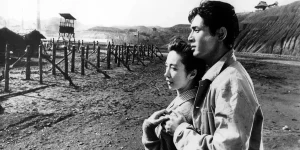
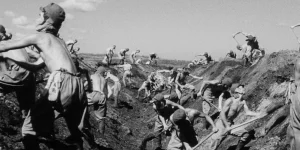
The prisoners are transported to labor camps under harsh winter conditions. Hunger, disease, and exhaustion quickly kill many.
Here, the film deliberately avoids portraying one side as morally superior. Power itself becomes the villain.
Life in the Prison Camp
Inside the camp, prisoners are divided into work units and ruled through fear. Informants are encouraged, and food is distributed unevenly.
Kaji again finds himself trapped between authority and conscience. When he attempts to defend weaker prisoners, he is punished brutally. He becomes increasingly isolated.
The emotional weight intensifies as Kaji realizes something terrifying:
Even his resistance is becoming meaningless.
He can no longer save people. He can barely save himself.
Psychological Collapse
As months pass, Kaji grows thinner, quieter, and distant. His once-powerful speeches about justice vanish. The man who believed reason could defeat brutality now struggles to stand upright.
He begins speaking less and observing more. His ideals are no longer arguments; they are memories.
The film subtly shows how war does not simply kill bodies but dismantles identity.
Escape Attempt
When chaos erupts in the camp, Kaji manages to escape with another prisoner. They wander through the frozen wilderness, desperately searching for food and shelter.
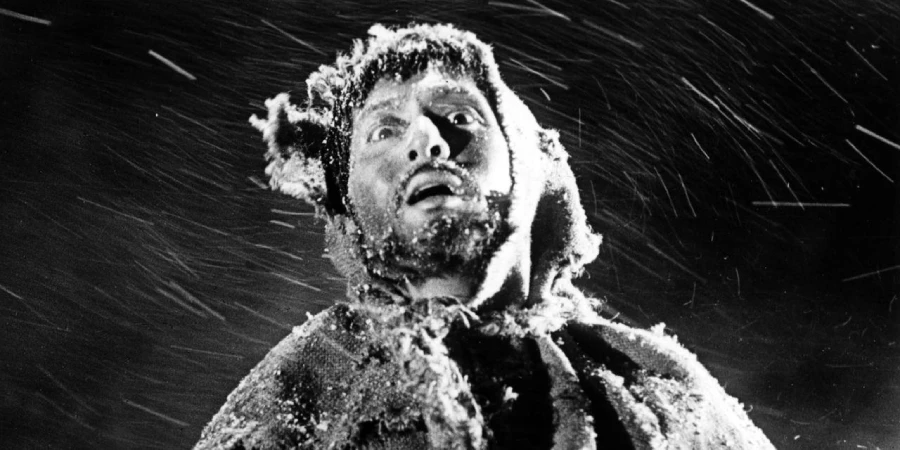
This portion of the film is nearly existential in nature. There is almost no dialogue. Nature itself becomes the enemy. Snowstorms, hunger, and exhaustion dominate every frame.
The world feels empty.
Human civilization has vanished.

Movie Ending
The ending of The Human Condition III is one of the most devastating conclusions in film history.
After escaping the prison camp, Kaji stumbles through the frozen plains of Manchuria. He is severely malnourished, delirious, and barely conscious. His companion dies along the way, leaving Kaji completely alone.
He begins hallucinating.
He talks to his wife Michiko, imagining her voice calling to him. He believes he is finally close to returning home. In reality, he is walking in circles through endless snow.
Eventually, Kaji collapses.
In his final moments, he attempts to crawl forward, whispering her name. His hands claw at the snow as if reaching for life itself.
Then he stops moving.
There is no rescue.
No reunion.
No redemption.
The camera lingers on his lifeless body, swallowed by the vast white landscape.
The message is brutally clear:
A moral man can survive war spiritually, but not physically.
Kaji dies not as a hero or martyr, but as a human being destroyed by systems far larger than himself.
The trilogy ends not with hope, but with truth.
Are There Post-Credits Scenes?
No. There are no post-credits or mid-credits scenes. The film ends definitively with Kaji’s death, reinforcing the finality and hopeless realism of Kobayashi’s vision.
Type of Movie
The Human Condition III is a war drama and philosophical tragedy that blends realism with existential cinema. It functions as both a historical depiction of World War II and a moral inquiry into obedience, survival, and human dignity.
Cast
- Tatsuya Nakadai as Kaji
- Michiyo Aratama as Michiko
- Keiji Sada
- Masaki Kita
- Akira Ishihama
Nakadai’s performance across all three films is widely regarded as one of the greatest acting achievements in Japanese cinema.
Film Music and Composer
The score was composed by Toru Takemitsu, whose minimalist and emotionally restrained music enhances the film’s oppressive atmosphere. Silence is used as frequently as music, emphasizing isolation and despair.

Filming Locations
The movie was filmed primarily in:
- Hokkaido, Japan
- Remote mountainous regions designed to resemble Manchuria
These locations were crucial for achieving the film’s sense of emptiness and cold. The harsh environments were real, and actors endured extreme conditions during filming, which adds authenticity to the performances.
Awards and Nominations
Although not heavily awarded internationally at the time of release, the trilogy later gained major recognition:
- Mainichi Film Award nominations
- Kinema Junpo Top Ten recognition
- Widely ranked among the greatest Japanese films ever made
Its reputation has grown steadily over decades.
Behind the Scenes Insights
- Masaki Kobayashi was himself a former soldier who refused promotion during WWII due to moral objections.
- The trilogy was filmed over nearly three years.
- Tatsuya Nakadai lost significant weight to portray Kaji’s physical decline realistically.
- Many extras were real veterans, contributing authentic behavior and movement.
- The director insisted on long takes to preserve emotional realism.
Inspirations and References
The film is based on the novel The Human Condition by Junpei Gomikawa, himself a former soldier.
Major influences include:
- Japanese post-war pacifist philosophy
- Existentialist literature
- Real testimonies from POW camps
- Kobayashi’s personal wartime experiences
Alternate Endings and Deleted Scenes
No alternate ending exists.
Kobayashi was adamant that Kaji must die. Studio executives reportedly suggested a more hopeful conclusion, but the director refused, stating that survival would betray the entire message of the trilogy.
Several shorter dialogue scenes were removed to maintain pacing, but no major narrative elements were cut.
Book Adaptation and Differences
Compared to the novel:
- The film condenses many internal monologues into visual storytelling
- Kaji’s ideological debates are more prominent in the book
- The ending remains faithful, though the film presents it with greater emotional restraint
The film is considered one of the most successful literary adaptations in Japanese cinema.


Memorable Scenes and Quotes
Key Scenes
- The chaotic retreat through the snow
- Prisoners collapsing during forced labor
- Kaji standing alone against camp authorities
- The silent escape across the frozen plains
- The final collapse in the snow
Iconic Quotes
- “If being human is a crime, then I will remain guilty.”
- “War does not reveal strength. It reveals emptiness.”
- “Survival without dignity is not life.”
Easter Eggs and Hidden Details
- Kaji’s uniform deteriorates visually in every act, symbolizing moral decay around him.
- The increasing dominance of white imagery reflects the erasure of identity.
- Long static shots mirror Buddhist concepts of impermanence.
- The final image mirrors the opening of Part I, completing a tragic visual circle.
Trivia
- The complete trilogy runs over nine hours.
- Frequently ranked alongside Seven Samurai and Tokyo Story in critics’ lists.
- Martin Scorsese has cited the trilogy as a major influence.
- The film was controversial in Japan for its criticism of military authority.
Why Watch?
You should watch The Human Condition III if you want:
- One of the most honest anti-war films ever made
- A deeply human story without propaganda
- A masterclass in performance and direction
- Cinema that challenges rather than comforts
This is not entertainment.
It is confrontation.
Director’s Other Works (with Year)
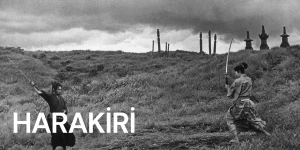
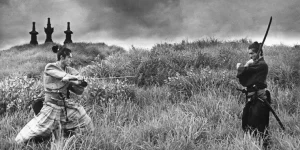
- Harakiri (1962)
- Samurai Rebellion (1967)
- Kwaidan (1964)
- The Inheritance (1962)
- Black River (1957)
Recommended Films for Fans
- Harakiri (1962)
- Fires on the Plain (1959)
- Come and See (1985)
- Paths of Glory (1957)
- Ivan’s Childhood (1962)
- Grave of the Fireflies (1988)