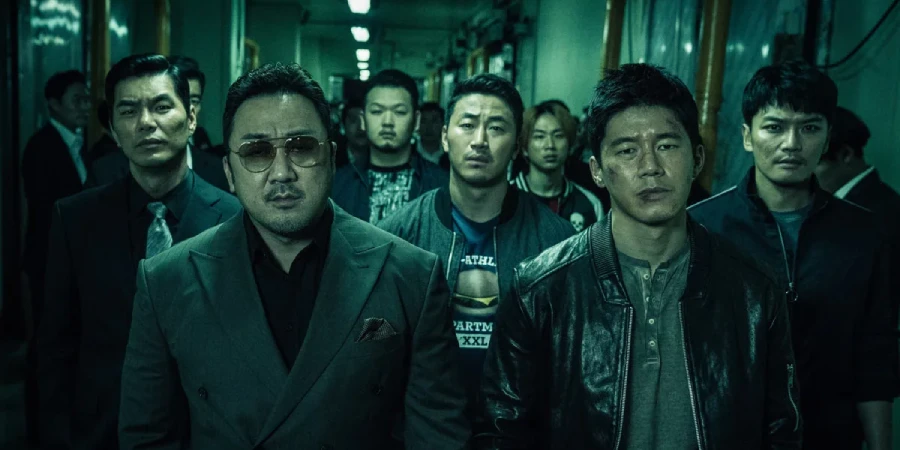

The Gangster, the Cop, the Devil is a gritty South Korean crime thriller that brings together three powerful forces: organized crime, law enforcement, and a cold-blooded serial killer. Anchored by an unforgettable performance from Ma Dong-seok, the film blends brutal violence with dark humor and moral ambiguity, asking a simple but dangerous question: what happens when justice teams up with crime?
Detailed Summary
A Serial Killer in the Shadows
The story begins with a series of unexplained murders shaking the city. The killer, later known as K, murders strangers at random, using extreme violence and leaving almost no evidence. His unpredictability makes him especially terrifying and difficult to track.
The Gangster Who Survives
Crime boss Jang Dong-soo becomes the killer’s first known survivor after a savage attack. This moment is crucial: for the first time, K makes a mistake. Dong-soo’s survival wounds his pride and turns the hunt personal. For a gangster who rules through fear, being treated like prey is unacceptable.
The Cop Who Breaks the Rules
Detective Jung Tae-seok is already investigating the serial killings, but internal politics and lack of evidence slow him down. When he realizes Dong-soo encountered the killer and survived, he makes a morally questionable choice: ally with a criminal to catch a greater evil.
An Uneasy Alliance
Dong-soo and Jung form a temporary partnership. Their relationship is built on mutual hatred and necessity. The gangster wants revenge. The cop wants an arrest. Each believes he’s using the other. This tension drives the film, creating constant power shifts and sharp dialogue.
The Hunt Tightens
Using Dong-soo’s criminal network and Jung’s investigative skills, they close in on the killer. The film carefully contrasts three philosophies:
- The gangster believes in revenge
- The cop believes in justice
- The killer believes in nothing at all
As the noose tightens, it becomes clear that only one of these worldviews can win.
Movie Ending
In the final act, Dong-soo captures the serial killer before the police can arrest him. This is a turning point that fulfills the gangster’s personal vendetta but creates a moral dilemma. Dong-soo brutally murders the killer with his bare hands, ensuring that the man who humiliated him will never face a courtroom.
Detective Jung arrives moments too late. However, this is where the ending becomes particularly clever and satisfying. Jung anticipated Dong-soo’s actions and planted forensic evidence earlier, ensuring that the murder of the serial killer could still be legally attributed to Dong-soo.
Dong-soo is arrested and sentenced, not as a hero, but as a criminal paying for his lifetime of violence. Jung gets his arrest, society is rid of a monster, and the law technically prevails. Yet the ending deliberately leaves viewers uncomfortable: justice was served, but not cleanly.
The final message is clear and unsettling: sometimes evil destroys evil, but the cost is never zero.
Are There Post-Credits Scenes?
No. There are no post-credits or mid-credits scenes. The film ends definitively, reinforcing its grounded and realistic tone rather than teasing a sequel.
Type of Movie
This is a crime thriller with strong elements of neo-noir, psychological horror, and action drama. It balances brutal violence with character-driven storytelling rather than relying solely on spectacle.
Cast
- Ma Dong-seok (Don Lee) as Jang Dong-soo
- Kim Mu-yeol as Detective Jung Tae-seok
- Kim Sung-kyu as K, the serial killer
The casting is minimal but highly effective, with each actor embodying a distinct moral force.
Film Music and Composer
The score was composed by Mowg, known for his work on Korean crime and action films. The music is restrained, tense, and atmospheric, often stepping back to let silence and ambient sound increase the sense of dread.

Filming Locations and Their Importance
The movie was filmed primarily in South Korea, using:
- Industrial districts
- Narrow urban streets
- Warehouses and abandoned buildings
These locations reinforce the film’s raw realism. There are no glamorous cityscapes here; the environment feels suffocating and decayed, mirroring the moral rot at the center of the story.
Awards and Nominations
While not a major awards-season darling, the film received:
- Strong recognition at Korean film festivals
- International attention after screening at Cannes Film Festival (Midnight Screenings)
Its reputation has grown steadily through word of mouth rather than trophies.
Behind the Scenes Insights
- Ma Dong-seok was heavily involved in shaping his character’s physical presence and fighting style.
- Many fight scenes were designed to feel messy and painful, avoiding stylized choreography.
- The director emphasized practical effects over CGI to enhance realism.
- The killer’s character was intentionally written with minimal dialogue to make him more unsettling.
Inspirations and References
The film draws inspiration from:
- Real-life Korean serial killer cases
- Classic crime thrillers like Se7en (1995)
- South Korean neo-noir traditions seen in films like I Saw the Devil (2010)
Alternate Endings and Deleted Scenes
No officially released alternate ending exists. However, interviews suggest early drafts considered:
- A more ambiguous fate for the gangster
- A version where the killer survives longer into police custody
These were abandoned to preserve the film’s bleak moral clarity.
Book Adaptation and Differences
This film is not based on a book. It is an original screenplay, though its structure resembles crime novels and true-crime narratives.
Memorable Scenes and Quotes
Key Scenes
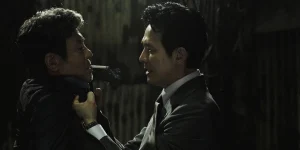
- Dong-soo surviving the initial attack in his car
- The first face-to-face meeting between the cop and the gangster
- The final confrontation between Dong-soo and the killer
Iconic Quotes
- “I don’t care who you are. You hurt me.”
- “Justice doesn’t mean clean hands.”
Easter Eggs and Hidden Details
- The killer’s victims are chosen to reflect random urban anonymity
- The cop’s repeated hand injuries subtly symbolize his moral compromises
- Dong-soo’s suit colors darken as the story progresses, reflecting his descent
Trivia
- This film inspired the announcement of a Hollywood remake with Sylvester Stallone involved as a producer.
- Ma Dong-seok gained international recognition largely due to this role.
- The killer’s car was deliberately kept generic to avoid any personality clues.
Why Watch This Movie?
You should watch this film if you enjoy morally complex crime stories where there are no clear heroes. It offers brutal action, sharp writing, and a rare dynamic where the protagonist is neither good nor redeemable, just necessary.
Director’s Other Works
- The Outlaws (2017)
- Unstoppable (2018)
- The Roundup (2022)