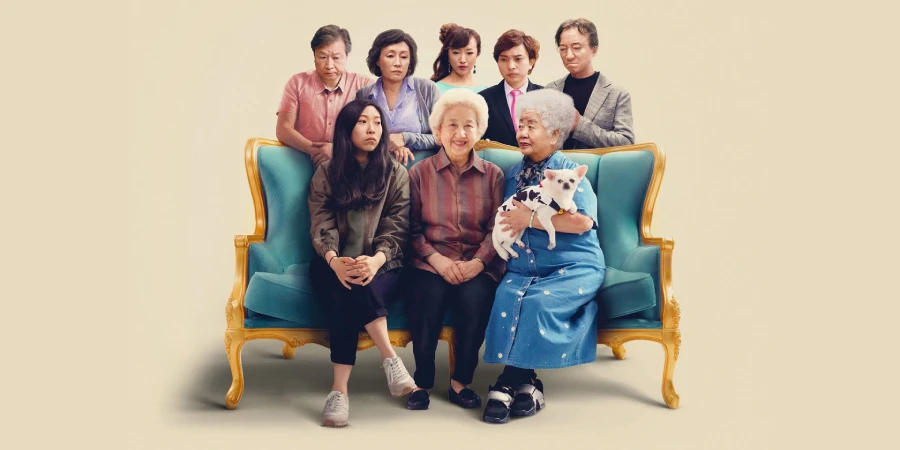

The Farewell is one of those rare films that feels intimate yet universal. Directed by Lulu Wang and starring Awkwafina, the movie is based on Wang’s own real-life experience. It tells the story of a Chinese-American family who decides not to tell their beloved grandmother that she has terminal cancer. The result is a heartfelt, quietly devastating, and often surprisingly funny exploration of culture, truth, and love.
Detailed Summary
Opening: A Secret No One Can Share
The film begins with Billi (Awkwafina), a struggling writer living in New York. She is emotionally close to her grandmother, Nai Nai, who lives in China. When the family learns that Nai Nai has late-stage lung cancer and only a short time to live, they make a decision rooted in Chinese cultural tradition: they will not tell her the diagnosis. Instead, they stage a fake wedding as an excuse for the entire family to gather and say their goodbyes.
From the very beginning, the emotional tension is clear: Who are they protecting—Nai Nai, or themselves?
The Cultural Divide
Billi strongly disagrees with the family’s choice. Having grown up in the United States, she believes Nai Nai deserves to know the truth. Her parents argue that in China, the burden of illness is carried collectively by the family. “It’s not her illness,” they explain. “It’s ours.”
This cultural conflict becomes one of the film’s emotional backbones. Billi feels torn between two worlds—American individualism and Chinese collectivism. The conversations around the dinner table feel natural, uncomfortable, and painfully real.
The Fake Wedding
The wedding itself is almost absurdly comic. The groom barely knows the bride. Family members cry during what should be a joyous occasion. Nai Nai remains blissfully unaware, focused on the happiness of her family.
The film masterfully blends humor and sorrow here. There are awkward toasts, forced smiles, and emotional breakdowns in private bathrooms. The tension builds because everyone knows the truth—except the one person who matters most.
Private Moments with Nai Nai
Some of the film’s most powerful scenes are the quiet ones between Billi and Nai Nai (played beautifully by Zhao Shuzhen). Nai Nai gives Billi advice about life, marriage, and purpose. She expresses pride and concern for her granddaughter’s future.
These scenes hit especially hard because the audience knows what Nai Nai does not. The unspoken goodbye hangs heavily in the air. Billi struggles constantly not to break down.



Movie Ending
In the final act, the wedding concludes and the family prepares to leave China. The farewell at the apartment door is emotionally restrained but devastating. Billi hugs Nai Nai tightly, longer than usual. Nai Nai, unaware of the truth, cheerfully reminds her granddaughter to eat well and work hard.
At the airport, Billi finally breaks down. The weight of the lie, the grief, and the unresolved moral conflict overwhelms her. The audience is left with the same question that has lingered throughout the film: Was the lie an act of love or an act of fear?
In a powerful closing title card, we learn that the film is based on a true story and that Nai Nai is still alive years after her diagnosis. This revelation reframes everything. The supposed “final goodbye” was not final at all. It suggests something profound: perhaps emotional peace and belief can sometimes matter as much as medical certainty.
The final scene shows Billi practicing a traditional breathing exercise Nai Nai taught her, shouting “Ha!” into the air—a release of grief, tension, and inherited strength. It is not a dramatic climax but a quiet emotional exhale. The story ends not with death, but with continuity.
Are There Post-Credits Scenes?
No, there are no post-credits scenes. However, viewers should stay for the end title card, as it provides meaningful context about Nai Nai’s real-life outcome.
Type of Movie
The Farewell is a deeply human family drama with strong comedic undertones. It blends cultural exploration, emotional realism, and subtle humor into a story that feels both specific and universally relatable.
Cast
- Awkwafina as Billi
- Zhao Shuzhen as Nai Nai
- Tzi Ma as Haiyan (Billi’s father)
- Diana Lin as Jian (Billi’s mother)
- Jiang Yongbo as Little Nai Nai
Awkwafina’s performance was particularly praised for revealing a softer, more dramatic side compared to her previous comedic roles.
Film Music and Composer
The score was composed by Alex Weston. The music is understated and delicate, allowing silences and ambient sounds to carry emotional weight. Rather than manipulating the audience, the score gently supports the film’s introspective tone.



Filming Locations and Their Importance
The film was primarily shot in Changchun, China. This location is significant because it mirrors Lulu Wang’s own family hometown. The apartment complexes, hospital corridors, and banquet halls feel authentic rather than stylized.
Scenes set in New York City contrast sharply with Changchun. New York feels isolating and uncertain for Billi, while China feels crowded, familial, and emotionally intense. The geography reinforces Billi’s internal identity conflict.
Awards and Nominations
The Farewell received widespread critical acclaim.
- Awkwafina won the Golden Globe Award for Best Actress – Motion Picture Musical or Comedy at the Golden Globe Awards, becoming the first actress of Asian descent to win in that category.
- The film was nominated at the Independent Spirit Awards and numerous critics’ associations.
- It was named one of the best films of 2019 by several major publications.
Behind the Scenes Insights
- The story is based directly on Lulu Wang’s real family experience, which she first shared on the podcast This American Life.
- Wang insisted on filming in Mandarin for authenticity, even though it made financing more difficult.
- Many supporting actors were cast for their naturalistic presence rather than star power.
- Awkwafina drew from her own experiences with grief to shape Billi’s emotional restraint.
- The production emphasized realism; family dinner scenes were often shot with overlapping dialogue to mimic real gatherings.
Inspirations and References
The film is inspired by Wang’s personal life and her essay for This American Life. It also draws from broader themes common in diasporic cinema—identity, generational divide, and cultural hybridity.
Stylistically, it echoes restrained family dramas rather than melodramas, focusing on small gestures instead of grand speeches.
Alternate Endings and Deleted Scenes
There were no radically different alternate endings reported. However, some extended family interactions were trimmed for pacing. Early cuts reportedly included more scenes set in New York to further establish Billi’s financial struggles, but Wang ultimately chose to center the emotional weight in China.
Book Adaptations and Differences
The film is not adapted from a novel. It is an original screenplay based on real events from Lulu Wang’s life. Therefore, there are no book-to-film differences.



Memorable Scenes and Quotes
Key Scenes
- The hospital scene where family members rehearse how not to cry.
- The chaotic, emotionally loaded wedding banquet.
- Billi and Nai Nai walking together through the neighborhood.
- The final goodbye outside Nai Nai’s apartment door.
Iconic Quotes
- “Chinese people have a saying: when people get cancer, they die.”
- “It’s not your fault. You’re just too soft-hearted.”
- “Life is not just about what you do. It’s more about how you do it.”
Easter Eggs and Hidden Details
- Nai Nai’s breathing exercise at the end mirrors the real exercise Wang’s grandmother practiced.
- The film subtly shows Billi translating conversations differently depending on who she speaks to, emphasizing identity shifts.
- Background television programs in China echo themes of family loyalty.
- The wedding photographer scenes quietly underline the artificiality of the event.
Trivia
- The film was made on a relatively modest budget but became a major indie success.
- Awkwafina’s Golden Globe win was historic.
- Many viewers initially assumed the story was fictional due to its moral complexity.
- The director has stated that some family members were nervous about the film’s release.
Why Watch?
Because it confronts one of the hardest questions imaginable: Is truth always the kindest choice?
The film invites viewers to reflect on cultural perspective, love, mortality, and family responsibility. It is emotionally resonant without being manipulative, funny without being disrespectful, and deeply personal yet widely relatable.
Director’s Other Works (Lulu Wang)
- Posthumous (2014)
- Expats (2024)
Recommended Films for Fans
- Minari (2020)
- The Big Sick (2017)
- Roma (2018)
- Past Lives (2023)
- Tokyo Story (1953)