Directed by Walter Hill, The Driver (1978) is a stripped-down, stylish neo-noir crime thriller that has become a cult classic over the decades. Minimal dialogue, cool professionalism, and some of the most influential car chases ever filmed define this movie.
Rather than focusing on traditional storytelling, the film builds tension through silence, character archetypes, and pure cinematic momentum. In many ways, it feels like a blueprint for modern “professional criminal vs obsessive cop” stories.
Detailed Summary
The Professional Getaway Driver
The film follows an unnamed getaway driver known only as “The Driver”, played by Ryan O’Neal. He is a quiet, highly skilled professional criminal who specializes in one thing: driving criminals away from crime scenes.
He has a strict reputation in the underworld:
He never gets caught.
He never betrays his clients.
And he never talks more than necessary.
The opening sequence immediately establishes his abilities. Two criminals hire him for a bank robbery, but the real test comes afterward: he must prove to them that he’s worth hiring.
During a tense nighttime demonstration, The Driver evades multiple police cars in a chaotic parking garage chase, smashing through barriers and maneuvering in tight spaces. The scene functions almost like a job interview through destruction, proving he is the best in the business.
The Detective Obsessed With Catching Him
On the other side of the law is “The Detective”, played by Bruce Dern. Like the driver, he is never given a real name. He becomes obsessed with catching this elusive criminal.
The Detective is arrogant, relentless, and manipulative. He believes the Driver is responsible for numerous robberies but lacks the proof needed to arrest him.
Because of this, he devises an unusual plan:
He pressures criminals into working with the Driver while secretly monitoring them, hoping to catch him in the act.
The dynamic becomes less about justice and more about two professionals trying to outsmart each other.
The Player and the Trap
The Detective eventually finds a small-time gambler known as “The Player”, played by Isabelle Adjani. She becomes a pawn in his attempt to trap the Driver.
Meanwhile, two criminals — “Red Plainclothesman” and “Green Plainclothesman” — agree to set up a robbery using the Driver as their getaway man. Their cooperation with the police is meant to ensure the Driver is finally caught.
But things go wrong.
During the robbery, chaos erupts, gunfire breaks out, and the carefully constructed trap collapses. The Driver manages to escape yet again, reinforcing his almost mythic status in the criminal world.
Escalation Toward the Final Confrontation
The Detective grows increasingly desperate and aggressive. His obsession becomes personal.
He arrests the Driver several times but always has to release him because he cannot produce evidence.
The tension between them becomes psychological rather than physical. The Driver remains silent and calm, while the Detective grows louder and more unstable.
Eventually, the Detective organizes one final trap using both the criminals and The Player.
Movie Ending
In the film’s final act, the Detective pushes the criminals to betray the Driver during a robbery so that police can arrest him immediately afterward.
The plan appears airtight.
But once the job begins, the criminals start turning on each other. Greed and distrust sabotage the arrangement.
A violent confrontation erupts in a parking structure. Gunfire breaks out, and several of the criminals are killed. The Driver narrowly escapes again, using his driving skills to evade capture.
Now the situation shifts: the criminals who were supposed to help the police are dead, and the Detective is left with nothing.
The Driver then turns the tables completely.
He arranges a final meeting with The Player, who had been involved in the Detective’s scheme. During this encounter, he quietly proves that he knows about the trap and her role in it.
Instead of seeking revenge, he simply walks away — leaving her shaken.
The Driver then disappears back into the night, once again avoiding arrest.
Meanwhile, the Detective has completely failed. He has no evidence, no witnesses, and no case.
The Driver remains free, his reputation intact, while the Detective is left defeated and humiliated.
The ending reinforces the film’s central idea: true professionals survive because they stay calm, silent, and disciplined.
Are There Post-Credits Scenes?
No. The Driver (1978) does not contain any post-credits or mid-credits scenes. Once the film ends, the story is complete.
Type of Movie
The Driver is a neo-noir crime thriller built around car chases, criminal professionalism, and psychological rivalry. Its storytelling is extremely minimalist, emphasizing mood, tension, and visual storytelling over dialogue.
Cast
- Ryan O’Neal — The Driver
- Bruce Dern — The Detective
- Isabelle Adjani — The Player
- Ronee Blakley — The Connection
- Matt Clark — Red Plainclothesman
- Felice Orlandi — Gold Plainclothesman
Notably, most characters are never given real names, reinforcing the film’s archetypal style.
Film Music and Composer
The score was composed by Michael Small.
The music is subtle and atmospheric, designed to support tension rather than dominate scenes. Many sequences rely purely on engine noise, tire screeches, and city ambience, which adds to the film’s realism and intensity.
Filming Locations
The movie was primarily filmed in Los Angeles, California.
Important filming locations include:
- Downtown Los Angeles parking garages
- Industrial districts
- Quiet nighttime streets
These environments helped create the movie’s cold, anonymous urban atmosphere, reinforcing the idea that the characters exist in a shadowy criminal ecosystem.
The parking garage sequences in particular became some of the most influential car chase scenes in cinema.
Awards and Nominations
Although not a major awards contender upon release, the film later gained recognition as a cult classic.
It did not receive major Academy Award nominations, but critics and filmmakers later praised its influence on action cinema.
Behind the Scenes Insights
- Director Walter Hill intentionally minimized dialogue, believing action should tell the story.
- Many actors were confused by the script because their characters did not have real names.
- Several car stunts were performed practically without modern CGI.
- Ryan O’Neal trained extensively to perform realistic driving sequences.
- The film was heavily inspired by minimalist crime films from France.
Inspirations and References
The film was strongly influenced by Le Samouraï (1967) by Jean-Pierre Melville.
Like that film, The Driver features:
- a silent professional criminal
- minimal dialogue
- stylized realism
- psychological tension between hunter and hunted
The movie itself later became a major influence on modern action cinema.
Alternate Endings and Deleted Scenes
There are no widely documented alternate endings.
However, several scenes were reportedly trimmed to maintain the film’s lean pacing, particularly dialogue-heavy exchanges that slowed the tension.
Walter Hill preferred a visual storytelling approach, so unnecessary exposition was removed.
Book Adaptations and Differences
The film is not based on a book, though its structure and characters feel very similar to classic hard-boiled crime novels.
Memorable Scenes and Quotes
Key Scenes
- The parking garage “job interview” chase, where the Driver proves his skills.
- The tense police interrogation scenes, where the Driver refuses to talk.
- The chaotic final robbery and parking structure shootout.
- The quiet final confrontation between the Driver and the Player.
Iconic Quotes
- “The Driver don’t deliver.”
- “Maybe you’re good enough… but you’re not lucky enough.”
These lines capture the film’s philosophy: skill alone isn’t enough — survival also requires luck.

Easter Eggs and Hidden Details
- Many characters are identified only by colors or roles, emphasizing their symbolic nature.
- The film’s driving scenes inspired later video game mechanics in racing and crime games.
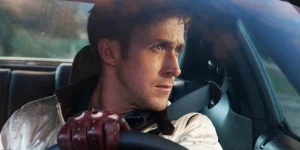
- The Driver’s quiet personality influenced later film characters like the protagonist in Drive (2011).
Trivia
- The film’s budget was about $4 million.
- Walter Hill described the movie as a “Western with cars instead of horses.”
- Ryan O’Neal’s character speaks very few lines throughout the entire film.
- The movie has been cited as a major influence on the Driver video game series.
Why Watch?
You should watch The Driver if you enjoy:
- Minimalist storytelling
- Realistic car chases
- Neo-noir crime movies
- Cat-and-mouse psychological battles
Even decades later, the film feels surprisingly modern.
Its DNA can be seen in many later movies about quiet professional criminals.
Director’s Other Works (Movies)
Other films directed by Walter Hill include:
Recommended Films for Fans
If you liked The Driver, you may also enjoy: