The Big Boss is the film that turned Bruce Lee into an international superstar and reshaped the martial arts cinema landscape forever. Known in some regions as Fists of Fury, this gritty revenge story blends social commentary, raw kung fu, and explosive emotion into a landmark Hong Kong film.
Detailed Summary
Arrival in Thailand: A Promise of Peace
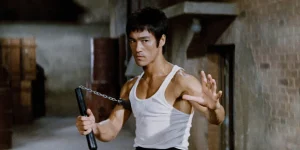
Cheng Chao-an (Bruce Lee) travels from mainland China to Thailand to work at an ice factory run by his relatives. Before leaving, his mother makes him swear never to fight, giving him a jade amulet as a reminder of self-control and moral restraint. Cheng initially appears quiet, humble, and almost passive.
The factory workers are already living in fear. Several colleagues have mysteriously disappeared after discovering something suspicious about the business.
Disappearances and Growing Tension
As more workers vanish, rumors spread that the factory is involved in illegal activities hidden inside the ice blocks. Cheng keeps his promise and avoids conflict, even when thugs harass and beat his cousins.
The tension escalates when Cheng’s closest cousin goes missing after investigating the factory at night. This loss begins to crack Cheng’s calm exterior.
The Breaking Point
When Cheng discovers the frozen corpse of his cousin hidden in the ice, his emotional restraint completely collapses. He removes his jade amulet, symbolically abandoning his vow of nonviolence.
This moment marks a dramatic shift in the film. Cheng transforms from a quiet worker into a relentless force of vengeance.
One Man Against the Syndicate
Cheng systematically hunts down the factory’s enforcers, delivering brutal, direct fights that showcase Bruce Lee’s explosive speed and physical dominance. Each confrontation escalates in intensity as Cheng works his way toward the man known only as The Big Boss, the crime lord behind the operation.
The violence is raw and personal, emphasizing anger, grief, and moral outrage rather than flashy choreography.

Movie Ending
Cheng finally infiltrates the inner compound of the ice factory and confronts The Big Boss, discovering the full scope of the criminal enterprise: drug trafficking hidden inside exported ice blocks, enforced through murder and intimidation.
The final fight is brutal and symbolic. Cheng battles the Big Boss in a savage hand-to-hand showdown that strips away any sense of heroism and replaces it with desperation and rage. Cheng ultimately kills him, ending the criminal operation.
However, the victory is short-lived.
As Cheng emerges, the Thai police arrive. Surrounded, exhausted, and bloodied, Cheng does not resist arrest. He stands silently as officers close in, fully aware that his actions, though morally justified, carry legal consequences.
The film ends with Cheng being taken into custody, leaving audiences with a powerful question: Was justice truly served, or did violence only create another victim?
This somber ending reinforces the film’s core theme: revenge may bring closure, but it never brings peace.
Are There Post-Credits Scenes?
No. The Big Boss does not include any post-credits or mid-credits scenes. The film ends definitively with Cheng’s arrest.
Type of Movie
The Big Boss is a martial arts revenge drama that blends kung fu action with crime, tragedy, and social realism, focusing more on emotional intensity than spectacle.
Cast
- Bruce Lee as Cheng Chao-an
- Maria Yi as Chow Mei
- James Tien as Hsiu Chien
- Han Ying-Chieh as The Big Boss
- Tony Liu as Hsiu Chien’s brother
Film Music and Composer
The score was composed by Wang Fu-ling, whose music emphasizes tension and tragedy rather than triumph. The soundtrack uses dramatic cues to underline Cheng’s internal struggle and emotional descent.
Filming Locations
The movie was filmed primarily in Thailand, including real factories and rural settings. These locations give the film a grounded, almost documentary-like realism. The oppressive heat, dusty environments, and industrial spaces reinforce the themes of exploitation and isolation faced by immigrant workers.
Awards and Nominations
While The Big Boss did not win major international awards at the time, it became one of the highest-grossing Hong Kong films of its era, cementing Bruce Lee’s star power and influencing global cinema for decades.
Behind the Scenes Insights
- Bruce Lee was not the original lead; the role was initially intended for James Tien.
- Lee reportedly choreographed many of the fight scenes himself, dissatisfied with early drafts.
- The film was heavily censored in several countries due to its violence.
- This was Bruce Lee’s first leading role in a Hong Kong feature film.
- The massive success of the film gave Lee unprecedented creative control over future projects.
Inspirations and References
The story draws inspiration from traditional Chinese morality tales, themes of brotherhood, and exploitation of immigrant labor. It also reflects real-world issues faced by overseas Chinese workers in Southeast Asia during the era.
Alternate Endings and Deleted Scenes
Some international cuts removed graphic violence and shortened the final fight. There is no confirmed alternate ending where Cheng escapes punishment; the arrest was always intended to preserve the film’s moral weight.
Book Adaptations and Differences
The Big Boss is not based on a book or novel. It was an original screenplay, later inspiring countless similar revenge narratives in martial arts cinema.

Memorable Scenes and Quotes
Key Scenes
- Cheng discovering his cousin’s body inside an ice block
- The symbolic removal of the jade amulet
- Cheng’s first full fight sequence after breaking his vow
- The final showdown with The Big Boss
Iconic Quotes
- “I promised my mother I wouldn’t fight.”
- “You forced me to break my promise.”
Easter Eggs and Hidden Details
- The jade amulet symbolizes Confucian restraint and moral duty.
- Bruce Lee’s screams during fights became a signature style element.
- Several fight scenes were shot in single takes to showcase Lee’s real speed.
Trivia
- The film broke box office records in Hong Kong in 1971.
- Bruce Lee injured his hand during production but continued filming.
- Some fight sounds were added later to exaggerate impact.
- The movie was released under different titles worldwide.
Why Watch?
If you want to understand why Bruce Lee became a legend, this is essential viewing. It offers raw emotion, authentic martial arts, and a powerful moral conflict that still resonates today. It’s not just a kung fu movie; it’s a statement.
Director’s Other Works
- The Chinese Boxer (1970)
- Fist of Fury (1972) – producer
- The Way of the Dragon (1972) – executive involvement