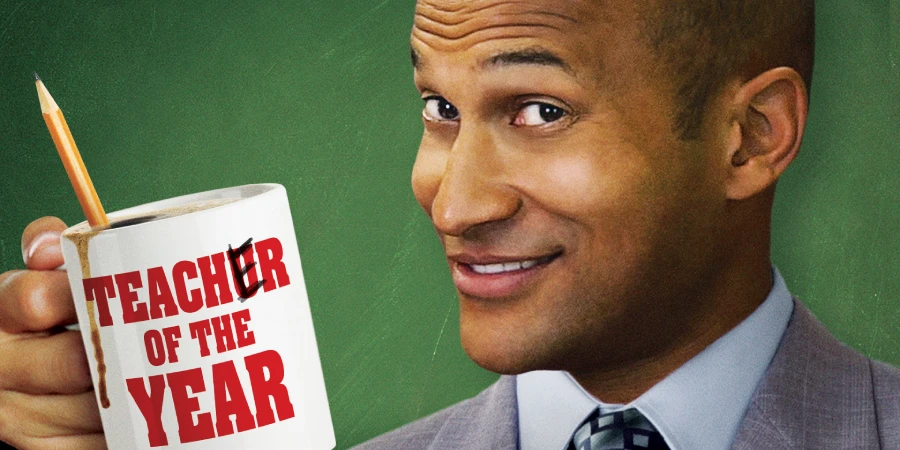

Teacher of the Year (2014) is a mockumentary-style comedy that takes a sharp, often uncomfortable look at ambition, insecurity, and the strange politics of the modern education system. It’s a small film with big cringe energy, driven largely by performance rather than spectacle.
Detailed Summary
The Mockumentary Setup: Meet Mitch Carter
The film follows Mitch Carter, a high school teacher who believes—deep in his soul—that he is destined for greatness. When his school announces a Teacher of the Year competition, Mitch sees it not as an honor, but as his inevitable coronation.
The mockumentary format allows Mitch to speak directly to the camera, where he constantly reframes reality to fit his self-image. His confidence is loud, unearned, and deeply awkward.
Campaigning Like It’s a Political Election
As the competition unfolds, Mitch treats the award like a national election. He:
- Overplays his accomplishments
- Subtly sabotages colleagues
- Performs exaggerated acts of “inspiration” for students and staff
Other teachers, who initially don’t take him seriously, slowly begin to push back. The film finds much of its humor in how Mitch cannot comprehend that others don’t see him as special.
Cracks Begin to Show
Mitch’s obsession starts affecting:
- His classroom performance
- His relationships with coworkers
- His already fragile reputation
The documentary crew captures moments where Mitch’s charisma collapses into desperation. What he thinks are heroic speeches come off as rambling, egotistical monologues. This is where the movie shifts from light satire into painfully honest character study.
Public Embarrassment and Loss of Control
As the final decision approaches, Mitch’s behavior becomes increasingly erratic. He attempts to control the narrative by:
- Forcing emotional moments on students
- Manipulating interviews
- Doubling down instead of self-reflecting
The film makes it very clear: Mitch isn’t misunderstood—he’s refusing to understand himself.


Movie Ending
In the final act, the Teacher of the Year winner is announced—and Mitch does not win.
The loss is not dramatic or explosive. Instead, it’s quietly devastating. Mitch is forced to sit with the reality that:
- His colleagues don’t respect him the way he imagined
- His students were props, not participants, in his ego project
- The award never represented teaching excellence, only his need for validation
In the closing scenes, Mitch attempts to spin the loss as a moral victory, insisting on camera that the experience “changed him.” However, the final moments subtly contradict this claim. His body language, tone, and last interview suggest he hasn’t learned anything at all.
The film ends on an intentionally ambiguous note: Mitch remains a teacher, unchanged, still convinced his greatness is just waiting to be recognized. It’s funny, sad, and unsettling in equal measure.
Are There Post-Credits Scenes?
No. There are no post-credits or mid-credits scenes. Once the film ends, that’s the final word on Mitch Carter—and that’s very much the point.
Type of Movie
Teacher of the Year is a mockumentary comedy with strong elements of satire and character-driven cringe humor. It leans more toward The Office than traditional laugh-out-loud comedy, focusing on discomfort rather than punchlines.
Cast
- Keegan-Michael Key as Mitch Carter
- Nate Dern
- Teri Reeves
- Jillian Clare
Keegan-Michael Key carries the film almost entirely, delivering a performance that is intentionally grating but deeply committed.
Film Music and Composer
The film uses minimal, understated music, typical of mockumentary projects. There is no dominant score; instead, silence and awkward pauses are used to heighten discomfort and realism.

Filming Locations
The movie was filmed primarily in Los Angeles, California, using real school interiors and modest locations. This grounded approach reinforces the documentary illusion and keeps the focus on character rather than setting.
The ordinary environments emphasize a key theme: Mitch believes he’s extraordinary in the most average of places.
Awards and Nominations
The film did not receive major industry awards but has gained cult recognition for:
- Keegan-Michael Key’s performance
- Its commitment to mockumentary realism
- Its uncomfortable but accurate satire of workplace narcissism
Behind the Scenes Insights
- The film was largely improvised, especially interview segments
- Keegan-Michael Key based Mitch on real-life educators he had encountered
- The documentary crew within the film was instructed not to “help” the character, enhancing authenticity
- Several scenes were shot in long takes to preserve natural awkwardness
Inspirations and References
- This Is Spinal Tap (1984)
- Best in Show (2000)
- The Office (UK and US versions)
The film borrows heavily from mockumentary traditions, applying them to the rarely explored ego dynamics of educators.
Alternate Endings and Deleted Scenes
Some deleted scenes reportedly showed Mitch attempting to transfer schools or start a motivational speaking career. These were removed to preserve the film’s bleak, circular ending—where nothing truly changes.
No alternate ending was officially released.
Book Adaptations and Differences
This film is not based on a book or prior written work. It is an original screenplay developed specifically for the mockumentary format.


Memorable Scenes and Quotes
Key Scenes
- Mitch rehearsing his acceptance speech before nominees are announced
- A classroom scene where his “inspiration” visibly confuses students
- The final interview where Mitch insists he’s grown, despite evidence to the contrary
Iconic Quotes
- “I don’t need validation. I just deserve recognition.”
- “Teaching isn’t a job. It’s a calling. And I answer loudly.”
Easter Eggs and Hidden Details
- Background posters subtly contradict Mitch’s self-image
- Other teachers are often framed more competently without comment
- The documentary crew becomes less responsive over time, reflecting growing detachment
Trivia
- The entire film was shot in under three weeks
- Many background actors were real educators
- Several scenes use real classroom lesson plans
Why Watch?
You should watch Teacher of the Year if you enjoy:
- Cringe comedy that trusts the audience
- Character studies of deeply flawed people
- Mockumentaries that blur comedy and discomfort
It’s not a feel-good movie—but it is a sharp and honest one.
Director’s Other Works (Movies)
- The Test (2012) – short film
- The List (2013) – short film
Recommended Films for Fans
- Best in Show (2000)
- This Is Spinal Tap (1984)
- American Movie (1999)
- The Inbetweeners Movie (2011)
- Napoleon Dynamite (2004)