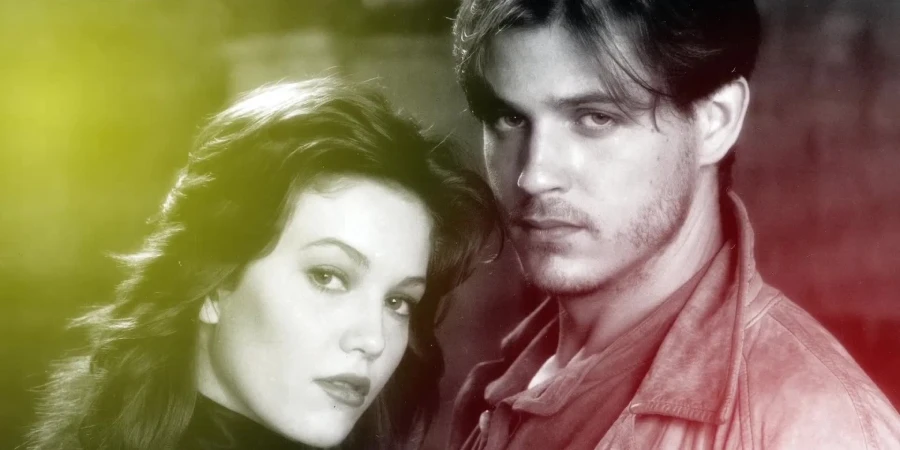

Streets of Fire is one of the most unique action films of the 1980s. Directed by Walter Hill, the movie blends rock music, comic-book aesthetics, and urban action into what Hill famously called “a rock & roll fable.”
Starring Michael Paré, Diane Lane, and Willem Dafoe, the film creates a stylized city that feels both futuristic and nostalgic—somewhere between the 1950s and the 1980s.
Detailed Summary
Opening: A City of Neon, Music, and Trouble
The story takes place in a gritty, unnamed city that looks like a hybrid of 1950s Americana and 1980s urban nightlife.
Rock star Ellen Aim (Diane Lane) performs at a packed concert. During the show, a biker gang called the Bombers storms the stage and kidnaps her. Their leader, the terrifying Raven Shaddock (Willem Dafoe), drags Ellen away while the audience panics.
The kidnapping sets the central plot in motion.
The Return of Tom Cody
Word of the kidnapping spreads quickly, eventually reaching Tom Cody (Michael Paré), Ellen’s former boyfriend and a soldier-for-hire type.
Tom returns to the city after being hired by Ellen’s manager Billy Fish. He’s not particularly thrilled about the job, but the money—and perhaps unresolved feelings—convince him.
Tom assembles a small team:
- McCoy (Amy Madigan), a tough ex-soldier and mechanic
- Billy Fish (Ellen’s sharp-tongued manager)
Their mission: infiltrate the Bombers’ territory and rescue Ellen.
The Bomber Territory
The Bombers control a dangerous industrial district filled with smoke, factories, and biker hangouts.
Tom and his crew track down the gang’s hideout. In a tense nighttime operation, Tom sneaks inside and successfully rescues Ellen.
However, escaping the territory is far from easy. The Bombers pursue them in a high-speed chase through dark streets and abandoned train yards.
Tom and Ellen: Old Feelings Resurface
While hiding out after the rescue, Tom and Ellen reconnect.
Their past relationship becomes clear: Tom left the city years earlier, leaving Ellen behind just as her music career began taking off.
Despite their lingering chemistry, Ellen realizes that Tom is not someone who can stay in one place.
Raven’s Challenge
Humiliated by Ellen’s escape, Raven demands a rematch with Tom.
Instead of another gang war, Raven proposes a one-on-one duel with sledgehammers. It will take place in an abandoned industrial area.
Tom agrees.

Movie Ending
The climax centers around the brutal duel between Tom Cody and Raven Shaddock.
The two men meet in an empty factory district at night, surrounded by spectators from both sides. Armed with heavy sledgehammers, they fight in a raw and intense battle.
Raven initially dominates with sheer aggression, but Tom eventually gains the upper hand through strategy and endurance.
During the final moments of the fight, Tom knocks Raven down and defeats him decisively.
The Bombers are forced to retreat, effectively ending their control over the area.
Meanwhile, Ellen prepares for another major concert performance. Tom attends briefly but watches from a distance rather than joining her backstage.
In the film’s emotional final moments, Ellen performs the song “Tonight Is What It Means to Be Young.”
Tom quietly leaves the city on a train, returning to his wandering life. Ellen stays behind to continue her career.
The ending emphasizes a bittersweet truth:
Tom and Ellen care about each other deeply, but their lives are moving in different directions.
It’s a romantic ending without a traditional reunion, reinforcing the film’s fairy-tale tone.
Are There Post-Credits Scenes?
No. Streets of Fire does not include a post-credits scene. The story concludes completely with Ellen’s final performance and Tom’s departure.
Type of Movie
The film is best described as a stylized action musical hybrid. It mixes elements of action cinema, rock music performance, romance, and comic-book storytelling into what the creators called a “rock & roll fable.”
Cast
- Michael Paré — Tom Cody
- Diane Lane — Ellen Aim
- Willem Dafoe — Raven Shaddock
- Amy Madigan — McCoy
- Rick Moranis — Billy Fish
- Bill Paxton — Clyde the Bartender
Film Music and Composer
The score was composed by Ry Cooder.
However, the soundtrack songs became the film’s real legacy.
Notable tracks include:
- “Nowhere Fast”
- “Tonight Is What It Means to Be Young”
- “I Can Dream About You” by Dan Hartman
These songs helped cement the movie’s identity as a rock-driven action story.

Filming Locations and Their Importance
Although the story takes place in a fictional city, most filming occurred in:
- Chicago, Illinois
- Los Angeles studio backlots
The production deliberately created a timeless urban environment, mixing architectural styles from different decades. This design choice helped give the movie its surreal, almost comic-book atmosphere.
Awards and Nominations
While the film wasn’t a major awards contender at the time, it gained recognition later for its music and cult status.
Notable acknowledgments include:
- Multiple soundtrack chart successes
- Cult film recognition in later retrospective film festivals
- Strong influence on later music video aesthetics and action films
Behind the Scenes Insights
- Director Walter Hill intended the movie to be the first part of a trilogy, though the sequels were never made.
- Willem Dafoe insisted on performing many of his own stunt scenes.
- Diane Lane was only 18 years old during filming.
- Rick Moranis originally had a much smaller role, but his character was expanded during production.
- The film’s lighting style was heavily inspired by film noir and comic books.
Inspirations and References
The film draws inspiration from several sources:
- 1950s rock and roll culture
- Western films (Tom Cody behaves like a lone gunslinger)
- Film noir aesthetics
- Urban comic books and pulp adventure stories
Walter Hill wanted the film to feel like a modern myth set in a city that never quite existed.
Alternate Endings and Deleted Scenes
Some scenes were trimmed from the theatrical release:
- A longer version of Tom and Ellen’s reunion conversation
- Additional scenes showing Ellen’s rise to stardom
- Extended gang interactions with the Bombers
Early concepts also suggested a slightly darker ending where Tom leaves the city under more ambiguous circumstances, but this version was never filmed.
Memorable Scenes and Quotes
Key Scenes
- Ellen Aim’s opening concert performance
- The Bombers’ dramatic stage kidnapping
- The nighttime rescue at the biker compound
- The motorcycle chase through industrial streets
- The sledgehammer duel between Tom and Raven
Iconic Quotes
- “This is a rock and roll fable.”
- “I’m just passing through.” — Tom Cody
- “Tonight is what it means to be young.”

Easter Eggs and Hidden Details
- The city deliberately lacks a name, reinforcing the fairy-tale vibe.
- The visual style influenced later cyberpunk films.
- Many street signs and props mix 1950s and 1980s design elements.
- Raven’s costume was inspired by glam rock stage outfits.
Trivia
- The film had a large budget for its time: about $14 million.
- Despite underperforming at the box office, it became a major cult classic.
- The final song “Tonight Is What It Means to Be Young” almost wasn’t included.
- Willem Dafoe’s look (leather overalls with no shirt) became one of his most recognizable villain designs.
Why Watch?
You should watch this movie if you enjoy:
- Highly stylized 80s action films
- Unique genre mashups
- Memorable rock soundtracks
- Cult cinema with strong visual identity
Few movies feel quite like Streets of Fire. It’s part musical, part western, part action comic—and completely unapologetic about it.
Director’s Other Works
Other notable films by Walter Hill include:
- The Warriors (1979)
- 48 Hrs. (1982)
- Brewster’s Millions (1985)
- Red Heat (1988)
- Last Man Standing (1996)
Recommended Films for Fans
If you enjoyed Streets of Fire, you might also like: