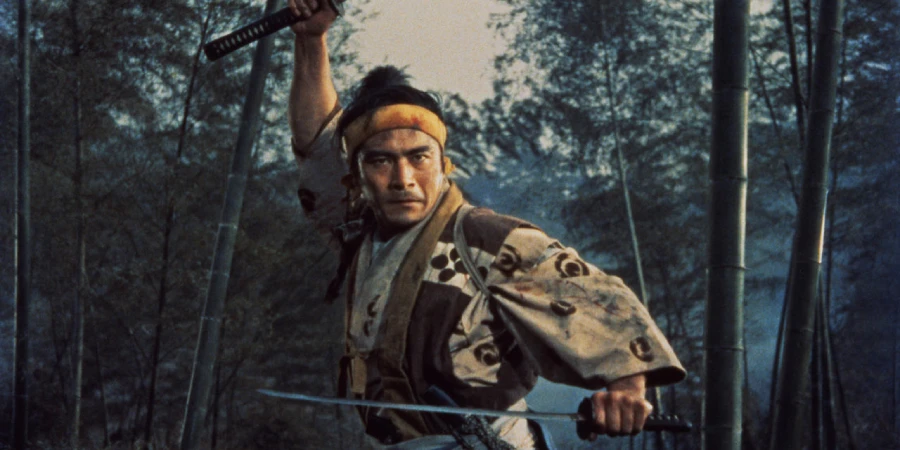

Fame is a brutal master. In Samurai II: Duel at Ichijoji Temple, Miyamoto Musashi finds his growing reputation is a cage, not a prize. Consequently, every duel he wins pushes him further from the peaceful life he craves, forcing him down a path drenched in blood and sorrow.
Detailed Summary
A Triumphant Return to Kyoto
The film opens with Takezo, now known by his samurai name Miyamoto Musashi (Toshiro Mifune), returning to Kyoto. His victory against the Kyo-ryu school in the previous film has made him a local celebrity. However, Musashi finds this fame disquieting. He seeks to refine his swordsmanship on a spiritual level, not merely for glory. Meanwhile, his devoted love Otsu (Kaoru Yachigusa) continues to follow him, hoping for a life together. Complicating matters further is Matahachi (Sachio Sakai), Musashi’s cowardly childhood friend, who spreads lies about Musashi to save his own skin.
A Temptress and a Challenge
In Kyoto, Musashi becomes entangled with the beautiful and enigmatic courtesan Yoshino (Mariko Okada). She is captivated by his raw power and untamed spirit, a stark contrast to the refined nobles she usually entertains. On the other hand, the prestigious Yoshioka sword school, feeling its honor stained by Musashi’s presence, sees him as a threat. The school’s master, Seijuro Yoshioka (Akihiko Hirata), a skilled but arrogant swordsman, formally challenges Musashi to a duel to reclaim his family’s reputation.
The First Duel and a Deeper Plot
Musashi accepts the challenge from Seijuro Yoshioka. Despite Seijuro’s refined technique, Musashi’s unorthodox, two-sword style proves superior. He defeats Seijuro with a single, powerful blow to the arm, deliberately sparing his life to avoid further bloodshed. However, this act of mercy backfires spectacularly. Humiliated, Seijuro retreats, while his younger brother, Denshichiro Yoshioka, immediately vows revenge and issues a new challenge. In addition, the Yoshioka school’s retainers begin plotting a more definitive way to eliminate Musashi, regardless of the duel’s outcome.
An Ambush at Ichijoji Temple
Musashi defeats Denshichiro in their duel as well, killing him. The Yoshioka school, now leaderless and desperate, abandons all pretense of honor. They arrange a final “duel” against Seijuro’s young heir, a mere boy. Musashi knows this is a trap. Nevertheless, he agrees to meet them at the Ichijoji Temple. When he arrives, he finds not a boy, but the entire remaining force of the Yoshioka school—nearly 80 swordsmen—waiting to ambush him. What follows is a brutal, chaotic battle for survival.
Movie Ending
The climax is the legendary duel at Ichijoji Temple. Musashi, surrounded and vastly outnumbered, fights with ferocious desperation. He cuts his way through dozens of opponents in a stunningly choreographed, extended sequence. Ultimately, he emerges as the sole survivor, wounded and splattered with the blood of the entire Yoshioka school. His victory, however, feels hollow and monstrous.
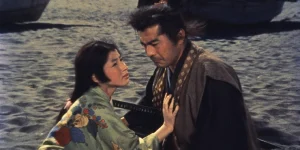
Following the battle, he meets with the courtesan Yoshino, who offers him comfort and a life with her. Musashi, however, is emotionally shattered by the slaughter he has just committed. He realizes that a path of violence and a life of peace cannot coexist. In a moment of cold clarity, he rejects her and walks away, continuing his lonely journey as a swordsman. The final shot sees Otsu watching him depart once more, her hopes dashed again as Musashi chooses the way of the sword over a life with her.
Are There Post-Credits Scenes?
No, Samurai II: Duel at Ichijoji Temple does not have any post-credits scenes. The film concludes definitively, setting the stage for the third and final installment of the trilogy.
Type of Movie
This film is a historical action drama, specifically a jidaigeki (period drama) with strong elements of the chanbara (sword-fighting) subgenre. The tone is largely serious and introspective. Moreover, it contrasts brutal, fast-paced action sequences with quiet moments of philosophical contemplation and romantic tension. The narrative focuses on Musashi’s internal conflict between his desire for enlightenment and the violent reality of his fame.
Cast
- Toshiro Mifune – Miyamoto Musashi (Takezo)
- Kaoru Yachigusa – Otsu
- Mariko Okada – Yoshino
- Akihiko Hirata – Seijuro Yoshioka
- Koji Tsuruta – Sasaki Kojiro
- Sachio Sakai – Matahachi Honiden
- Daisuke Kato – Toji Gion
Film Music and Composer
The powerful score for Samurai II was composed by Ikuma Dan, who also scored the other two films in the trilogy. Dan’s music effectively blends traditional Japanese motifs with grand, Western-style orchestral arrangements. The score skillfully underscores the film’s emotional weight, from the tension of an impending duel to the tragic romance. Notably, the music during the final battle at Ichijoji Temple amplifies the scene’s chaos and desperation without overwhelming the action.
Filming Locations
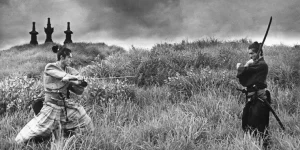
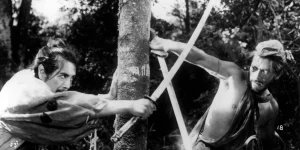
Director Hiroshi Inagaki shot the film primarily in and around Kyoto, Japan, the historical setting of the story. Using real locations, such as the areas near the actual Ichijoji Temple and the scenic landscapes of the region, adds a profound layer of authenticity. This choice grounds the legendary tale of Musashi in a tangible reality. Consequently, the beautiful Eastmancolor cinematography captures the natural beauty of the Japanese countryside, providing a stark, poetic contrast to the brutal violence of the sword fights.
Awards and Nominations
While its predecessor won an Academy Award, Samurai II: Duel at Ichijoji Temple also received Oscar recognition. The film was nominated for an Academy Award for Best Costume Design at the 29th Academy Awards. This nomination celebrated the stunning and historically accurate work of costume designer Sanzo Wada.
Behind the Scenes Insights
- Director Hiroshi Inagaki reportedly pushed Toshiro Mifune to his physical limits, especially for the final battle, to capture a genuine sense of exhaustion and desperation.
- The film was shot in Eastmancolor, a relatively new color process at the time, which gave the trilogy its distinct, vibrant visual palette that stood out from many black-and-white contemporaries.
- Toshiro Mifune and Akihiko Hirata (Seijuro) were frequent collaborators, having both appeared in the original Godzilla (1954) a year earlier.
- Interestingly, the massive final battle sequence had to be carefully choreographed to ensure actor safety while still appearing chaotic and deadly on screen.
Inspirations and References
The film is directly based on the epic historical novel Musashi by Eiji Yoshikawa. Yoshikawa’s novel, first serialized in a newspaper in the 1930s, is a fictionalized account of the life of the real Miyamoto Musashi, a renowned Japanese swordsman, philosopher, and writer. The film trilogy faithfully adapts the major plot points of this beloved and sprawling book.
Alternate Endings and Deleted Scenes
There are no known official alternate endings or widely available deleted scenes for Samurai II: Duel at Ichijoji Temple. Director Hiroshi Inagaki‘s final cut is the only version that has been preserved and distributed. The narrative is a direct continuation of the first film and leads seamlessly into the third, leaving little room for alternate story paths.
Book Adaptations and Differences
Samurai II adapts the “Water” and “Fire” scrolls of Eiji Yoshikawa’s novel Musashi. While largely faithful, the film makes several key changes for pacing and cinematic impact. For instance, the film significantly streamlines Musashi’s time in Kyoto, focusing more intently on his conflict with the Yoshioka school and his relationships with Otsu and Yoshino. The character of Sasaki Kojiro (Koji Tsuruta), Musashi’s ultimate rival, has a much larger presence in the film than in this section of the book, thereby setting up their fated confrontation in the third movie more explicitly.
Memorable Scenes and Quotes
Key Scenes
- The Duel with Seijuro: Musashi faces the refined master of the Yoshioka school. He ends the fight with one decisive strike to Seijuro’s arm, showcasing his merciful yet brutally efficient style.
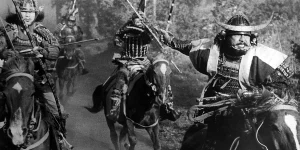
- The Ambush at Ichijoji Temple: The film’s breathtaking climax. Musashi, alone against nearly 80 swordsmen, fights for his life in a muddy rice paddy, a stunning display of action choreography and raw performance.
- Musashi’s Rejection of Yoshino: After the battle, a blood-soaked and emotionally broken Musashi coldly rejects Yoshino’s offer of a peaceful life, symbolizing his permanent submission to the way of the sword.
Iconic Quotes
- Toji Gion: “A real swordsman doesn’t need a famous name.”
- Musashi: “I’m not fighting to kill. I fight to win.”
- Yoshino: “You are like a wild beast. That is why I am drawn to you.”
Easter Eggs and Hidden Details
- The film subtly introduces Sasaki Kojiro using his signature “swallow cut” technique while practicing, a clear piece of foreshadowing for his eventual duel with Musashi in the third film.
- In some scenes, the wear and tear on Musashi’s kimono visibly worsens, a small but effective detail that reflects his arduous journey and constant fighting.
- The crest of the Yoshioka family is accurately depicted throughout their dojo, a detail that adds to the film’s historical authenticity for those familiar with 17th-century Japanese clans.
Trivia
- Koji Tsuruta, who plays the refined and deadly Sasaki Kojiro, was a massive film star in his own right, often playing romantic leads or yakuza anti-heroes.
- This is the second of three films in Hiroshi Inagaki’s Samurai Trilogy, which collectively stand as one of the most famous and successful adaptations of Miyamoto Musashi’s life story.
- Akihiko Hirata (Seijuro Yoshioka) is perhaps best known to Western audiences as Dr. Serizawa in the original Godzilla (1954).
Why Watch?
This film is a masterclass in action storytelling. It offers not just spectacular sword fights, but a compelling look at the price of fame and violence. Ultimately, it is a beautifully shot, superbly acted, and essential piece of samurai cinema history.
Director’s Other Movies
- The Rickshaw Man (1943)
- Samurai I: Musashi Miyamoto (1954)
- Samurai III: Duel at Ganryu Island (1956)
- The Lone Swordsman (1963)
- Chushingura: Hana no Maki, Yuki no Maki (1962)
Recommended Films for Fans
- Seven Samurai (1954)
- Yojimbo (1961)
- Harakiri (1962)
- The Sword of Doom (1966)
- 13 Assassins (2010)