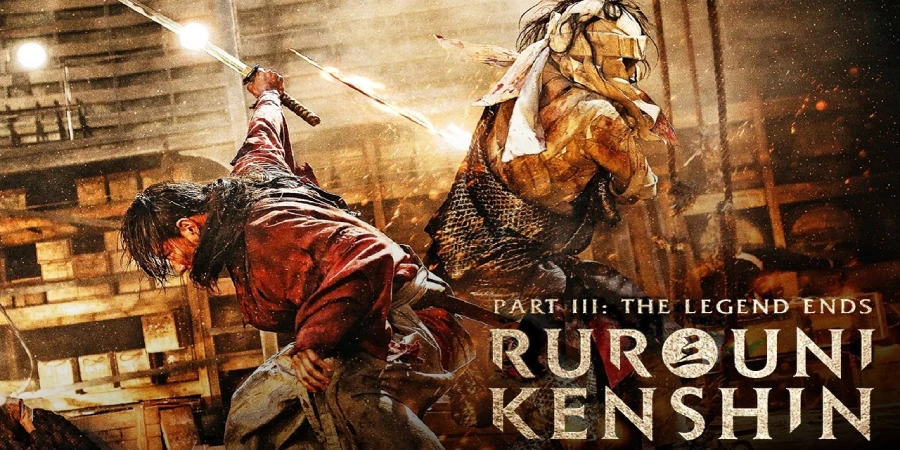
Rurouni Kenshin: The Legend Ends is the explosive conclusion to the two-part finale of the live-action Rurouni Kenshin trilogy (later expanded into five films). Directed by Keishi Ōtomo, this film focuses on redemption, responsibility, and the true meaning of strength, delivering a highly emotional and action-heavy ending to Kenshin Himura’s battle with his darkest mirror.
Detailed Summary
Kenshin’s Defeat and the Price of Mercy
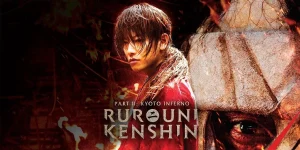
The film opens immediately after the devastating events of Kyoto Inferno. Kenshin Himura is brutally defeated by Makoto Shishio and thrown into the sea, left to die. This moment is crucial because it strips Kenshin of his invincible aura and forces him to confront a painful truth: good intentions are not enough to stop true evil.
Presumed dead, Kenshin is rescued by Hiko Seijūrō XIII, his former master and the creator of the Hiten Mitsurugi-ryū sword style. Kenshin’s survival comes at a cost: he is physically broken and emotionally shaken.
Training Under Hiko Seijūrō
Much of the first half focuses on Kenshin’s training. Hiko harshly reminds him that Hiten Mitsurugi-ryū was never meant for self-sacrifice, but for survival. Kenshin’s tendency to throw his life away for others is portrayed not as noble, but as flawed.
Kenshin must learn the final and ultimate technique: Amakakeru Ryū no Hirameki. To do so, he must overcome his fear of killing and accept responsibility for his strength. This section deepens the philosophical core of the film, emphasizing that true strength is choosing to live and protect, not to die dramatically.
Shishio’s Plan and the Collapse of Kyoto
Meanwhile, Shishio launches his final plan to overthrow the Meiji government. Kyoto descends into chaos as fires rage and civilians suffer. Kenshin’s allies, including Saitō Hajime, Sanosuke, and Aoshi, fight desperately to slow Shishio’s advance.
Each character faces their own limits, reinforcing the theme that no one can stop Shishio alone. Shishio himself is depicted as a force of pure will, driven by survival-of-the-fittest ideology.
Kenshin’s Return
Kenshin finally returns to Kyoto, fully healed and mentally transformed. His presence immediately shifts the tone of the battle. He no longer fights recklessly; instead, he fights with clarity, control, and resolve.
The long-awaited rematch between Kenshin and Shishio begins aboard Shishio’s ironclad battleship, setting the stage for one of the most iconic sword fights in live-action anime adaptations.

Movie Ending
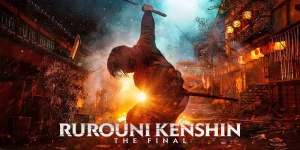
The final battle between Kenshin Himura and Makoto Shishio is intense, brutal, and exhausting for both fighters. Kenshin uses every ounce of his skill, including the newly mastered Amakakeru Ryū no Hirameki, which finally overwhelms Shishio.
However, Shishio does not die by Kenshin’s blade. Instead, his body, already unstable due to severe burns and self-imposed limits, combusts from internal heat. This is a powerful narrative choice: Shishio is destroyed by the very philosophy he lived by. His obsession with survival and dominance ultimately consumes him.
With Shishio gone, his coup collapses. Kyoto is saved, and the Meiji government survives.
In the aftermath, Kenshin chooses not to remain a government weapon. He reaffirms his vow never to kill again and accepts that protecting peace does not require endless bloodshed. The film ends with Kenshin returning to Kaoru and the Kamiya dojo, symbolizing hope, healing, and the possibility of a peaceful future.
The ending deliberately avoids triumphalism. Instead, it emphasizes emotional closure and moral resolution, making Kenshin’s victory as internal as it is physical.
Are There Post-Credits Scenes?
No. Rurouni Kenshin: The Legend Ends does not include any post-credits or mid-credits scenes. The story concludes fully within the film itself.
Type of Movie
This film is a samurai action drama with strong elements of historical fiction and martial arts cinema, blending high-speed sword combat with deep moral and philosophical themes.
Cast
- Takeru Satoh as Kenshin Himura
- Tatsuya Fujiwara as Makoto Shishio
- Emi Takei as Kaoru Kamiya
- Munetaka Aoki as Sanosuke Sagara
- Yosuke Eguchi as Saitō Hajime
- Yū Aoi as Megumi Takani
- Masaharu Fukuyama as Hiko Seijūrō XIII
Film Music and Composer
The score was composed by Naoki Satō, whose music balances traditional Japanese instruments with modern orchestral intensity. The soundtrack heightens both the emotional beats and the kinetic sword fights without overpowering them.
Filming Locations
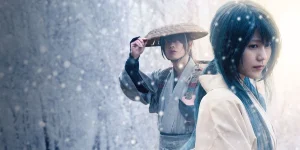
The movie was shot across various locations in Kyoto, Shiga, and Tochigi Prefectures, as well as large studio sets.
Kyoto’s historical architecture reinforces the stakes of Shishio’s threat, while mountainous regions were used for Kenshin’s training scenes, symbolizing isolation and rebirth.
Awards and Nominations
- Japan Academy Prize nominations for Best Cinematography and Best Action Direction
- Widely praised by critics for choreography and faithfulness to the source material, even if not heavily awarded internationally
Behind the Scenes Insights
- Takeru Satoh performed most of his own sword stunts, requiring months of intensive training
- Fight scenes were choreographed to minimize CGI and maximize practical movement
- The Kenshin vs Shishio final fight took several weeks to film due to its complexity
- Director Keishi Ōtomo insisted on grounding the anime-style action in realistic physics
Inspirations and References
- Based on the manga Rurouni Kenshin by Nobuhiro Watsuki
- Influenced by classic Japanese samurai cinema, especially Akira Kurosawa
- Shishio’s ideology reflects Social Darwinist themes common in post-war Japanese literature
Alternate Endings and Deleted Scenes
No alternate ending was officially released. Some deleted scenes reportedly expanded on Shishio’s inner circle, but they were cut to maintain pacing and focus on Kenshin’s emotional journey.
Book Adaptation and Differences
While faithful to the Kyoto Arc, the film condenses timelines and merges battles from the manga. Certain secondary villains receive less screen time, while Kenshin’s internal struggle is emphasized more heavily than in the source material.
Memorable Scenes and Quotes
Key Scenes
- Kenshin’s near-death defeat at Shishio’s hands
- Training duel with Hiko Seijūrō
- Kenshin’s return to the battlefield
- Final battle aboard the ironclad ship
Iconic Quotes
- “I will not kill. That is my answer.”
- “Strength exists to protect life, not to throw it away.”
Easter Eggs and Hidden Details
- Kenshin’s scars are subtly emphasized more as his resolve strengthens
- Hiko’s cloak symbol mirrors designs from the manga panels
- Shishio’s body temperature references are visual nods to manga exposition
Trivia
- The film was shot back-to-back with Kyoto Inferno
- Shishio’s bandages were reapplied multiple times daily during filming
- The trilogy helped redefine live-action anime adaptations globally
Why Watch?
If you appreciate emotionally grounded action, complex villains, and character-driven storytelling, this film delivers a deeply satisfying conclusion. It’s not just about sword fights; it’s about choosing how to live after violence.
Director’s Other Works (Movies)
- Rurouni Kenshin (2012)
- Rurouni Kenshin: Kyoto Inferno (2014)
- Rurouni Kenshin: The Final (2021)
- Rurouni Kenshin: The Beginning (2021)
Recommended Films for Fans
- Rurouni Kenshin: The Final (2021)
- 13 Assassins (2010)
- Blade of the Immortal (2017)
- Samurai Marathon (2019)
- Twilight Samurai (2002)